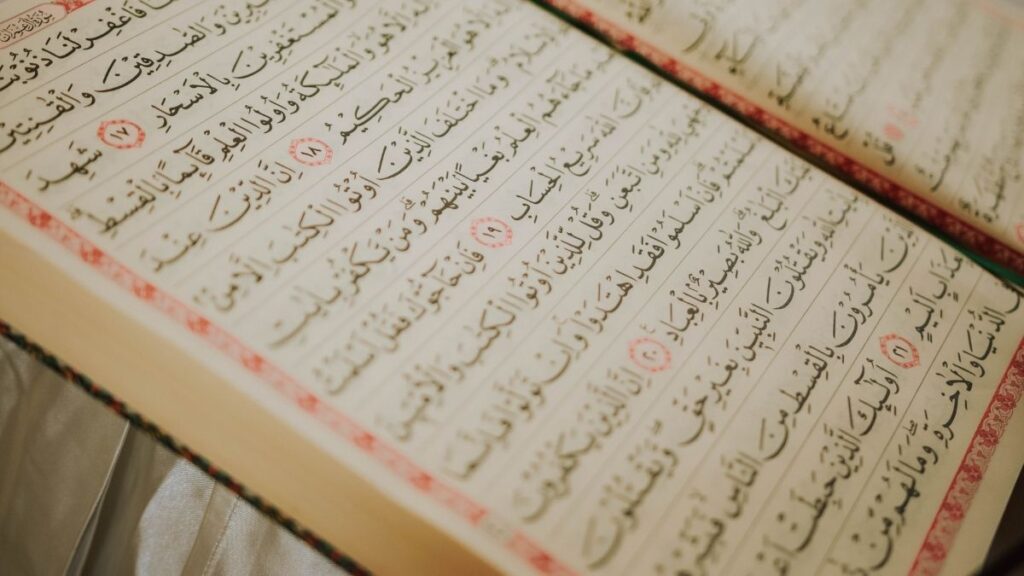
Supplications in the Qur’an


In the Qur’an supplication is a special form of human
speaking addressed to God. We say human
speaking because the Qur’an tells us that we humans do not understand the
speech of other creatures who also address God. They address Him through their
awareness that He gave them existence and that He provides the means of
sustaining it; also, they express their gratitude to Him (عمد; شكر) and glorify Him (يسبح له ما في السماوات و الأرض).
Humans do this too, but something else besides. That something is a measure of
the unique nature of human beings and the unique character of their speaking
and, therefore, also of their supplicating God.
To understand supplication to God, we must understand what
human speaking is, because it is a particular form of such speaking. Speaking
is, secondarily, communication – conveying information or instruction, so that
others know what they did not know before, or what you want them to do or feel
as a result of having that information. In this respect, speaking can be
efficient or inefficient, it can succeed well or poorly or not at all in
communicating information or instruction. It follows that a learned, articulate
person is better at this kind of speaking than someone who is not learned or
not articulate.
In real life, people tend to become articulate in particular
domains of life, in which they have become good at communicating through
practice and familiarity with special words and ways of speaking, while in
other domains they may be quite inefficient. Supplication to other than God is
an effort to communicate need, in hope of that need being fulfilled: petitions
to the rich and powerful are obvious examples. However, primarily, speaking is
not communication; that is not the major function of human use of language.
Rather, the primary, major function of language is discovery and expression by
human beings of what is inside them, a pouring out of what is already there in
their hearts but not properly or fully realised. So, when the Qur’an (for
example) tells us: قل هو الله
أحد, we are being guided
to realise fully what was already known to us as true. Human speaking, in its
primary function, is an unfolding or unveiling, a putting out (uttering), a
bringing into full, conscious awareness, what was folded up or veiled inside
us, in darkness or some sort of half-light. In respect of this kind of
speaking, no human is better than another; neither literacy, education and
civilization, nor even assiduous training in piety and devotion, make one human
heart richer in what it has to utter than any other. Indeed, one may go further
and say that humans as such are no better in this regard than any other
creature: it is only that we hear and understand our human speech but we do not
hear and understand the speech of other creatures.
Attentiveness as the mark of human speech
What differentiates human
beings in respect of their speaking is their ability or willingness to attend
to their lived experience. It is possible, but not natural or easy, for human
beings to float on the surface of their lives without attending to them, to go
from moment to moment without reckoning, reflecting, remembering, planning.
Some people make a conscious effort not to be aware that they have a life and
that this life will end, and to avoid any concern that what they say and do has
consequences for themselves and others. This is a life-style directly opposed
to what is commended in all religions, all of which urge the seriousness and
transience of life, and its being a preparation for another or further life.
In sum, human speaking is primarily an effort to be
attentive, to reckon, reflect and plan, to build and gather meaning. It is an
effort to signify, to be important, to value life as better than an
undifferentiated stream of matters of fact. As I will try to explain,
supplication to God is an intense form of bringing one’s self and one’s
situation to one’s attention, a sort of fully waking up. Accordingly, it is a
virtue to supplicate continually, though hardly possible. It is only easy, as
the Qur’an teaches, at the ends of the day, or in the night’s stillness when
the chains of the day’s business are less heavy.
Why supplication is not communication
Supplication to God cannot be an effort of communication.
The Qur’an asks rhetorically, Would you seek to inform God of what He does not
know? Since God already knows what you have need of asking him, communication
cannot be the point of supplication. What then are the Prophets and Messengers,
upon them be peace, up to, when they say, for example, ‘O God, I have need of
whatever help you might give me?’ There is an answer in the perfect symmetry of
the Fatiha: it teaches us to prepare the supplication for guidance and
protection from straying off the Straight Path by first affirming that praise
and thanks are due to God, that He is both essentially and actively merciful,
that He has full dominion of the final outcome of all situations, to be
revealed on the Day of judgement.
Sometimes human need is overwhelming, and may
be uttered first, almost involuntarily, like a cry of anguish. But in the
example of those brought near to God, the balance is immediately restored: for
example in the petition of Ayyub, alayhi salam, ‘My affliction is great and You
are the most merciful of the merciful’. Every petition of every Prophet, as
reported in the Qur’an, is properly addressed to God in full acceptance of the
oneness of His attributes, even if a particular appeal is to His mercy, or His
knowledge, or His power, or His readiness to accept repentance and forgive all
transgressions except the denial of His oneness. Every petition therefore
expresses human dependence on God, it brings to attention the limitless extent
of human needs and aspirations combined with the limitation of human powers,
active or passive:
neither the power to endure a situation nor the power to
alter it, neither the power to desire or imagine a future nor the power to
bring that future nearer to realisation are placed entirely in human hands. It
is not even the case that we have control of the consequences of our
deliberate, willed, carefully planned actions: all our actions (including our
speaking) have unpredictable as well as predictable consequences, and we can
only become aware of a few of them. The range of supplications in the Qur’an is
wide: the need for full certainty of faith, the need for relief from the
demands of life, especially the burden of prophethood in the face of its
evident failure, the need for help in facing the trials and temptations of the
life ahead or the consequences of the life past.
I will be going through some
examples to Ibrahim, alayhi salam. But with this variety it is important to
remember what, particularly and always, every supplication to God achieves for
the supplicant: it makes the supplicant attentive to God and mindful of human
need of Him.
The human capacity for thought beyond the self
Human need arises because God has created man with a
capacity to send his thought, his inner being, to the furthest ends of time and
space, even while, in his physical being, he is little, fragile and feeble. The
reality that surrounds man is permeable to his thought, it informs and teaches
him, it is rich with possibility and intelligibility. We can see a leaf and
wonder how would it be if I combine this leaf with this other, what flavour
might I cook up? We can get it wrong, we
can guess wrong about how things are and how they work, but mostly we can
correct our guesswork, and eventually get it right. Reality is given to us as
informative and intelligible. We need it, and we are inscribed within it, while
somehow somewhat able to put ourselves outside of it in our hearts and minds.
Human mastery of reality is piecemeal and limited, so too is human attention.
The supreme and first temptation is to be tricked into believing that we can
have unlimited power. We can not. The first human pair suffered this
temptation. So, in His mercy, God taught Adam the words, the first petition,
the first, best use of speaking: we have wronged ourselves, and but that You would
forgive us, we can have no hope. Every supplication to God says this, if in
different situations and different words, out of the same need for reason to
hope. Hope in respect of final outcomes comes unbreakably attached to
attentiveness to God and remembrance of Him.
The wrong kind of petition
Unfortunately, our capacity to petition God in the right
way, as God’s Messengers and Prophets have shown us, is itself subject to human
liability to error and sin. So it is best to be aware of the wrong kinds of
petition. The worst kind is that which seeks to impress God, to obligate God.
Supplicating in this way is speaking in its secondary function of
communication, intended to inform or instruct. In ordinary inter-human
communication, people sometimes say, If I do X and Y, will you promise to do Z,
or I promise to do X and Y, if you will do Z. Between these two persons, such
speech is admissible, even normal: I have the power to do X and Y, and you have
the power to do Z, so we can make a deal. In other words, the condition is a
valid offer. Sadly, some people petition God on this same pattern and say
things like:
if You do Z, I will do X and Y, usually something like I will fast
all year or I will never drink again or I will give more money to the poor,
etc. In this case, the condition is not a valid condition because the person’s
capacity to do X or Y is just as much in the gift of God as His will to do Z.
It is most unwise to pray in this style. For this reason, God’s Messenger,sallahu
alayhi wa-sallam, advised moderation in the forms of worship and other service
done for God. It is notably foolish to try to impress God with one’s capacity
for renunciation and self-denial. Rather, His Messenger advised us to do a
little regularly, and build on that, while ensuring that what is intended for
God is intended for Him and not for some other objective.
The hadith of the poor man’s sadaqa
In the famous hadith of
the poor, honest man who came asking what he could do by way of sadaqa, to
purify himself and to please God, a number of options presented by the Prophet
were refused by the man as ‘impossible’ for him. When the Prophet suggested
that he do good to his neighbour (speak kindly, be helpful, etc.), the poor man
said he could not do even that. Well then, the Prophet advised him, do not do
any harm to your neighbour for the sake of God. And, at last, the man assented.
The sadaqa is achieved by the orientation to God, by wariness of Him. Now, we
can hardly ever achieve the quality and constancy of God-wariness of the
Messengers and Prophets, but the effort of supplication can put us in that
direction. That is what it is for, and for that purpose, nothing is more
efficient.