In the Name of Allah, the Most Gracious, the Most Merciful
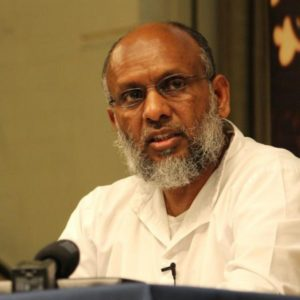
Shaykh Akram Nadwi
Muhaddith & Islamic Scholar

In the Name of Allah, the Most Gracious, the Most Merciful
*An Educational Journey*
29 Jumada al-Thani – 1 Rajab 1447 AH
By: Dr. Muhammad Akram al-Nadwi
Oxford
21/12/2025
On the morning of Saturday, the twenty-ninth of Jumada al-Thani, I set out for the bustling city of Cambridge. A distinguished scholarly session was held at Cambridge Islamic College, devoted to the biography of the Prophet (peace be upon him), covering the period from the blessed Hijrah to the momentous events of the Battle of Badr. The gathering was graced by the presence of researchers and scholars who came together to draw from the rich wellspring of the Prophetic biography, examining its details and events with academic rigour, sincere diligence, and a spirit imbued with love for the science of Seerah and a desire to renew perspectives upon it.
After the blessed session concluded—replete with fruitful discussions and clear benefits—I boarded the train from Cambridge station at 5:50 p.m., bound for Wakefield. Within two and a half hours, I arrived at Wakefield station at 8:30 p.m. There, I was warmly received by a noble group of devoted individuals: Sulayman Qadhi, Zubair Chothia, and Hafiz Muhammad Gardee. They were the gracious hosts who had arranged the meetings and scholarly lessons, and they overwhelmed me with their hospitality, warmth, and generosity.
These esteemed individuals are known for their energetic service, broad-minded outlook, sound judgment, and deep concern for nurturing the Muslim community upon the principles and teachings of Islam, while firmly preserving its religious and cultural identity. With awakened insight, they have recognised that service to the faith is realised through the dissemination of knowledge, and that the reform of society and the nurturing of youth are achieved through sound awareness and exemplary conduct.
We then proceeded to the home of the venerable Shaykh Muhammad al-Karani in the city of Batley. He is a distinguished scholar and a graduate of Darul Uloom Farooqia in Karachi, Pakistan, who has studied under leading scholars and combines academic rigour with personal humility and expansive intellectual horizons. He received us with exceptional kindness, having invited a gathering of scholars, researchers, and people of virtue and heritage to honour our arrival. Among those present were Shaykh Mushfiq of Ibrahim College in London, Habib Akudi, Shaykh Saeed Qadhi, and a number of other respected individuals.
The gathering commenced with a wide range of thoughtful questions touching upon the Noble Qur’an, the Prophetic Sunnah, the condition of Muslims in Britain, and the challenges and opportunities facing the community’s advancement. I was then asked about my commentary on Sahih Muslim and my methodology in interpreting the Qur’an. I explained both projects with clarity and precision, outlining their foundational principles, methods of reasoning, and the scholarly and educational objectives that guide my work in these two endeavours.
Following the conclusion of the scholarly discussion, Shaykh Muhammad Karani honoured us with a splendid dinner, abundant in variety and remarkable in quality. The richness and generosity of the hospitality left us deeply appreciative. We expressed our sincere gratitude for his kindness and warmth.
Thereafter, tea and sweets were served, and the evening continued with extended conversation covering scholarly, intellectual, and social themes. The atmosphere was one of familiarity and brotherhood, shaded by mutual affection for the sake of Allah. It was a gathering that uplifted the heart, increased joy, and strengthened the bonds between brothers engaged in knowledge and da‘wah.
Later, we arrived at the home of Sulayman Qadhi, where another scholarly gathering was convened. Present were a number of honourable guests, led by Hafiz Yusha Qadhi, Hafiz Dawood Qadhi, and Karima Qadhi—the children of our generous host, Sulayman Qadhi.
The attendees posed precise and thoughtful questions concerning challenging Qur’anic verses, Prophetic hadiths, and doubts raised regarding the Qur’an and Sunnah. The discussion focused on clarification, resolving ambiguities, and establishing the truth through sound evidence. This scholarly exchange continued until 1:00 a.m., in an atmosphere marked by attentive listening and serious, respectful dialogue.
After some rest, we awoke for Fajr, performed the congregational prayer, and I then delivered a lesson. I spoke about the timings of the five daily prayers and their profound wisdom, linking them to the statement of Prophet Ibrahim (peace be upon him): “I do not love those that set” (Qur’an 6:76). I explained that the system of prayer timings reflects this deep Abrahamic wisdom, symbolising steadfastness upon the truth and detachment from the transient and ever-changing. A large gathering attended, many of whom remarked that they had not previously considered this rhetorical and legislative dimension of the prayer timings. Discussion and questions continued at length, reflecting the participants’ thirst for knowledge and deep understanding of the religion.
Breakfast was then served at the home of Sulayman Qadhi. Our conversations ranged over Islamic finance, contemporary economic issues, and their related legal rulings and practical applications within the Muslim community. During this time, the venerable Shaykh Zakariyya Akudi visited me. Shaykh Khalil Qadhi then presented me with a valuable two-volume biography of Shaykh Yusuf Motala (may Allah have mercy on him), a leading figure in da‘wah and education in Britain whose enduring legacy has had a profound impact on the Muslim community. Sulayman Qadhi also presented me with a book on the life of Shaykh Abdullah al-Kapodravi, a distinguished scholar and servant of the faith.
Thus, the day unfolded as one rich in scholarly gatherings, enhanced by noble companionship and enriched by valuable academic gifts—reflecting a sincere love for knowledge and a genuine desire to serve Islam and benefit the Muslim community.
As the time approached eleven o’clock, we arrived at the Healey Community Centre, which was filled with a large gathering of men, led by the venerable Shaykh Abu ‘Ubaydah Andrew Boso. Their warm welcome brought joy to the heart. I sat with them in a gathering of review and friendly exchange, presented the Musalsal bil-Awwaliyyah and other musalsal narrations with their chains, and granted those present a general ijazah in what is authentically transmitted.
I then delivered a lesson on knowledge—its sources, methods of acquisition, and the criteria by which truth is distinguished from falsehood. I began with the innate disposition (fitrah) upon which Allah has created humanity, then spoke about the senses, revelation and its certainty, and the role and limits of the intellect. I clarified that, contrary to the claims of some philosophers and theologians, the intellect is not an independent source of knowledge but a faculty that processes and organises information received through valid means. I explained its four primary functions: preservation, coordination, derivation, and critical evaluation, illustrating these with clear examples.
Following the lesson, questions were posed and answered with a methodological, evidence-based approach, free of partisanship. The gathering concluded with hearts illuminated, understanding expanded, and renewed appreciation for the nobility and necessity of knowledge.
We then prayed Dhuhr and ‘Asr at the home of Sulayman Qadhi, after which I sat with scholars and researchers—men and women—in a packed session of questions and discussion. The dialogue addressed diverse scholarly and methodological issues related to Qur’anic studies and interpretation, conducted with dignity and academic etiquette. The exchange added both depth and breadth to the gathering.
Lunch followed in an atmosphere of warmth and affection, and discussion continued until around five o’clock. We concluded with a shared resolve to begin a structured series of lessons in Batley, grounded in sound principles of Qur’anic interpretation and aimed at reviving reflection and practice upon the Noble Book.
Each of us departed reassured that this initiative would mark a beneficial beginning to a sustained scholarly programme, contributing to deeper Qur’anic awareness and closer adherence to divine guidance.
Sulayman Qadhi, Zubair Chothia , and Hafez Muhammad Gardee accompanied me to the station and bid me farewell. I departed with deep gratitude for their companionship and returned to Oxford.
Now, at the close of a long and eventful day, I reflect upon its moments. Farewell, however simple, leaves a gentle imprint upon the heart, reminding one that life is enriched by companions who lighten the journey. As I departed, I felt that the city to which I returned would seem quieter, for their memory accompanied me like a gentle breeze adorning one’s thoughts.
With this, my day concludes. I close these notes in the hope that tomorrow will bring further beautiful memories, and that the heart will always have space for sincere bonds that uplift the soul, even in moments of parting.
⸻
Follow the الشيخ محمد أكرم الندوي channel on WhatsApp: https://whatsapp.com/channel/0029VbAxp2qGpLHHqQ3LoY0w