I Am Migrating to My Lord
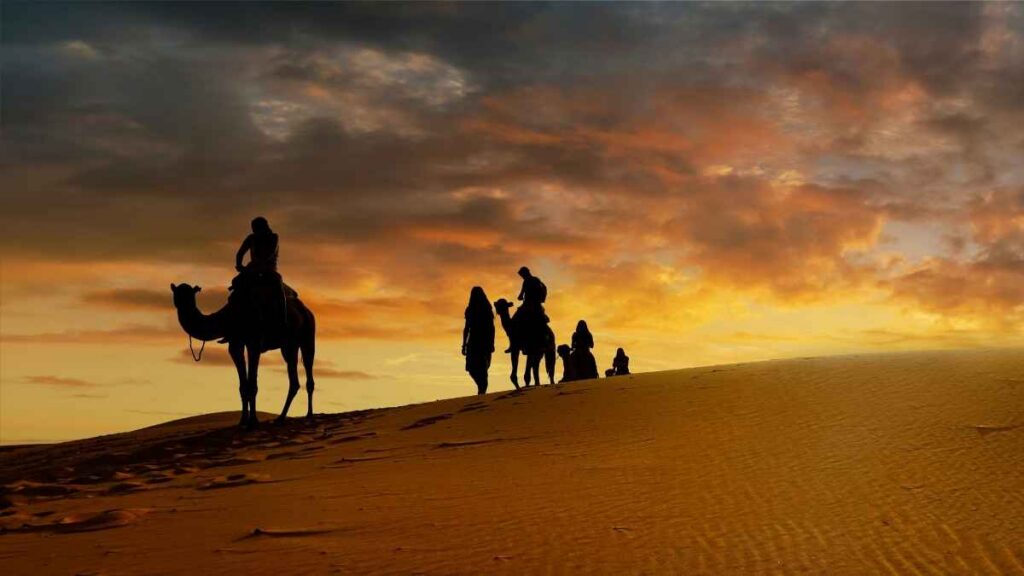
Migration is not merely a scene from the past that we re-enact in our consciousness each year, nor is it a religious occasion to be passed over in sermons and exhortations. Rather, it is a moment of profound awareness and a civilisational and human concept that transcends the confines of time and place. Allah chose for Islamic history to commence with the Hijrah—not with the Prophetic mission, the Night Journey, or the victory at Badr—because migration was not simply a transformation in the state of the ummah, but a proclamation of the birth of a new human being: a human who transcends himself and his society, deciding to reshape his life in the light of revelation. At its root, migration is not a movement of the body, but a movement of consciousness. It is a revolt against what is stagnant when it has become corrupt, against what is familiar when it has become an obstacle, and against the self when it has become a veil.
True migration begins when a person can no longer reconcile himself with an environment that delights in his heedlessness, feeds his selfishness, and rocks him to sleep in the cradle of repetition. There is a kind of soft jāhiliyyah that does not raise swords or bury daughters alive, but extinguishes the heart, tames ambition, and convinces you that there is no point in change. Migration is to listen to an inner voice that tells you: “You are not as you ought to be,” so you rise, move, and search for Allah within yourself anew.
When Ibrāhīm, upon him be peace, said: “Indeed, I am migrating to my Lord; surely, He is the Mighty, the Wise,” he was not fleeing out of fear, but moving out of loyalty. Migration, in this sense, is the renunciation of all allegiance save that to Allah. It is to depart from a land you love, people with whom you live, and a social status you have grown accustomed to—not because you reject them, but because you love Allah more. It is a transition from “what I want” to “what He wills,” from the whims of the self to the command of Allah.
The Prophet ﷺ migrated at the most difficult moment of the da‘wah, after every form of exclusion and restriction had been imposed upon him. Yet he did not carry hatred; he carried light. Madinah was not a reward, but a new test in establishing the foundation. He migrated not merely to live, but to give life to an ummah.
At first glance, migration seems like an act of escape, but in reality it is an act of confrontation—confrontation with the self, its weaknesses, its habits, and its obstacles. Many people flee their realities, their jobs, their relationships, or their hardships, and call that “migration.” But true migration is not fleeing responsibility; it is fleeing to Allah. This is why Allah said: “So flee to Allah,” that is, detach yourselves from all that binds you to the earth, and cling to the heavens. Migration does not necessarily mean to leave your place; it means to change your meaning. You might remain in the same house, same city, and same society, yet migrate within yourself: changing your relationship with Allah, with people, and with all of existence. Migration is an inward decision to become a true servant in a world that worships wealth, status, and appearances.
Migration is not an act that occurs once and is then folded away; it is a continuous path. In every moment you live, there is a “Makkah” you must leave and a “Madinah” you must reach. In every situation, there is a jāhiliyyah you must renounce and a light you must pursue. Thus the Prophet ﷺ said: “The emigrant is the one who forsakes what Allah has forbidden,” meaning that the doors of migration have not closed; rather, they have been opened in every heart that seeks Allah.
At the beginning of every Hijrī year, we do not need to revive the memory of the Hijrah in words alone, but to revive it in our decisions: to migrate from disbelief and hypocrisy to Islam and faith, from envy to contentment, from heedlessness to remembrance, from hatred to peace, from laziness to diligence, and
from superficial living to depth of meaning.
Migration is not merely an event in history, but the key to emerging from any spiritual or moral wilderness. It is the moment of truthfulness with oneself and returning to Allah with everything one possesses. Let this new year be a year in which we renew our intentions for Allah, review ourselves, and embark upon a migration that never ends—a migration towards meaning, towards light, towards Allah.
May you spend each year steadfast on the path of migration, advancing with resolve towards the light.
And may you spend each year forsaking what displeases Allah, so that you may dwell in His pleasure.
Original source: