How to teach children about Christmas

Shaykh Akram Nadwi
Muhaddith & Islamic Scholar
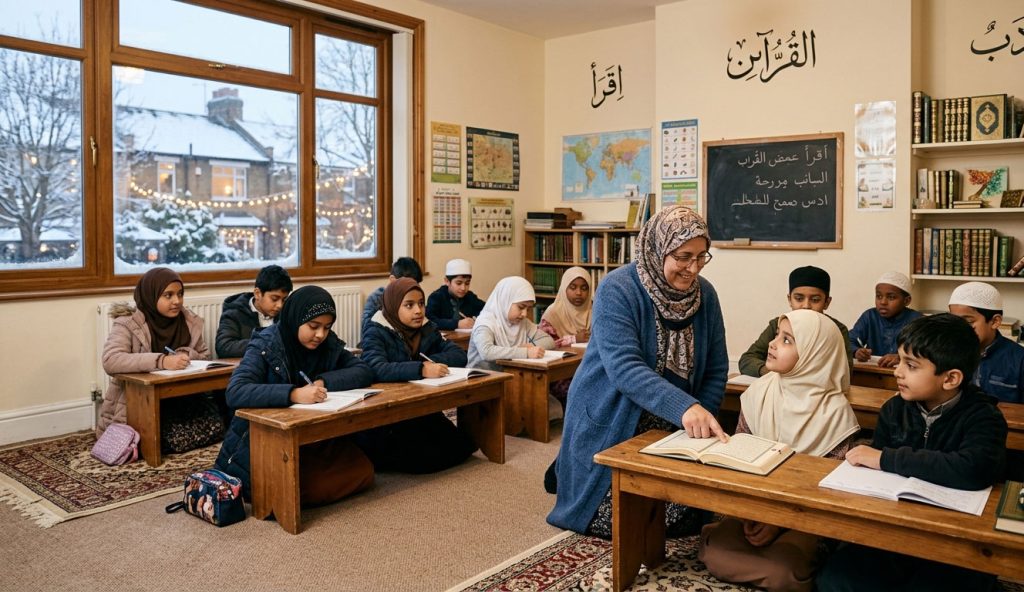
How to teach children about Christmas
By Dr Mohammad Aram Nadwi
Oxford
10/12/2025
Question:
Assalamu alaykum Shaykh, I pray you are well. I wanted to thank you sincerely for your Sunday classes; I benefit greatly from them. May Allah reward you abundantly.
I am seeking guidance on how to teach children at madrasah about Christmas. My class is mixed in age (7–13), and some children say they “celebrate Christmas,” though it seems their families may treat it culturally rather than religiously. I know Christmas is a Christian religious festival and generally Muslims do not celebrate it, but in the UK many aspects of it have become cultural, and some Muslim families participate in those parts. This makes me hesitant to give a blanket statement that might make children feel their families are doing something wrong.
I also wonder whether my understanding is correct: that if certain customs today are no longer tied to Christian belief, some scholars may consider them cultural, similar to the way many now view birthdays. Because the issue feels more nuanced than something clearly defined like hijab, I want to explain it in a way that is accurate, sensitive, and does not create unnecessary conflict between what children hear at madrasah and what they see at home.
What is the best way to present this topic to them, and is my reasoning about changing customs correct?
JazakAllahu khayran, Shaykh, for your time and for all your ongoing effort in teaching. I know you are very busy, so please do feel free to respond whenever is convenient.
Aaminah
Answer:
Wa ʿalaykum as-salām wa raḥmatullāhi wa barakātuh.
May Allah reward you for your sincerity, care, and the thoughtful way you approach your responsibility as a teacher. Your concern for both accuracy and compassion reflects the very essence of tarbiyah, and it is clear that you wish to guide the children with wisdom rather than rigidity. May Allah place barakah in your work.
In matters like Christmas, the starting point in tarbiyah is not simply the legal ruling but the emotional and developmental reality of the children. At their age, they respond best to explanations that affirm who they are as Muslims, rather than those that criticise what others do. They also take what teachers say very literally, which means a single blunt statement, such as “Muslims do not celebrate Christmas”, can easily make a child feel that something in their home is wrong. Your instinct to avoid such unintended consequences is absolutely correct.
A sound and gentle approach is to begin by grounding them in their own identity. You can say, very naturally, that Allah has given Muslims two beautiful celebrations: Eid al-Fitr and Eid al-Adha. These are our special days, full of meaning, worship, happiness, and family. When children are reminded of this, they immediately understand that Muslims have their own religious festivals, and that we do not take part in the religious occasions of other faiths, not out of disrespect, but because our celebrations come from our own beliefs and teachings.
Once this foundation is laid, you can help them understand the society they live in. For Christians, Christmas is a religious celebration connected to beliefs about Prophet Isa (ʿalayhi al-salām) that Muslims do not share. This can be explained simply and respectfully: “Christians celebrate Christmas because of what they believe about Prophet Isa. Muslims love Prophet Isa too, but view him differently, so we do not celebrate Christmas as a religious festival.”
This is clear, accurate, and kind.
At the same time, you are completely right to observe that in Britain today, much of what surrounds Christmas has become cultural rather than religious. The lights, the excitement, the break from school, the family meals, the general winter atmosphere, these are the parts many children experience, and some Muslim families participate in them without any religious intention. This reality is important to acknowledge, because the children see it. If it is ignored, they will feel a clash between their madrasah learning and their home life, which is exactly what you are trying to avoid.
For this reason, it is better to offer a nuanced and reassuring explanation, such as:
“Christmas itself is a religious celebration for Christians. As Muslims, we don’t join in religious festivals of other faiths because Allah has already given us our own special days, our Eids. But in our country, many things that happen in December are just part of the winter season and not religious. Families make different choices about those cultural things, and Islam teaches us to always respect our families’ decisions.”
This gives the children clarity without judgement. It protects their relationship with their parents, and it teaches them to respect difference, not only between religions, but within the Muslim community as well.
Regarding your question about whether your reasoning on changing customs is correct: yes, it is. Islam recognises that customs evolve, and rulings take into account how people understand and practise those customs today. This is why scholars differ on matters such as birthdays or non-religious winter activities. However, this level of fiqh detail is not necessary for children. What they need is a simple moral compass: Muslims avoid the religious aspects of Christmas, hold firmly to their own faith and celebrations, and behave with respect and kindness towards everyone.
This tarbiyah-centred method does several things at once:
1- it nurtures a strong Muslim identity;
2- it avoids unfairly judging what happens in a child’s home;
3- it gives them a healthy and confident way to understand the world around them;
4- and it keeps them emotionally connected to their faith, rather than confused or conflicted.
By presenting the issue in this balanced and caring way, you remain true to Islamic teaching and to the emotional needs of the children. They will grow up as Muslims who are both principled and compassionate, exactly what our tradition aims to produce.
Jazākillāhu khayran for your sincerity and for seeking to do right by the children. May Allah grant you wisdom, patience, and reward.
FOLLOW THE الشيخ محمد أكرم الندوي CHANNEL ON WHATSAPP:
https://WhatsApp.com/channel/0029VbAxp2qGpLHHqQ3LoY0w