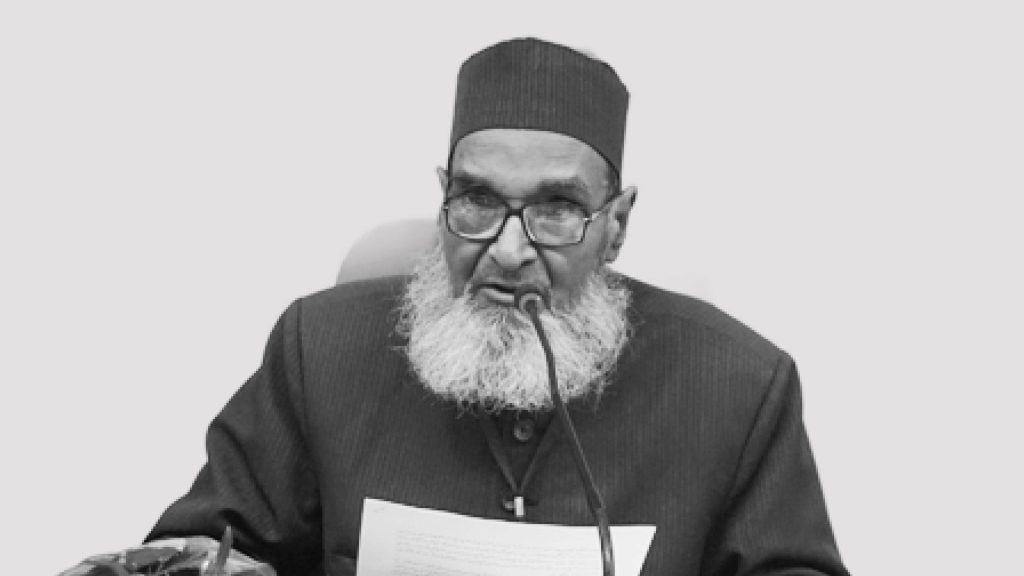
Foreword by Shaykh Abdullah Judai

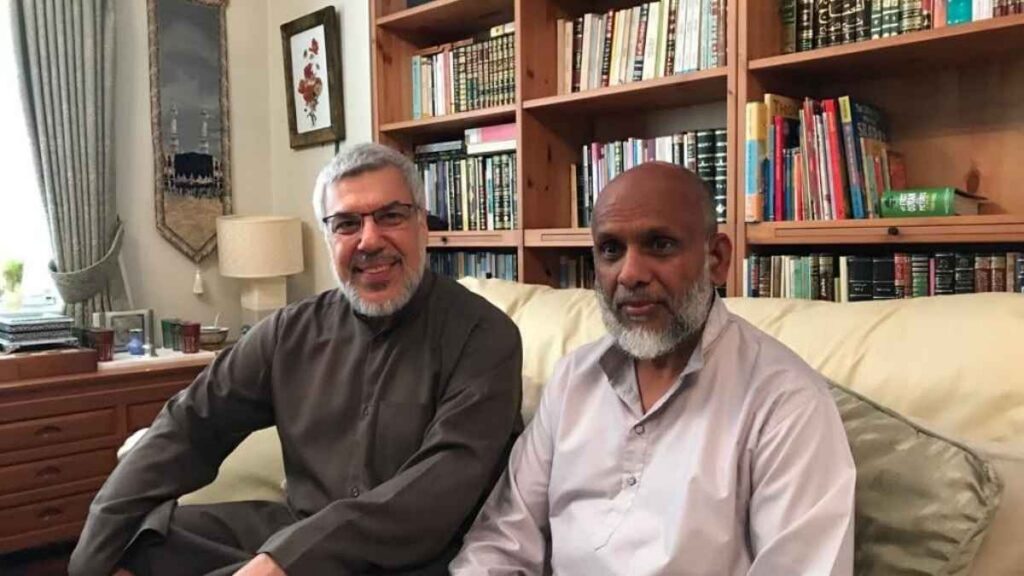
To Madkhal ilā Ṣaḥīḥ al-Bukhārī by Mohammed Akram Nadwi
All praise belongs to God, Lord of all worlds. I bear witness that there is none worthy of worship except He Who is without partners and Who is the protector of the pious. I bear witness that Muḥammad is His servant and messenger, the trustworthy and truthful Prophet, God’s peace and blessings be upon him, his family, his Companions, and those who followed his guidance and example until the Day of Judgment.
When the esteemed noble scholar Dr. Mohammed Akram Nadwi forwarded me this book for my own review and comments, I found myself compelled to respond to his request and help realize his ambitions for a number of reasons. First, there is the great status of ḥadīth science in my own estimation: a unique discipline which many claim to master but few are actually able to do so in our times.
Secondly, the Ṣaḥīḥ of Imām Bukhārī has engrossed me and taken up a good share of my own studies, particularly because of the rise of much deviant propaganda against the Prophetic Sunnah and its most notable sources, which this great Ṣaḥīḥ work represents. It gives me great pleasure that such a noble scholar has thought of me to shed some light from my own journey of nearly fifty years through a discipline that is the most endearing to my heart and on the most special of the sources on the Sunnah of the Prophet ﷺ. That is the Ṣaḥīḥ of Imām Bukhārī with which I have lived for my entire lifetime and continue to do so.
Since I have prior conviction that what this author has brought forth comes from a competent expert in the field, I did not feel that he wanted me to simply review it a number of times. Therefore, I designated for it the time that it deserved and studied it anxiously in order to truly benefit from what this great scholar was inspired to compile and organize on paper with his blessed hands. As a result, I benefited a great deal from the ample knowledge that it contained from the author’s exhaustive study and deep research. He has done well with its authorship and careful compilation and arranged the sections and contents in the best way.
Dr. Nadwi has started the work with a suitable introduction to the personality and persona of Imām Bukhārī, revealing in the process some firm principles which lead to leadership and preeminence in religion. He also discussed Bukhārī’s teachers and their various commendations, providing detail on some of the most senior ones. He has attempted to highlight Bukhārī’s qualities of uprightness, honesty and high aspirations, and how he exerted these in learning and researching the Prophetic Sunnah. He has also discussed the mastery of numerous Islamic disciplines enjoyed by Bukhārī which were vital in enabling mature understanding, deep insight, and firm outlooks. These are the qualities which guaranteed his status among the best experts and people of ijtihad in this ummah. Bukhārī was an expert in language, tafsīr, and fiqh, and possessed great insights into history. This, along with his personal qualities, prepared him for attaining the highest levels in each discipline.
After this introduction, the author delves into the Ṣaḥīḥ to reveal its key characteristics and distinctions. He highlights the Companions in the chains of the ḥadīth reports of the Ṣaḥīḥ as well as the teachers of Bukhārī. He instructs us on the contents of the Ṣaḥīḥ, examining issues such as the number of ḥadīth reports, the phenomenon of repeating ḥadīth multiple times, summarizing them within chapters, and the fact that the primary corpus consists of only the connected Prophetic ḥadīth reports and not the reports of anyone else.
He also discusses the authenticity of the ascription of the Ṣaḥīḥ to Imām Bukhārī, a topic which the author has researched greatly and arrived at a blessed and correct stance. In fact, you will not find any other researcher arrive at conclusions in the manner of this author in exposing the fallacy of the detractors of the Ṣaḥīḥ harboring ill intentions.
He boldly states, ‘And I am ashamed to live in a time where human beings are in need of proving the light of the sun.’ By God, he has spoken the truth! It was Mutanabbī who expressed:
“In intellect would never be
A shred of credibility
When light of day itself
Of proof would stand in need.”
Neither the Ṣaḥīḥ nor Bukhārī himself are harmed in the least by these incitements from those who are blinded from seeing clear and open reality. Verily it is not their eyes that are blind but the hearts within their chests. (22:46)
From the exceptional efforts of the author in this matter is his detailed attention to verify the transmissions of the Ṣaḥīḥ and its circulating and authoritative manuscripts. He has discussed the proliferation of these accurate copies and the diligence of experts in preserving them well in terms of reading, hearing, teaching and transmission, and their ultimate spread throughout the world, east to west. He also touches on the major written manuscripts which were distributed in various lands.
He has also excelled in highlighting some of the great authors that followed up the Ṣaḥīḥ of Bukhārī with their own related works, too numerous to list, which paid attention to the Ṣaḥīḥ’s isnāds, texts, transmission and insights. These include the mustakhraj works, each of which—for those who are aware of what they are—represent a complete and independent testimony to the greatness of the Ṣaḥīḥ.
He has shed light on the contents of the primary corpus consisting of connected ḥadīth reports, as well as muʿallaq reports, mawqūf reports of Companions, and reports from other than them. He has painstakingly elucidated Bukhārī’s methodology and purpose in relating each of these types of reports in a manner that reveals his remarkable precision and depth of insight. He has also discussed the methodology of Bukhārī’s chapter headings which reveal Bukhārī’s profound understanding which do not cease to impress even the best experts for its sophistication, intricacy and profundity.
The author has done well in researching and delineating that methodology and has followed a brilliant analytical method to clarify the manner of Bukhārī’s division of chapters, extracting rulings from reports, and preferring some opinions over others, and generally how to extract understandings from texts. As an example, the author has a chapter entitled, ‘His manner in linking evidence with aims,’ which is counted among the distinctions of this book.
As for his chapter entitled ‘His precision in maintaining his conditions,’ whoever reflects over that realizes that this Ṣaḥīḥ has no equal in the entire discipline of ḥadīth in its sheer strength and precision. The most distinguished sign of that is the refusal of Bukhārī to relate certain ḥadīth reports which Muslim related due to their inadequacy in meeting his own conditions. This proves that no other book can be superior to this great Ṣaḥīḥ.
The distinctions of this book which the author compiled in order to serve the single most notable work on the Sunnah of the Prophet ﷺ are many. It is a book that is quite remarkable in its content, consistent in its fabric, and refined in sum and substance. It is a great resource and reliance in the support, spread, and preservation of the Sunnah and in the silencing of the insolent ones deluded by their own desires and overtaken by their defective intellects in our times.
There is no doubt that the one who has no experience in understanding the nature of the transmission of the Sunnah requires a preamble and introduction in order to know how to benefit from a book such as Ṣaḥīḥ Bukhārī in a suitable way. The author has excelled in providing just that in the line of this discipline’s true experts.
This by itself is proof that those who hold no proficiency in ḥadīth sciences can never become critics of the Ṣaḥīḥ. They cannot even begin to grasp the manner and method of ḥadīth experts. Their criticism is pretentious ignorance and hasty misguided effort.
Whoever wants to truthfully know his own estimation in comparison to these ḥadīth experts should ask the following question prior to embarking on a critique of the Ṣaḥīḥ: Have you even read the Ṣaḥīḥ? That would be enough, for the Ṣaḥīḥ itself is a testament to its greatness, grandeur, beauty, correctness, and perfection! Most of these detractors—if we may have a good opinion of some of them—are merely followers, parrots repeating the words of others without any real understanding.
What a great loss for these deniers of the Sunnah and its greatest source: the Ṣaḥīḥ of Bukhārī! How bold are the detractors of the truth and guidance which was brought by the Prophet ﷺ who came to warn and give glad tidings. If these individuals ascribe themselves to the ummah of Muḥammad ﷺ, they should consider how much knowledge they are missing out on, which could teach their faith to them and help them understand the Book of their Lord. If they do not ascribe themselves to the ummah, then they have a evil precedent in those who challenged Islam and its sources. They will be frustrated and ultimately lose.
They seek to extinguish Allah’s light (by blowing) with their mouths, but Allah shall spread His light in all its fullness, howsoever the unbelievers may abhor this. He it is Who has sent forth the Messenger with the Guidance and the True Religion that He may make it prevail over all religion, however those that associate aught with Allah in His Divinity might dislike this. (61:8)
May Allah reward the author immensely for compiling this book in excellent service to the Sunnah of the Prophet ﷺ and to Islam itself. May Allah grant him the best reward and place great benefit in his knowledge and effort. May He accept his work and increase it in success and acceptance. May He use him for his service and write all of our names among the ranks of those who defend the true faith and raise its flags high.
God’s peace and blessings be upon His Prophet Muḥammad ﷺ, his family and Companions.
Dr. Abdullah Yusuf Al-Judai
al-Judai Research and Consultancy Center, Leeds, UK
June 28, 2021 / Dhū al-Qiʿdah 17, 1442