Farewell to Bashir Badr, Urdu Ghazal Poet
Bashir Badr: The Last Beacon of Urdu Ghazal
28/5/2026
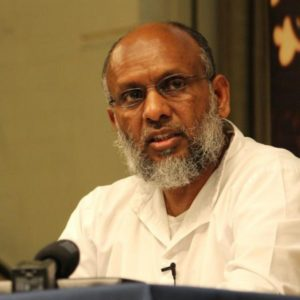
Today, on the 28th of May, 2026, with profound sorrow and regret, we received the news that the renowned poet of Urdu, the magician of ghazal, the conqueror of words, Mr. Bashir Badr, has departed from this world.
Indeed, to Allah we belong and to Him we shall return. May Allah forgive the deceased and overlook his shortcomings.
It feels as if the last lamp of the evening of Urdu ghazal has been extinguished. A poet who did not confine ghazal to books alone but brought it to the streets, crossroads, colleges, poetic gatherings, radio, lovers’ letters, and the common man’s conversation. He was among those few poets whose verses were on the lips of the masses like the budding leaves of spring on a tree.
Today, upon hearing the news of his passing, a corner of my heart awakened to forty years ago. Memories of the days when we were students at Nadwatul Ulama came flooding back. The world of Urdu poetic gatherings was different then. A mushaira was not merely a poetic session but a vibrant festival of culture, elegance, voice, rhythm, emotions, and language. Two great luminaries of these gatherings were Bashir Badr and Malikzada Manzoor Ahmad.
Wherever they sat, the gathering would light up. Young people memorized their verses as if they were memorizing chapters of the Quran. In colleges and universities, literary circles, tea houses, railway platforms—everywhere, Bashir Badr’s poetry could be heard. Some verses seemed to emerge not from the tongue but from the heart.
Who has not heard this verse:
“There must have been some compulsion,
No one becomes unfaithful without reason.”
This was not just a verse; it was the national anthem of broken hearts. How many lovers found dignity in their failures through this verse, how many covered their deprivations with its cloak and consoled their hearts.
Then there is his timeless verse:
“Let the light of memories stay with us,
Who knows in which street life’s evening may fall.”
This verse will perhaps remain alive in the history of Urdu ghazal forever. It encompasses the transience of life, the sanctity of memories, the gentle warmth of love, and the ruthlessness of time. This is why it did not remain confined to books but became titles of radio programs, appeared in films, and became part of people’s private lives.
And the famous verse he penned at the time of the Shimla Agreement in 1972:
“Be steadfast in enmity, but leave room,
So that if we become friends, we are not embarrassed.”
This is not just a verse; it is a summary of the entire psychological tragedy post the partition of the subcontinent. Politicians may have given countless speeches, but what Bashir Badr conveyed in two lines could not be expressed in any diplomatic communiqué.
Bashir Badr’s true greatness lay in saving ghazal from the burden of complexity and artificial philosophy. His poetry was free of wordy exhibition and pretentious noise. It flowed like a gentle evening breeze passing through trees. His verses contained pain but not screams, love but not vulgarity, philosophy but not dryness.
He was among the last poets of ghazal who kept the tradition of Mir and Ghalib alive in modern times. After him, ghazal either became a slogan, a fashion, or a literary puzzle. Bashir Badr was perhaps the last great poet of the classical public ghazal in India. He combined tradition with contemporaneity, illuminating the darkness of the present with the lamp of the past.
His life was no less than a ghazal. Born in 1935 in a town in Uttar Pradesh, he was educated at Aligarh Muslim University, where he also taught, and later served for years at Meerut College. However, the Meerut riots of 1987 changed his life. His house burned, his books burned, and many of his unpublished verses turned to ash. What greater tragedy for a poet than to see his memories, words, and dreams consumed by fire?
Yet perhaps this very pain deepened his poetry. He moved to Bhopal, but the melancholy of exile lingered in his tone. Some of his verses evoke the image of a man standing silently before his burning home, gazing at the sky.
The popularity of his verses was such that they transcended literary circles. His poetry lived on in Indian films, radio programs, and public conversations. The new generation, which perhaps did not read Mir or Fani, knew Bashir Badr. Young lovers, lonely elders, failed lovers, displaced people—all found their pain reflected in his work.
Bashir Badr’s poetry possessed a unique softness. Even when he inflicted wounds, it was with the petal of a flower. His verses did not knock on the heart’s door; they quietly entered within.
Today, with his passing, it feels as though the last elegantly dressed, eloquent, and cultured poet has left the gathering of Urdu ghazal. There will still be poetic gatherings, microphones, and applause, but that culture, that elegance, that gentle fire, that noble pain, may be seen less and less.
Consider one of his ghazals:
“Do not wander aimlessly, spend some evenings at home,
She is the true book of ghazal, read her quietly.
No one will shake hands if you embrace warmly,
This is a city of new temperaments, meet from a distance.
There are many turns on the path, some will come, some will go,
Pray to forget the one who forgot you from the heart.
These tales of love seem like advertisements to me,
Listen to what is unsaid, say what is unheard.
Sometimes beauty should be veiled in a lover’s attire,
If I walk adorned, you too should walk with me.
She is not the unveiled moon that no gaze affects,
Do not stare with such fervor for too long.
This yellow shawl of autumn near the sad tree,
This is the spring of your home, make it green with tears.”
Bashir Badr has departed, but his verses will remain alive for many days to come. Perhaps because a good verse never dies. The poet descends into the grave, but his words continue to walk in the hearts of people.
Tonight, as I recall his verses, my heart involuntarily says:
“Let the light of memories stay with us,
Who knows in which street life’s evening may fall.”
And now truly, an evening has fallen on Urdu ghazal.