Crisis of Traditional Education in Religious Schools
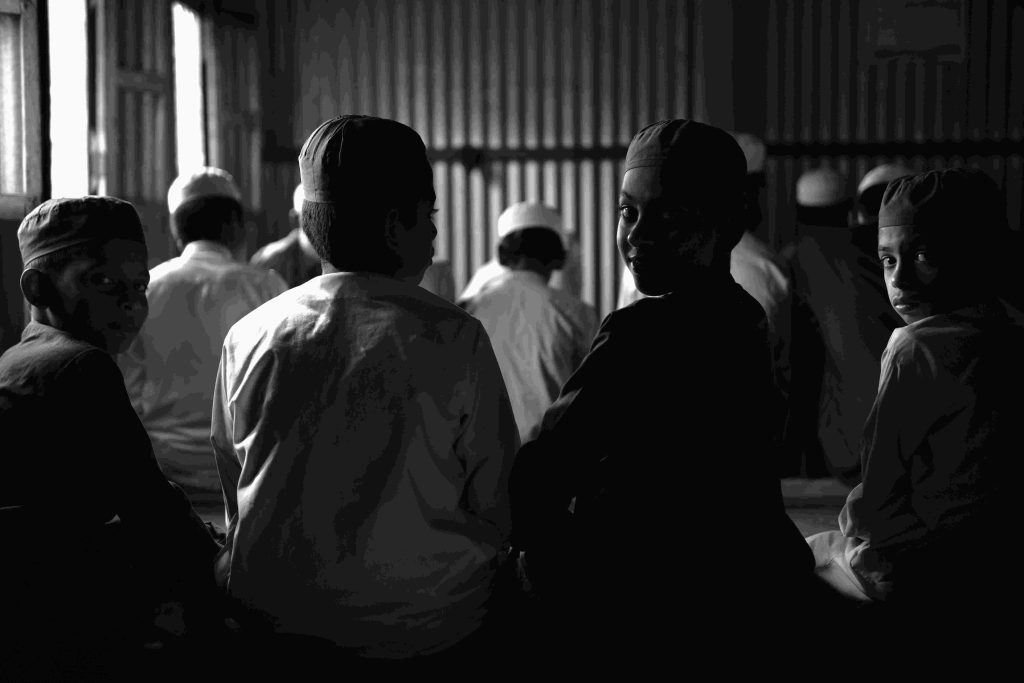
The religious madrasahs of the Indian sub-continent have played an historic role in safeguarding the Islamic sciences, the religious legacy and the civilisational identity. Their services—and the historical necessity of their existence—cannot be denied. Yet the benefit of any educational tradition cannot be measured solely by its past achievements; it is likewise necessary to see to what extent it is attuned to the intellectual, academic and social demands of its own age, and with what kinds of scholarly and practical competencies it is equipping the new generation. When the traditional madrasahs of the sub-continent are assessed on this criterion, a fundamental crisis becomes plain: this system, to a great extent, has come to regard the protection of narration (riwāyah) as the very purpose of education, while the understanding of that narration, its critical re-reading, its creative extension, and its meaningful connection with contemporary life do not receive adequate attention.
The purpose of education is not merely to store information in minds, or to create the capacity to repeat already existing dicta; rather, it is to develop in the student the ability of comprehension, analysis, reasoning and scholarly engagement with new problems. Within the intellectual tradition both riwāyah and dirāyah have their respective importance. Riwāyah preserves the corpus of knowledge and conveys it from one generation to another, whereas dirāyah enables one to understand that corpus, to reach its principles and foundations, to examine its proofs and to apply it to new circumstances. The balance between the two constitutes the real basis of scholarly training. When riwāyah is taken as the final goal and dirāyah as secondary or unnecessary, knowledge ceases to be a living intellectual force and becomes but a collection of preserved texts, repeated dicta and inherited opinions.
A conspicuous problem of the present educational system of the madrasahs is that memorisation, repetition, textual reading, and the teaching of commentaries and marginalia are given primary importance, whereas the training in comprehension, research, critical study and scholarly independence is relatively weak. For years the students read texts, commentaries and glosses, practise reproducing various scholarly opinions, and memorise the conclusions expressed by their teachers; yet they often do not learn how to analyse the scholarly background, argumentative structure, historical context, and limits and implications of any given passage. They become capable of transmitting statements, but fail to develop the capacity to examine their proofs impartially, to establish preference among them, or to draw guidance from them in a new situation. Thus, even after completing the stages of study, their aptitude to employ knowledge creatively and critically does not fully mature.
A still more fundamental aspect of this crisis is that the students remain distant not only from contemporary intellectual and academic discussions but, for the most part, do not even learn the traditional sciences with their true spirit and scholarly depth. To memorise the subsidiary questions of fiqh is not the same as acquiring fiqhī insight; to be acquainted with the terminologies of uṣūl al-fiqh is not equivalent to possessing the power of uṣūlī reasoning; and to read passages of ḥadīth and tafsīr is no guarantee of mastery in those sciences. Expertise in any discipline requires understanding of its basic principles, methodologies of reasoning, historical development, internal diversity and scholarly debates. When teaching is confined, ignoring these aspects, to the recitation of texts and the memorisation of opinions, the student certainly learns the results adopted by his own school of thought, but does not become fully acquainted with the scholarly method by which those results were reached. In this way even the knowledge of the tradition assumes a limited and superficial form.
That weak foundation transforms many graduates, rather than into independent scholarly personalities, into uncritical followers of their particular school, disposition and elders. For them, the criterion of the soundness of any opinion is often not its scholarly reasoning but whether or not it is attributed to their school or to their favoured figures. Respect for the elders is an important part of the scholarly tradition, but turning that respect into unconditional intellectual attachment and the uncritical acceptance of every statement causes intellectual stagnation. The real greatness of the elders lies not in declaring each of their sayings final and beyond reconsideration, but in benefiting from their scholarly method, strength of reasoning, courage in research and intellectual insight. To differ with their opinions or to undertake their critical appraisal is not disrespect; rather, it is a necessary demand of the continuity of the scholarly tradition.
This intellectual narrowness is strikingly expressed in the abundance of debates, refutations and sectarian polemics. Scholarly disagreement and critique have always been an unavoidable part of the Islamic intellectual tradition, yet their purpose should be the search for truth, the testing of proofs and the advancement of knowledge. When debate becomes confined to defeating the opponent, refutation-writing to declaring the other school of thought false, and scholarly activity to the defence of group identity, the process turns into an extension of sectarian affiliation rather than research. Regrettably, in the atmosphere of some madrasahs such activities are considered the measure of scholarly capability and religious service, even though they generate no new scholarly insight nor furnish any solution to the real problems of society. On the contrary, at the popular level sectarian prejudices deepen, religious differences turn into permanent disputes, and the moral and social strength of the dīn is consumed in internal conflict.
An important cause of this situation is likewise that madrasah education is, to a large extent, cut off from its contemporary social, political and intellectual environment. The modern state, democracy, economy, scientific progress, artificial intelligence, bio-ethics, environmental crisis, philosophy and the social sciences are subjects that relate to the fundamental questions of human life. Ignorance of them renders the religiously educated class incapable of understanding the issues of its age in their real complexity or of providing effective scholarly guidance upon them. Consequently, a class emerges which can engage in prolonged discussion about the juridical and sectarian disputes of the past but possesses limited understanding regarding the changes taking place around it, the problems of the populace and the collective challenges. In the face of poverty, injustice, economic exploitation, educational backwardness, political unawareness and moral decline, its scholarly activity often plays no noteworthy constructive role. The result is that, instead of contributing effectively to the intellectual and moral formation of society, the religiously educated group at times appears merely as a representative of a limited sectarian identity and confessional division.
This state of affairs does not accord with the original spirit of the Islamic intellectual tradition. The history of the Islamic sciences is not merely a history of transmitting and repeating statements; it is also a history of disagreement, rational reasoning, ijtihād, research and dialogue with new questions. Scholars such as Imām Abū Ḥanīfah, Imām al-Shāfiʿī, Imām Ibn Taymiyyah and Ibn Khaldūn directly confronted the scholarly issues of their age, examined the prevailing corpus of knowledge, and through their intellectual work added to the tradition. Their greatness lies not only in having preserved the earlier knowledge but also in having understood it, scrutinised it, interrogated it, and, in accordance with the demands of their time, derived scholarly conclusions. Including their names and writings in the curriculum is not sufficient; it is necessary that their scholarly method, research orientation and ijtihādī courage also become part of the educational process.
The demand for the reform of the madrasahs is not that the religious sciences or the traditional curriculum be abandoned, but that their teaching be aligned with their true scholarly purposes. A firm instruction in the Arabic language, fiqh, ḥadīth, tafsīr and uṣūl al-dīn is indispensable, yet these sciences must not remain confined to textual reading and the memorisation of dicta. Students should be trained in the analysis of proofs, comparative study, historical context, research dissertation writing, scholarly dialogue and independent derivation of conclusions. Likewise, it is necessary to provide suitable acquaintance with philosophy, history, sociology, psychology, economics and scientific methodologies, so that they may understand the intellectual and social issues of the contemporary world and relate religious knowledge to the real questions of human life. For this purpose it is also indispensable to create, within the educational environment, room for raising questions, tolerating disagreement, and subjecting the opinions of teachers and elders to scholarly examination.
The crisis of the madrasahs is not merely a matter of unfamiliarity with modern sciences or of the antiquity of the curriculum; its roots lie within the teaching methodology itself, the very conception of knowledge and the objectives of scholarly training. If, after studying the religious sciences for years, a student reaches neither their depths, nor acquires independent reflection and ijtihādī insight, nor can play a sound constructive role in the problems of the people and society of his age, then this system must review its aims and its manner of operation with seriousness. The ummah needs scholars who are guardians of the tradition and bearers of thought; who regard disagreement not as enmity but as a means of research; who benefit from their elders yet are not captive to them; and who, rather than being cut off from the human being of their time, are connected with his questions, difficulties and possibilities so as to provide religious guidance. The true renewal of the madrasahs is possible only when they cultivate, not merely the preservation of the tradition, but also the capacities to understand it, examine it, employ it and advance it.