Clarification regarding collective rhythmic dhikr gatherings
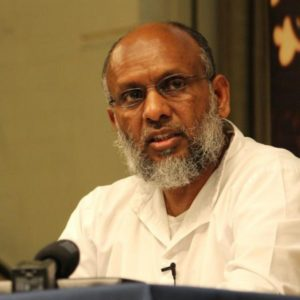
Shaykh Akram Nadwi
Muhaddith & Islamic Scholar
Clarification regarding collective rhythmic dhikr gatherings
By: Dr Mohammad Akram Nadwi
Oxford
Question:
Salam Shaikh Mohammed Akram Nadwi,
I hope you’re doing well, in shā’ Allāh.
I would like to gain a better understanding of a religious practice that I was recently
asked about brothers in the community who invited people to gather for food and a talk on īmān, and afterward, they turned off the lights and began performing dhikr, asking everyone to join them aloud in rhythmic remembrance of Allah, moving together in motion.
Could you please clarify whether such practices have any authentic basis in the Qur’an and Sunnah? Should Muslims accept, participate in, or promote these kinds of gatherings within their communities?
Jazāk Allāhu khayran for your time and guidance.
Mohammad Sirajuddin
Imam Islamic Society of Michiana
Answer:
Wa ʿalaykum al-salām wa raḥmatullāhi wa barakātuh,
May Allah bless you, and reward you for your concern for the guidance and unity of the community.
The clear and certain foundation of our religion is that the only true sources of guidance in Islām are the Book of Allah and the Sunnah of His Messenger ﷺ. These two are the ultimate criteria by which every belief, action, and religious practice must be measured. The Prophet ﷺ said: “I have left among you two things; you will never go astray as long as you hold fast to them, the Book of Allah and my Sunnah.” (Reported by Mālik in al-Muwaṭṭaʾ and others)
Any act of worship or religious practice that has no basis in these two sources, nor in the way of the rightly guided caliphs and the noble Companions, cannot be regarded as part of the dīn, no matter how good the intention or how appealing the form may appear.
With regard to collective dhikr performed in rhythmic unison, accompanied by movement, chanting, or gatherings in which the lights are dimmed and voices are raised together in a coordinated pattern, such practices have no foundation in the Qur’ān or the authentic Sunnah. The Prophet ﷺ and his noble Companions (raḍiya Allāhu ʿanhum) were known for their frequent remembrance of Allah, yet each would do so individually, either quietly or aloud, without fixed forms, musical rhythm, or synchronised motion.
As the scholars have clearly stated: That is: As for dhikr performed in the manner practised by some Sufis, with collective voices, a particular system, or an organised rhythm, this has no basis in the religion. It is not permissible for a Muslim to follow such a method. Rather, he must adhere to the way of the Messenger of Allah ﷺ, his rightly guided successors, and his Companions who followed his Sunnah.
Historically, such practices began among groups of Muslims who were sincere, pious, and devoted to worship and remembrance. Over time, however, their methods developed into forms and rituals that were not known to the early generations. Later, some even introduced drums, songs, and musical instruments into acts of devotion. These are clear innovations (bidʿah), against which the Prophet ﷺ warned us, saying: “Whoever introduces into this affair of ours that which is not from it, it is rejected.” (Ṣaḥīḥ al-Bukhārī and Ṣaḥīḥ Muslim)
Such practices, therefore, cannot be elevated to the rank of authentic guidance. True remembrance (dhikr) is indeed a noble and essential part of our faith, but it must be performed in the manner taught by the Prophet ﷺ with sincerity, humility, and mindfulness, in accordance with divine guidance, without innovation or exaggeration.
At the same time, it is essential to recognise that Muslims today are weak and divided. We must not allow such differences to become a source of hostility, argument, or division within our communities. If you possess the knowledge and ability to explain the matter clearly and gently, then advise others with wisdom, kindness, and good manners. But if you are unable to do so without causing discord, then neither join such gatherings nor oppose them publicly in a manner that leads to further division. Simply uphold the Sunnah and call to it with patience, gentleness, and sincerity.
May Allah guide us all to follow His Book and the Sunnah of His Messenger ﷺ with understanding, devotion, and unity.
FOLLOW THE الشيخ محمد أكرم الندوي CHANNEL ON WHATSAPP:
https://WhatsApp.com/channel/0029VbAxp2qGpLHHqQ3LoY0w