Alas for the Letters!

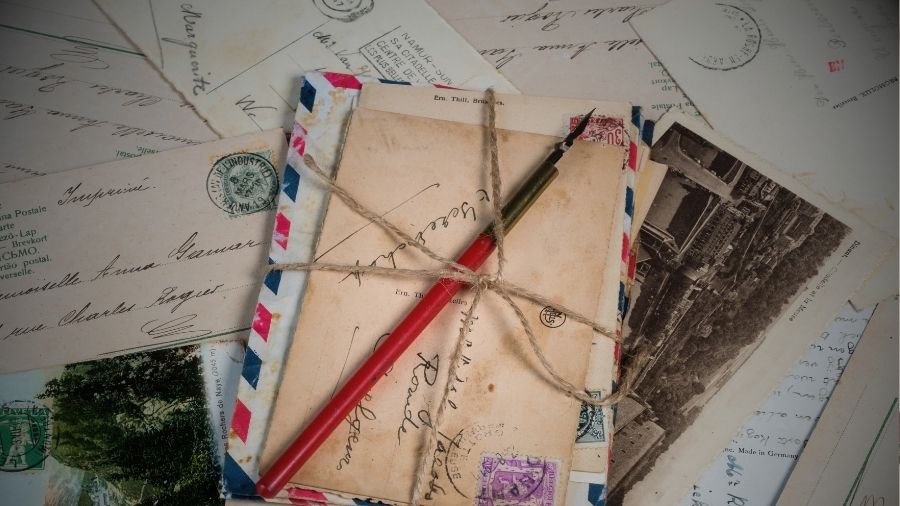
I am not among those who glorify the past in mourning, nor among those who curse the present out of discontent. Rather, I am of those who reflect upon the contours of faces and the lines etched upon them, reading in them the remnants of what has passed and the shadows of what is yet to come. What compelled me to speak on this matter was a long moment of silence, standing before an old wooden chest in a house abandoned by its inhabitants. I opened the chest, and there were letters—dozens of them—in varying handwritings, on yellowing paper, pulsing with life despite their stillness. I said to myself: what has happened to our age, that people no longer write to one another? Why is it that we write so much and yet say so little? It was from this that the following reflection emerged—not to lament paper, but to lament what we lost when we abandoned the art of letter-writing.
Woe to my soul in an age where values have changed, means have transformed, and with them, the meanings that once sheltered us from the harshness of isolation and protected us from the confusion of materialism and the dryness of the soul, have fallen. An age in which means have overwhelmed ends; in which warmth has fled from hands into machines, and from souls into screens. Among those lost meanings was something I once saw as a crown upon the head of humanity and a mirror among the finest ever produced by the human spirit: the art of correspondence and letters.
At its core, a letter was far greater than a piece of paper to be inscribed, and more valuable than ink to be spilled. It was a whole life folded into a small envelope. It was a hidden conversation between two hearts, unheard by others but resonating deeply within the soul. Words would travel from one inner world to another, unhindered by deserts or wilderness, not held back by seas or rivers, not delayed by night or day. It was eloquent speech, wise counsel, both a bringer of glad tidings and a warner. A letter was awaited like spring after a long winter; it was watched for like light in a tunnel whose end could not be seen.
Letters used to come to us trembling with emotion, arriving like the dawn itself. They were read with the eyes, yes—but before and after that, with a living heart, an alert mind, and a soul ready to receive. They were not read in order to be forgotten, but to be absorbed deep within, to be read again and again. Repetition never robbed them of their freshness or tenderness. Letters were not written merely to fulfil an obligation, but to carry a message—a message of feeling, of longing, of an absent presence, of a meeting postponed.
Then came the digital revolution, which brought with it many benefits—I do not deny them—but it also took from us some of the most precious qualities of the human being: the slowness of contemplation, the sincerity of expression, the warmth of emotion. Letters became notifications, yearning became a “status” to be shared, affection a mere “emoji” to be broadcast. Words were reduced until they were nearly stripped of meaning.
We lost the act of waiting—that dear companion who nurtured us in patience and turned every letter into a small celebration. We lost handwriting, which revealed the agitation of a heart, or hid its shyness. We lost the scent of place clinging to paper, the warmth of a hand impressed upon the page, the silent scribbles that spoke what the heart dared not express. Now we carry in our hands cold screens, spitting out words like machines feeding coal into fire—without warmth, without life.
We have lost living history. How did we come to know the anxieties of philosophers, the enchantment of poets, the longings of lovers, the weeping of mothers? How did we come to know what was stirring in the minds of those whose images or voices never reached us? We knew these things through their letters—those sheets not written for history, but which, despite that, became the truest record.
A letter was documentation untouched by the hand of the victor, uncorrupted by desire, unforgotten by time.
Perhaps the gravest loss in the disappearance of letters is that we were stripped of the rituals of attentive listening. We no longer know how to listen, nor how to wait, nor how to say, “We are here,” without expecting something in return. We forgot how to listen to what lies beyond the letters, to what resides in the silent lines, to what is not written but is still said, to what cannot be bought but is still felt. Money does not draw beauty to the soul.
Alas! If only the soul had a place to grieve, it would grieve the replacement of warm rituals with the press of a button; the exchange of hearts for symbols, voices for silence, presence for illusion. A letter, in its deepest meaning, was never merely a means of communication—it was a training in how to be human: to love in silence, to fear in silence, to whisper gently: I am here—do not extinguish that light.
Wā ḥuznāhu! If sorrow could avail its people… I do not write to weep over ruins, nor to beg the past for compassion, but to place my fingers upon the wound—perhaps we might reflect, and allow ourselves a moment—not to write “from the heart,” but to truly feel it, to make it part of every letter we compose. When a word is written with care and gentleness, and read with an open heart, the letter regains its rightful place—even without envelope or stamp.
Would that time might return—so we would not squander a moment of sincerity, nor postpone a pure feeling, nor extinguish a small lamp that may light the path for another. May the word become a balm, may the wound speak so that we may be healed, and may the heart, when it writes, write for mercy—not regret; for hope—not betrayal.
Original source: