The Importance of Knowledge Over Appearance
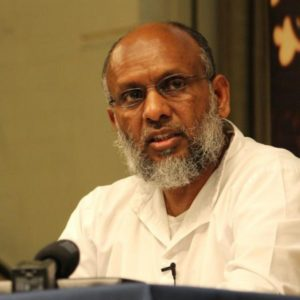
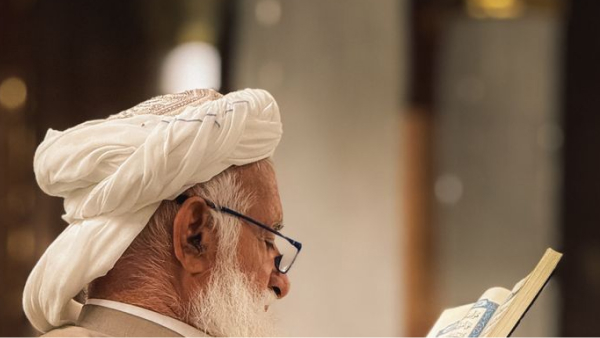
Consider, dear reader, the meaning embedded in this scene! One man stands immersed in worship, while another is appointed to oversee the outward proprieties of that worship. The first is present before his Lord; the second is, as it were, anxious that nothing exterior be left imperfect in the spectacle of devotion. He places upon the head of the worshipper a cap woven from leaves, yet fails to remove from his own mind the veil of ignorance. The cap has reached the head, but knowledge has not reached the heart.
Here the objection is not to wearing a cap; it is to that cast of mind which comes to regard some outward act as more important than the very teaching of the sharīʿah. The excellence (faḍīlah) of an action and the obligation (farḍiyyah) of an action are two distinct matters, and to preserve the distinction between them is the first sign of sound religious understanding. To cover the head may be a cultural convention, a personal taste or an etiquette related to religion; but to deem it a condition for the validity of ṣalāh, or to pass judgement upon the piety of the one who prays without it, is a mark of deficient knowledge and excessive preoccupation with appearances.
At times, on beholding the multitude of caps in India, one almost suspects that human heads were created only so that some form of cap might be placed upon them. The other functions of the head—thinking, understanding, raising questions, weighing arguments, discerning between truth and falsehood—seem to have been relegated far down the list. Concern remains for what is upon the head; there is no leisure for what is within it.
Yet on the evening of 16 October 2026, after maghrib, I witnessed an academic scene that bestowed a fresh meaning upon this reflection. Mawlānā Wathīq Nadwī held, with teachers and selected students, an intellectual majlis of questions and answers in the Riwāq Abū l-Ḥasan. This was no routine gathering yielding a handful of familiar phrases and customary counsels; here the axis of speech was knowledge, the pivot of the questions was reflection, and minds were directed to those issues through which true growth in scholarly life is attained.
The very nature of the questions disclosed the scholarly temperament of the sitting: How should one engage in external reading? What order ought to be observed in reading? Which principles should guide the selection of academic books? How may reading be made a means of intellectual training rather than a mere exercise in collecting information? These questions, outwardly concerned with the method of study, concealed within them a wider academic issue: a human being does not become an ʿālim merely by reading books; rather, scholarly personality is formed through correctness of reading, the ability to raise questions, analysis of proofs, and comprehension of acquired knowledge in its proper context.
Reading is not the counting of pages; it is the opening of the windows of the mind. To accumulate heaps of books is one thing; to derive from them the light of thought is quite another. Just as sitting by a river does not quench thirst, so dwelling among books does not necessarily acquaint a person with the true spirit of knowledge. For knowledge there is need, together with reading, of reflection, critical consciousness and intellectual honesty.
Thereafter the conversation moved to the major discussions of the history of the Qurʾān: What was the nature of the collection of the Qurʾān during the Prophetic period? In what form was the Qurʾān compiled in the time of Abū Bakr al-Ṣiddīq, raḍiya ʾllāhu ʿanhu? What measures did ʿUthmān al-Ghanī, raḍiya ʾllāhu ʿanhu, adopt in this regard? These questions relate to a most important chapter of Islamic history. They entail arranging events, distinguishing historical stages, and understanding the various aspects of the collection of the Qurʾān. The beauty of academic discourse lies in the fact that it does not consign familiar themes to mere second-hand information; rather, it invites one to comprehend their reality, context and mutual connection.
A significant portion of the session was devoted to the role of reason (ʿaql) and its limits. What is the proper function of reason? Does reason affirm and negate, or does it merely explain and clarify? To what, precisely, does reason refer when it interprets? These are not merely philosophical exercises; they pertain to the very methodology of knowledge. Why does a human being accept a claim? On what basis is an argument deemed sound? And how does one affirm or negate any reality on decisive grounds?
It is neither correct to enthrone reason as an unqualified sovereign over every question, nor to suspend it as an unnecessary ornament. Intellectual maturity requires that the scope of reason be recognised, its powers employed, and an awareness of its limits preserved. Regrettably, in our academic environment questioning is at times regarded with suspicion, as though to ponder a matter or to seek a proof were tantamount to weakening faith. Yet when a question is raised with integrity it does not crack the edifice of knowledge; rather, it provides an opportunity to test its foundations.
Within this same context, the question of firmness in principles and expansiveness in particulars and branches also held its own importance. Steadfastness in fundamentals does not mean adopting severity in every subsidiary issue, nor does breadth of vision imply the abolition of principles. A tree, though firm in its roots, grants freedom for its branches to spread; likewise, a sound scholarly personality may remain rooted in principles while displaying breadth and forbearance in derivative matters.
Another important aspect of the discussion concerned mutual rights among Muslims and the ethics of disagreement. Is it permissible, when criticising, to humiliate a Muslim? What rights do Muslims owe to one another? What are the etiquettes of difference? These questions matter because the true test of the benefit of knowledge appears when one disagrees with a person whose opinion one believes to be mistaken. Does one present evidence, or does one resort to insult? Does one refute the standpoint, or does one set about degrading the person who holds it?
Between critique and contempt lies the same gulf as between a lamp and an uncontrolled fire. The lamp gives light and shows the path, whereas fire can consume whatever lies about it. The purpose of critique is to indicate error, examine evidence and pave the way for correction; the aim of contempt is to wound a person’s dignity. The former can serve knowledge; the latter often nourishes prejudice.
One of the tragedies of our age is that some people regard disagreement as a personal affront. To them, to differ with their opinion is as though to assault their very person. Consequently, instead of replying to an argument with an argument, they attack the opponent’s intention, cast doubt on his sincerity, and bring his scholarly standing into question. Thus the real issue recedes and the debate is turned into a clash of personalities.
Listening to these discussions in the Riwāq Abū l-Ḥasan, I felt that the authentic milieu of knowledge is one in which a question is not deemed impertinence, study is not reduced to the acquisition of a certificate, reason is not suspended but its scope is understood, and disagreement is consciously prevented from hardening into enmity. Here the student does not merely collect information; he learns the art of thinking. He does not merely read the text, but strives to reach the thought that lies behind the text.
At the close of the session a thought emerged before me with complete clarity. I sensed that, in the world, and even within India, there surely exist places where the conception of the human head is somewhat different. There the dignity of the head is not determined by what is placed upon it, but by the light that burns within it. Heads were not created merely to bear caps; they were created to raise questions, to acquire knowledge and reflection, to employ reason, to weigh evidences, and, even in disagreement, to cling to justice.
This was, for me, the most significant impression left by that scholarly evening in the Riwāq Abū l-Ḥasan. On the one side stands the mentality that gauges piety by the colour, form and style of a cap; on the other side stands the scholarly tradition that invites reflection upon the method of study, the functions of reason, historical realities and the ethics of disagreement. In the first there is the clamour of outward symbols; in the second the quiet yet profound light of knowledge.
The need, therefore, is not that caps be removed, but that the veils of prejudice over minds be lifted. The need is not that cultural symbols be effaced, but that they not be allowed to become substitutes for reality. Let us wear the cap by all means; let us love our civilisation, certainly; let us cherish our religious identity, indeed; yet let us also remember that a cap can cover the head, but not the intellect; it can cast a shade upon the brow, but not upon the sun of thought; it can indicate an outward identity, but it cannot serve as a certificate of the inner state.
The scholarly greatness of a people is assessed not by the number of caps upon their heads, but by the questions that arise within those heads. The beauty of civilisation is found in dress as well, yet the spirit of civilisation is found in thought. Religious identity is, of course, important, but the light of knowledge, the refinement of character, the just employment of reason and forbearance in disagreement are the qualities that transform a man who merely possesses an identity into a person endowed with insight.
That evening in the Riwāq Abū l-Ḥasan further strengthened my conviction that the world has no need of heads that know only how to wear a cap of a particular design; it needs heads that know how to raise questions, how to assess evidence, how to traverse the arduous paths of research, how to be just in disagreement, and how to correct their own opinion before knowledge.
The chief adornment of the head is not the cap but the intellect; its greatest treasure is not outward form but knowledge; and its highest honour is not the colour of the cap it bears, but the degree to which it possesses enlightened thought, pure character and magnanimity.
There is no harm in wearing a cap; the harm lies in placing the cap in command over the intellect. It is good that there be a cap upon the head, but there must also be thought within the head. It is respectable that the brow bear the mark of religious identity, but integrity in conduct and justice in speech must accompany it.
Otherwise we may find ourselves so busy safeguarding our caps that we forget to safeguard our intellects, so intent on maintaining outward identity that we neglect inner cultivation, and so enamoured of covering the head that we allow the lamps within it to be extinguished.
For the real question is not which cap is upon the head; the real question is what is within the head. Perhaps that is why, after that evening in the Riwāq Abū l-Ḥasan, the heart could not help but say: in this world there are some heads that were not created to wear caps; they were created to think, to understand, and to be illumined by the light of knowledge and reflection.