A Visit from Al-Huda International

Today, a noble and dignified delegation from Al-Huda International Welfare Foundation, under the leadership of its esteemed head, Dr Farhat Hashmi, honoured my humble abode with their visit, bestowing upon it grace and dignity through their presence. It was one of those blessed moments that do not merely bring fleeting joy, but leave a lasting spiritual elation deep within the heart. Dr Farhat Hashmi is a personality who has devoted her life to the daʿwah and dissemination of the Dīn. Her gaze penetrates the depths of knowledge and understanding, and through her discourses, hundreds of thousands of women have transformed their lives.
A blessed visit
Though outwardly this meeting appeared to be a formal introduction, in reality it became an enlightening spiritual gathering illuminated with sincerity and knowledge. The arrival of this caravan of truth and purity transformed my modest dwelling into an assembly of intellectual and spiritual vibrancy. A state of inner delight and serenity settled over the heart. Every moment of our conversation in the company of these guests of knowledge and religion was rich with guidance and full of insight and reflection.
Dr Farhat Hashmi and Al-Huda
Dr Farhat Nasim Hashmi, whose name and scholarly contribution require no introduction, was born on 22 December 1957 and hails from Pakistan. She earned her PhD in Islamic Studies from the University of Glasgow in Scotland. A significant chapter of her academic journey is linked to the International Islamic University in Islamabad, where she served as a lecturer and later as an assistant professor in the Faculty of Usul al-Dīn.
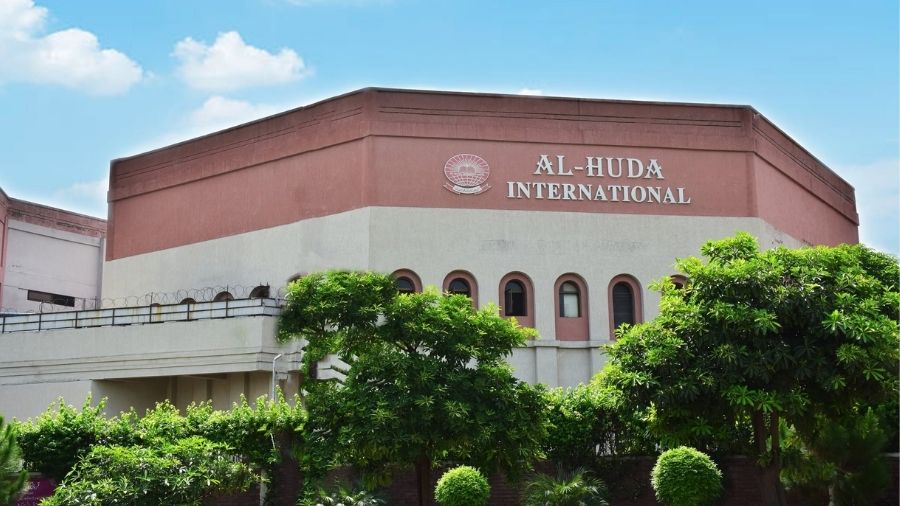
In 1994, she founded the Al-Huda International Welfare Foundation with the aim of educating women in the Qurʾān and Sunnah and helping them become conscious, practising Muslims. Today, the organisation has expanded beyond education into charitable work as well.
In 2004, the foundation launched the Al-Huda Institute in Mississauga, near Toronto, Canada, offering structured courses based on the exegesis of the Qurʾān and ḥadīth. The influence of this institute is not limited to North America but has extended as far as Australia. Dr Farhat Hashmi’s name is recognised both in Pakistan and abroad as that of a prominent Islamic scholar. Attendance at her lectures has at times reached ten thousand people. According to conservative estimates, more than fifteen thousand women have received formal certificates and diplomas through her institution, while hundreds, indeed thousands, have benefited informally from her teachings.
It is particularly noteworthy that many of her followers are modern, educated women from relatively affluent social and economic backgrounds. This itself demonstrates that the thirst for knowledge of the Dīn is not confined to those enrolled in madāris, but also exists in hearts immersed in the allure of modernity.
Conversations on daʿwah and scholarship
When the sun was still shining in its full brilliance and the day retained its vibrant light, at precisely 4 p.m. this honourable delegation, filled with the spirit of knowledge, sincerity, and devotion to the religion, arrived at my humble doorstep. The weather was considerably warmer than the previous week. The air carried some heat, and the sun blazed with its customary intensity. Yet the arrival of these guests turned the heat into a spiritual breeze, as though a gentle wind had passed over a burning desert.
The atmosphere, once slightly restless, was transformed into a state of inner calm. The meeting did not remain limited to a formal exchange but opened the door to many discussions on knowledge and thought. We spoke at length about daʿwah, women’s education, strategic approaches to propagation, and the demands of the present age, with sincerity at the core and intellectual depth enriching the discussion.
Dr Farhat Hashmi shared a brief yet impactful overview of her religious and reformative mission. She explained that her goal is not merely to educate but to breathe a new spirit into Islam, a spirit rooted in a correct and profound understanding of the Qurʾān and Sunnah. She emphasised that she does not advocate harshness, coercion, or confrontational methods of daʿwah. Rather, she desires that her students display the beauty of Islam through their actions, influencing others by their upright character and noble conduct.
Members of the delegation posed questions on various juristic issues, including those related to women’s travel, the female voice, and related matters. In response, I submitted that we must always adopt leniency and broad-mindedness regarding such subsidiary issues. Any action carried out within the bounds of the Sharīʿah, and based on a sound school or recognised opinion, is acceptable. In this complex age, people are embroiled in disputes over matters that are neither mentioned in the Qurʾān nor will they be questioned about on the Day of Judgement. What is needed is a return to foundational principles and a path of tolerance and breadth when dealing with secondary and peripheral matters.
Appreciation for scholarship
I found great delight in learning that Dr Farhat Hashmi and the honourable women accompanying her were familiar with my writings and had studied them regularly. Hearing some of my thoughts and articles recited in their own words was a moment of immense joy. It felt like a tremendous reward for any writer. The feeling one experiences when one’s words are not only read but truly understood is profound, and that moment brought such a feeling to my heart.
During the session, the delegation’s attention was drawn to one of my major works, al-Wafāʾ bi-Asmāʾ al-Nisāʾ, a scholarly compendium on the biographies of distinguished Muslim women who played a luminous role throughout Islamic history. The delegation attentively perused several volumes, turning the pages and expressing admiration for its academic rigour, literary style, and systematic arrangement.
Dr Farhat Hashmi not only expressed a desire to obtain a complete set of the work, but also inquired about the motivations behind such a monumental effort. She showed particular interest in some of the renowned women featured in the book. Her questions were not superficial. Rather, they bore the mark of a researcher’s eye, a mufassirah’s insight, and a murabbiyah’s concern. She was not merely a reader, but a discerning mind capable of perceiving the meanings that lie beyond the words.
During the meeting, some of the other members of the delegation also spoke of my work The Boy in the Gown, expressing appreciation for its style, unique subject matter, and emotional resonance. They described it as a distinctive, effective, and literarily rich work.
A gathering that left its mark
This blessed and meaningful gathering continued for about two hours. The atmosphere of the sitting was imbued with knowledge, sincerity, love, and contemplative seriousness, a subtle quality that lingers like a fragrance around the soul. When the gathering concluded, neither the heart nor the mind was left empty. There remained a sense of peace, intellectual exhilaration, and spiritual sweetness, much like the lingering scent of sacred knowledge and religion, leaving a lasting impression upon both heart and mind.