Under the Shadow of the Hūmā

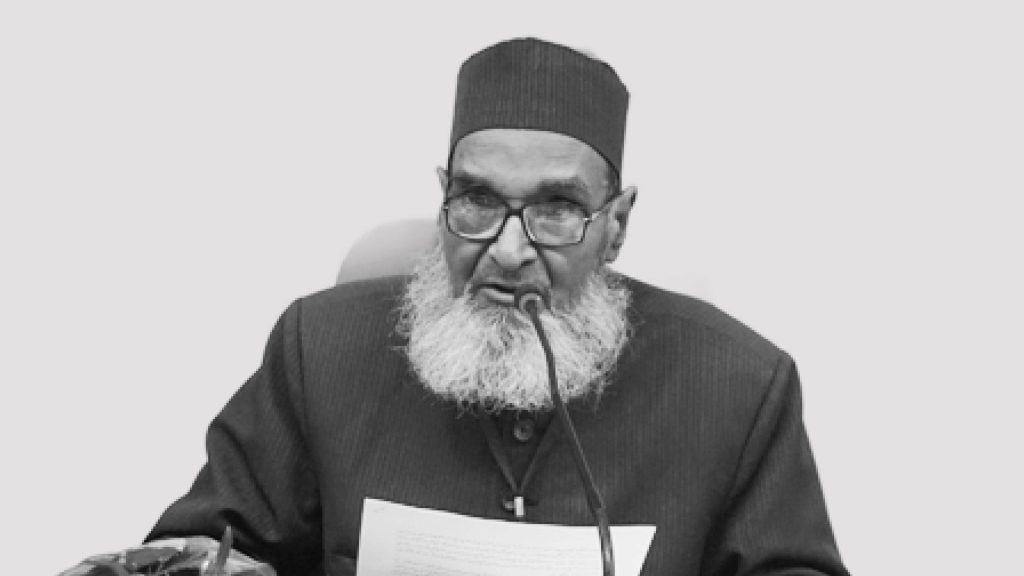
I have written a number of articles about Mawlāna Shahbāz, may Allah have mercy on him, and intend to write more. The present article, titled as above, is part of that series. While my other writings detail what I learned in his company, here my purpose is to narrate the nature of my relationship with him and to describe his general method of teaching.
Three Influences
My life has been a journey through three intellectual tendencies, consisting of a process of combining, critiquing, and prioritising these orientations. These were the specific traits of the madrasahs where I studied. A madrasah is a genus, and each institution is a species. The general characteristics are shared among all madrasahs, but their specific attributes differ. Distinguishing between these levels is not some novel discovery—it is in fact the story of the entire universe. This introduction should be kept in mind, and any explanation of affiliations should not be taken—contrary to the author’s intent—as disparagement, mockery, or sarcasm.
1. During the time in question, my village had two scholars who were graduates of Dār al-ʿUlūm Deoband. There were none affiliated with Islāh or Nadwa. The general public was connected to the Tabligh Jamāʿat. I began my studies in Persian and Arabic over nearly three years at Madrasah Diyāʾ al-ʿUlūm, Māni Kalan, in Jaunpur. The teachers at Diyāʾ al-ʿUlūm were graduates of Maẓāhir al-ʿUlūm and Dār al-ʿUlūm Deoband—pious and hardworking men who upheld the traditions of both institutions. I learned much from them and studied some of Mawlāna Thānawī’s books under their guidance. This led to a lasting relationship with his works, particularly Tarbiyat al-Sālik, which remains part of my regular reading. Later, too, many of my teachers and those who authorised me were graduates of Deoband and Maẓāhir al-ʿUlūm. Two among them had a particularly deep impact on me:
(a) Mawlāna ʿAbd al-ʿAlī Sahib Maẓāharī, may Allah have mercy on him, whose influence I have written about in one of my articles.
(b) Mawlāna Muḥammad Yūnus, Shaykh al-Ḥadīth at Maẓāhir al-ʿUlūm, may Allah have mercy on him, about whom I have written two books—one in Arabic and another in Urdu. Both of these men were remarkably free from the constraints of school and sect.
2. After that, I spent three years at another institute—Mawlāna Āzād Taʿlīmī Markaz in Asraḥat, Jaunpur. Here, teachers from Deoband and Islāh worked together. The thought process of the Islāhī teachers was novel to me. I greatly benefited from two of them:
Mawlāna ʿAbd al-Quddūs Islāhī (may Allah preserve him), and
Mawlāna Shamīm Islāhī, may Allah have mercy on him, who stood out for his habit of viewing every matter with fresh eyes. He was extraordinarily intelligent. Whichever book he taught, he did so in an investigative and independent manner. He would confidently disagree with authors and spoke on any topic with the authority of a specialist. I don’t recall any question being asked—whether on language, literature, science, or politics—without him providing a thorough and satisfying answer.
3. I then enrolled at Dār al-ʿUlūm Nadwat al-ʿUlamāʾ, where over time the specific attributes of Nadwa began to dominate me.
Nadwa’s greatest favour was in helping me realise the importance of the religion and the ummah over any particular school or group. All the teachers at Nadwa were stars in their own right, true exemplars of the phrase: “None here is lesser than another.” However, I was not able to equally benefit from all of them due to my own shortcomings. Various factors led to my closeness to two teachers in particular:
Mawlāna Muḥammad Wāḍiḥ Rashīd Nadwī, may Allah have mercy on him, from whom I gained the most in Arabic writing, Islamic thought, and ethics and character. I’ve published a book about him in Arabic from Morocco and am working on another in Urdu.
The second was Mawlāna Shahbāz, may Allah have mercy on him, who sharpened my intellect and taught me to examine everything deeply.
My Relationship with Mawlāna
My entrance exam at Nadwa was conducted by Mawlāna Saʿīd al-Raḥmān Aʿẓamī and Mawlāna Shahbāz. From that moment, I felt a deep affinity for the latter:
> “Just a passing glance at him
And a calamity it became.”
I was given accommodation in Sulaimaniya, which had strict rules. No one was allowed to leave the dormitory, so I only saw Mawlāna Shahbāz in class. He taught us tafsīr of the Qurʾān and Uṣūl al-Shāshī. He was a teacher, not an orator. As students were more impressed by speakers, many failed to appreciate his greatness. Every word of his felt valuable to me. I realised he was the only teacher who was truly a muḥaqqiq (critical scholar) and mujtahid (independent jurist). He did not merely repeat commentaries or restate standard scholarly positions. His lessons always brought fresh insights. He would state subtle and profound points in a simple way without any build-up, which is why many students didn’t grasp their value.
After a year, I was moved to the third floor of Athar Hostel, which Mawlāna supervised. Since he had no family with him, he also lived in a room there. That allowed me greater opportunities to benefit from him. He would often come to my room in his free time, sit on one side of my bed, and I would engage him in discussions—often debates. My roommates disliked this and would leave the room for the mosque to study. During exam periods, he would sit in my room from after Fajr until midday—sometimes also after Maghrib and then again after ʿIshā, well into the night. There were times our debates went on until one o’clock in the morning, yet he never missed his tahajjud prayers.
I was very close to him, and he to me. This is evident from the kind letters he wrote to me, and anyone who was at Nadwa at the time can testify to it. Once, I went to Raebareli for iʿtikāf during Ramaḍān. After Fajr, I met Mawlāna and shook his hand. We talked on many topics until nearly Dhuhr. The students there said to me, “It’s good you came—otherwise Mawlāna had no one to converse with.” It saddened me that students did not appreciate his greatness or benefit from him as they should have. Once I asked why he didn’t share these unique points in class. He said, “I used to try in the beginning, but students weren’t interested. In the end, they only insisted I teach them what would come in the exam. So, I resorted to formal teaching.”
Freedom from Affiliations
The most important thing I learned in his company—his defining trait—was freedom from all affiliations. He would critique the Ḥanafīs, Shāfiʿīs, Mālikīs, Ḥanbalīs, and Ahl al-Ḥadīth; point out the shortcomings of the Ashʿarīs and Māturidīs; critically examine the exegetes, hadith scholars, and jurists; and highlight the flaws of Deobandism, Islāhism, and Nadwism. He would decisively discuss taṣawwuf and the major Sufis, and he would identify the deficiencies of Jamāʿat-e-Islāmī, Tablighī Jamāʿat, and other Muslim movements. He liberated our minds from any over-awe of modern thinkers, scholars, or writers.
These critiques were always scholarly and reasoned. Sometimes one topic would span days of discussion. My certainty and conviction in matters I debated with him only grew. His aim wasn’t to cut our ties with our intellectual inheritance or modern scholars and groups, but to ensure that whatever opinion we held, we held it with full insight.
Insight was the essence of all his educational efforts. He wanted us to develop an investigative mindset and not form opinions based on blind respect, laziness, or intellectual stagnation. He would sometimes say during discussions, “You still carry remnants of your earlier training.” I never heard him say this about anyone else. Among my peers who debated him, three stood out besides me: Wazīr Aḥmad Aʿẓamī, Aftab ʿĀlam Aʿẓamī, and Ḥashmat Allāh. All three were accomplished Nadwīs.
We used to say that Hashmat Allāh Sahib was the most deeply Nadwī among us, perhaps because of his seriousness and thoughtful speech. Since I always debated with Mawlāna, I would bring into our discussions everything I had read or learned, even things that diverged from Nadwī thought. In such cases, he would call me fanciful or attribute my views to the legacy of my earlier education.
Those walking the path of knowledge must cling to truthfulness and integrity. It is in this spirit that I confess: Mawlāna’s observation about me was absolutely correct. Despite my desire and efforts, I was never able to fully detach from my earlier affiliations. Their influence remains in me. Just as true faith requires hijrah, sound intellectual vision requires abandoning blind imitation. Few people are truly free from taqlīd. In our times, three figures especially embodied this quality: ʿAllāmah Shiblī Nuʿmānī, Mawlāna Ḥamīd al-Dīn Farāhī, and Mawlāna Abū al-Kalām Āzād—may Allah have mercy on them all.
Pure Nadwism
Mawlāna wanted us to rise above sectarian and ideological affiliations. He considered this to be the essence of true Nadwism. I have a piece titled “To be Nadwī is to be free of Nadwism”, in which I elaborate on this point. His training deeply impacted me and instilled in me a distaste for identification with any school or ideology. I love the religion and its foundational principles, and I fervently wish that Muslims be known solely by Islam—that all other identities either disappear or become irrelevant. That is, in truth, the essence of Nadwism.
Intellect and Insight
In my view, the most important outcome of his training was the use of reason and insight. It freed me not only in religious sciences but in every aspect of life from imitation, and taught me to evaluate everything by sound intellect and honest reasoning. I became convinced that every claim without evidence is inadmissible, and that the so-called “proofs” upheld by sects and movements should not be accepted without investigation:
> “Not every hand is the hand of reason’s brilliance,
Not everyone with a staff is Mūsā.”
As a result, I came to see every element of the religion as natural and rational. Praise be to Allah, the Islamic thought imparted by Mawlāna Wāḍiḥ Rashīd Nadwī and the training in reason and reflection provided by Mawlāna Shahbāz have protected me from all forms of intellectual subservience here in the West.
Heart and Soul
Alongside intellect and reasoning, Mawlāna was also deeply aware of the needs of the heart and soul. He upheld them fully. This led him to an affinity with taṣawwuf. He first gave his oath of allegiance (bayʿah) to Shāh Wasī Allāh Fatḥpūrī, and after his passing, to Mawlāna Abū al-Ḥasan ʿAlī Nadwī. He also benefited from Mawlāna Muḥammad Aḥmad Partābgardhī and Mawlāna Abrār al-Ḥaqq, may Allah have mercy on them. He was consistent in his tahajjud prayers, performed salāh with excellence, and constantly reminded me to nurture a relationship with Allah. When I went for ʿUmrah, he wrote to me (10 Rabīʿ al-Awwal 1407H):
> “It is a matter of destiny that you’ve reached that blessed land—so many people died in longing, crying and praying for this journey. This is a divine gift for those whom the Lord chooses.”
For him, the Qurʾānic principle of tazkiyah was the foundation. It shaped his character, and his connection to taṣawwuf was rooted in this very principle. The Qurʾān was his first and last book. He would encourage us to study and teach it. When I was teaching Qurʾān to some students in Oxford, he wrote to me (24 Rabīʿ al-Awwal 1419H):
> “If, through your efforts, even a few people develop a taste for understanding the Qurʾān and become appreciative of divine speech, perhaps this very work will be the reason for your acceptance. For truly, to reach the Qurʾān is to reach God.”
> Dar sukhan makhfī manam chu bū-yi gul andar gulāb
Har kih dīdan mayl dārad dar sukhan bīnād marā
Source:
Original source:
View the original Telegram post.