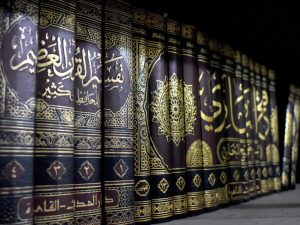
Authenticating the Ascription of Ṣaḥiḥ al-Bukhārī to its Author


Source: https://t.me/DrAkramNadwi/161
—
In the name of Allah, the Abundantly Merciful, the Ever Merciful
Authenticating the Ascription of Ṣaḥiḥ al-Bukhārī to its Author
(Part 1 of a series of articles covering the authentication of the ascription of Ṣaḥiḥ al-Bukhārī to its author, the value of the copy of al-Firabrī, and the explanation of some difficult hadiths in the Ṣaḥiḥ)
By: Shaykh Mohammed Akram Nadwi, Oxford
Translated by: Tariq Pandor
—
Doubt on the Ascription of Ṣaḥiḥ al-Bukhārī
Someone is raising questions that cast doubt on the ascription of the Ṣaḥiḥ to its author. He bases his doubt on:
The disappearance of Imam al-Bukhārī’s (d. 256 AH) original copy and its unknown whereabouts.
The fact that narrators from al-Bukhārī differed on additions, subtractions, and word order.
The claim that al-Firabrī was accused of manipulating his copy.
No one verified al-Firabrī’s trustworthiness until Abu Saʿd al-Samʿānī (d. 562 AH), two centuries after al-Firabrī.
The presence of hadiths in al-Bukhārī that conflict with the Qur’ān and reason.
—
Request for a Response
They asked: Please provide us with a critical academic response to lift our doubts and satisfy our hearts about the Ṣaḥiḥ.
—
Shaykh’s Response
I said: This should be termed an accusation, suspicion, or delusion rather than a question or doubt. I will resolve it in a series of articles, the first being on the ascription of the Ṣaḥiḥ to its author. I will focus on five points:
1. An investigation into the real reason behind the doubts on Ṣaḥiḥ al-Bukhārī
2. The difference between verifying the authenticity of a hadith and verifying the authenticity of a book’s ascription
3. Evidences for the ascription of the Ṣaḥiḥ to al-Bukhārī
4. Examples of the authentication of other books’ ascriptions
5. The superiority of al-Bukhārī over other books
—
1) Investigation Into the Real Reason Behind Doubts
Know that authenticating or weakening hadiths requires:
Proficiency in preserving hadiths.
Mastery of Muḥaddithīn principles.
Thorough knowledge of hadith narrators (ʿIlm al-Rijāl).
Understanding hidden defects in hadith (al-ʿIlal).
A deep fear of Allah and understanding of the responsibility involved.
Most people fall short of this level of knowledge and responsibility, yet they are annoyed with hadiths in Ṣaḥiḥ al-Bukhārī that clash with their desires or norms. Instead of rejecting individual hadiths, they find it easier to cast doubt on the entire book. This enables them to pick and choose the hadiths they agree with while rejecting the rest.
—
2) The Difference Between Verifying Hadith Authenticity & Book Ascription
Verifying the authenticity of a hadith depends on:
The strength of its chain of narration (sanad).
This applies to all reports, including those of the Prophet صلى الله عليه وسلم and others. The chain is essential.
On the other hand, authenticating the ascription of a book depends on:
Whether the ascription was known during the author’s lifetime.
Circulation and study of the book by the author’s students and scholars.
Scholars’ reliance on the book and opponents’ responses.
Manuscripts’ prevalence.
The content and style matching the author’s known works.
3) The Evidences for the Ascription of the Ṣaḥiḥ to al-Bukhārī
I am ashamed to live in a time when one needs to prove the sun and its light, and to state the obvious. In any case, I will summarise for you these evidences in a series of points:
1. Bukhārī’s Pre-Eminence: His pre-eminence in this field was acknowledged by his teachers, such as ʿĀlī al-Madīnī, Yaḥyā ibn Maʿīn, Aḥmad ibn Ḥanbal, and others, and he presented the Ṣaḥiḥ to them.
2. Widespread Knowledge: The knowledge of the Ṣaḥiḥ being his work was widespread among his contemporaries, including Abū Zurʿā al-Rāzī, Abu Ḥātim, Muslim, and others. In the introduction to Muslim, there is a clear allusion to it.
3. Fame Amongst Students: The Ṣaḥiḥ was famous among his students and their students, and it continues to be well-known to this day. In the Jāmiʿ of Abu Īsā [al-Tirmidhī] (d. 179 AH), the book is referenced by name as al-Saḥiḥ or al-Jāmiʿ multiple times.
4. Circulation and Study: The book was studied, critiqued, and circulated amongst academics. al-Nasaī (d. 303 AH) used it for his chapter headings and hadith narrations in his Sunan. Ibn Khuzaimah (d. 311 AH) praised it, and al-Dāraqutnī critiqued it, agreeing or disagreeing with its contents.
5. Mustakhrajāt: The imams of hadith narrated hadiths of the Ṣaḥiḥ through their own chains (al-Mustakhrajāt), further affirming its authenticity.
6. al-Ḥakim’s Review: al-Ḥakim reviewed the Ṣaḥiḥ (in his al-Mustadrak), and scholars such as al-Baihaqī referenced it.
7. Transmission Chains: The isnads (chains of narration) of the book to Bukhārī have spread and continued up to the present day.
8. Transmission by Teachers: People in every generation have been eager to receive the book from their teachers through audition (samāʿ), recitation (qirā’ah), and license to transmit (ijāzah).
9. Numerous Manuscripts: The substantial number of manuscripts of the book, many in the handwriting of expert imams, is cause for astonishment.
10. Scholarly Attention: The book has received significant attention from scholars through annotations, abridgements, and explanations.
11. Content as Proof: The book itself, through its hadiths, supporting chains (mutābaʿāt), suspended hadiths (muʿallaqāt), chapter headings (tarājim), divisions (tabwībāt), and order, testifies to Bukhārī’s authorship, except for known additions noted by al-Firabrī and others.
—
4) Examples of the Authentication of Ascription for Other Books
The writings of great figures such as Plato, Aristotle, Sībawaih, al-Shāfiʿī, Ibn Jinnī, and others—both Muslim and non-Muslim—do not rely on chains of narration (isnads). Rather, they are authenticated by a series of factors, the majority of which have already been mentioned in the previous point.
—
5) The Superiority of Ṣaḥiḥ al-Bukhārī Over Other Books
Ṣaḥiḥ al-Bukhārī is superior to all the aforementioned books when it comes to the authentication of its ascription to Imam al-Bukhārī. In terms of all the elements that support the ascription of authorship of works like those of Aristotle or Ibn Sīnā, these elements—and more—are found in Bukhārī’s text, making it even stronger in its authenticity.
They said: We are convinced that the book is authored by Imam al-Bukhārī.
—
Final Thoughts
I said: We recognize authentic poetry from poets such as al-Saʿdī and al-Shīrāzī and distinguish it from forgeries. Similarly, fabricated works attributed to Urdu poets like Ghālib, Iqbāl, and Mīr Taqī Mīr have been identified by literary experts. The same applies to Waliyyullah al-Dihlawī, whose false attributions were uncovered by critics. Once, a critical editor published a collection of treatises attributed to Waliyyullah, which was contested. The issue was brought before Mawlana Abul Kalām Āzād, who declared that the language loudly proclaimed it to be the work of Shah Waliyyullah.
I said: Praise Allah, mighty and majestic is He, for this book, Ṣaḥiḥ al-Bukhārī, which is unparalleled in terms of authenticity, strength, and abundance of knowledge and wisdom.