Language and Literature: Shared Human Heritage

Language and Literature: A Shared Heritage of Human Civilization
A profound study of human history highlights the truth that human intellectual, cultural, and spiritual life is shaped and evolves through the mutual cooperation of various sciences and arts. From the very beginning, humans have acquired knowledge through their needs, experiences, observations, and intellectual pursuits, which later took the form of different sciences and arts. Thus, the construction of civilizations, the organization of societies, the formation of moral values, and the awakening of intellectual consciousness are all manifestations of knowledge. From one perspective, sciences and arts can be divided into two major categories: those that relate to human material, cultural, and social needs, and those that guide his religious, moral, and spiritual life.
The first category includes sciences like science, medicine, commerce, economics, engineering, architecture, astronomy, politics, sociology, and all other disciplines that pertain to the external and cultural aspects of human life. These sciences emerge as a result of human experience, observation, intellect, and collective thought. Their purpose is to make human life easier, more organized, and advanced. These sciences provide material resources to humans, lend stability to societies, and expand civilization. Medicine treats human bodily ailments, engineering lays the foundation for construction, economics organizes the economic system, and science guides humans in understanding the phenomena of the universe.
A fundamental characteristic of these sciences is that they are not the property of any one nation, race, or religion but are considered the shared heritage of all humanity. The philosophical thoughts of Greece, the mathematical investigations of India, the medical and scientific contributions of Islamic civilization, and the industrial development of Europe are all different stages of a continuous journey of human knowledge. No nation can claim that knowledge is solely its inheritance, as human intellect and experience are not confined to any particular race or religion. The nature of knowledge is universal; wherever it originates, it ultimately becomes a source of benefit for all humanity.
The second category comprises religious sciences, which include the Quran, Hadith, Fiqh, Tafsir, Usul al-Fiqh, Ilm al-Kalam, and Sufism, among others. The source of these sciences is divine revelation, religious tradition, and the teachings of the prophets. Their purpose is to acquaint humans with their Creator, provide moral training, and offer the correct principles for living life. If human sciences organize the material and cultural life of humans, religious sciences construct their inner self, ethics, and spiritual consciousness. These sciences make humans realize that life is not merely about material comforts but also has a moral and spiritual purpose.
Religious sciences instill in humans a sense of accountability, piety, justice, compassion, selflessness, and moral responsibility. They teach that true greatness lies in one’s morals, character, and servitude to Allah, not merely in material progress. This is why those civilizations have proven enduring in human history that preserved moral and spiritual values alongside material progress.
Language and literature are connected to human sciences and are among the fundamental pillars of human civilization. Language is not merely a collection of words or a means of expression but is the guardian of human thought, culture, history, emotions, and collective consciousness. Humans convey their thoughts, emotions, experiences, concepts, and observations to others through language. It is language that preserves human experiences across generations and maintains the continuity of civilization. Without language, knowledge cannot be transferred, history cannot be preserved, and civilization cannot maintain its identity.
Similarly, literature mirrors human emotions, experiences, and collective consciousness. Literature preserves a nation’s dreams, fears, hopes, deprivations, successes, moral values, and cultural trends. Poetry and literature are not merely about verbal embellishment or stylistic beauty but are expressions of the human soul and collective experience. Studying a nation’s literature is essentially studying its psychology, culture, history, and intellectual temperament.
This is why language and literature cannot be confined to any particular nation or religion. Although every language develops in a specific cultural environment, over time, it becomes part of the intellectual and literary capital of all humanity. Thus, Greek literature, Persian poetry, Arabic eloquence, Sanskrit philosophy, English literature, and Urdu poetry are all part of the shared repository of human civilization. They contain the breadth of human experience that transcends racial, geographical, and religious boundaries.
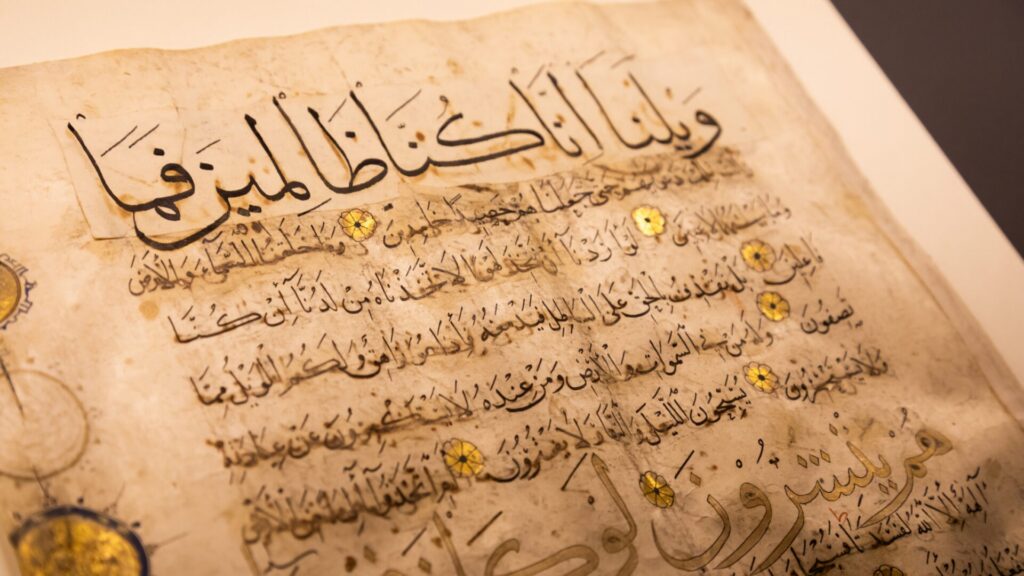
The Arabic language is a particularly bright example of this truth. Before Islam, Arab society was passing through an era of ignorance. Their beliefs were deviant, their social life was imbalanced, and there were many moral shortcomings, yet their language held a high position in terms of literary beauty, eloquence, and expressive power. Arab poets were renowned for the strength of their language, the novelty of their expression, and the impact of their style. For them, poetry and oratory were not merely means of entertainment or expression but were symbols of cultural identity and collective consciousness.
When the Quran was revealed, it used this very Arabic language as the medium for its message. The Quran not only adopted this language but declared it a “clear Arabic language.” This expression holds extraordinary significance. The Quran acknowledged the language of the pre-Islamic Arabs as clear, eloquent, and articulate, despite their doctrinal and moral deviations. This makes it abundantly clear that language, by its nature, is a shared asset of human civilization; its value and status are related to its literary and intellectual essence, not necessarily to the religious conditions of its speakers.
If the status of a language were determined solely on the basis of religious affiliation, the Quran would not have chosen the language of the pre-Islamic Arabs for its eternal message. But the Quran used this language as the medium of revelation because it held a high position in terms of expressive power, eloquence, and cultural evolution. This establishes the principle that languages and literary traditions are the shared heritage of humanity. To benefit from them, one needs intellectual breadth rather than religious or racial prejudices.
All the great civilizations of the world have progressed on this principle. Muslims benefited from Greek philosophy and science, Europe took advantage of the intellectual treasury of the Muslim world, and the modern world continues to draw from the intellectual capital of various civilizations. This interaction is the fundamental reason for the evolution of human civilization. Nations that close the doors of language, literature, and knowledge upon themselves fall prey to intellectual stagnation, while societies that benefit from the intellectual and literary capital of other civilizations become more broad-minded, balanced, and creative.
Unfortunately, sometimes attempts are made to divide language and literature on the basis of religious or racial prejudices, although languages do not separate humans but bring them closer. Literature builds bridges between hearts, introduces different civilizations to one another, and cultivates tolerance, broad-mindedness, and aesthetic consciousness within humans. This is why great literary traditions always promote humanism, intellectual openness, and cultural dialogue.
The truth is that language and literature are the greatest trust of the collective consciousness of human civilization. They preserve centuries of human experiences, emotions, thoughts, and cultural values. They are not only relics of the past but also serve as a means for the intellectual construction of the future. Thus, societies that maintain a strong connection with their language, literature, and scholarly tradition remain intellectually alive, culturally dignified, and more civilized in human terms.
Translation note: This article was translated by AI. View the original Telegram post.