Reminder: Iftar unfollowed by suḥūr

Behold, the beloved has resolved upon departure; and between me and him there remains but a breath that falters and a moment that slips away. I almost stretch forth my hand to detain him, yet I know full well that a barrier lies between us that cannot be pierced, and that the means of holding him back are cut off.
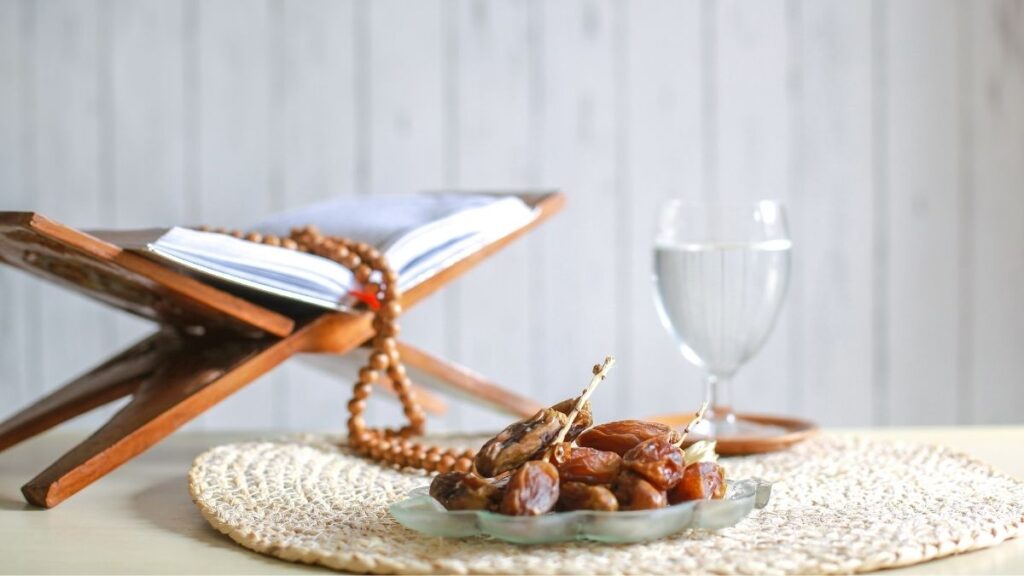
And it is but a brief while before the time of iftar arrives; yet my soul is not occupied with it, but with this nearness of parting—as though I were bidding farewell to one dear to me, with whom I have long been familiar, and for whose return I hold no hope.
There comes upon me, on such a day each year, a thought I cannot repel: an iftar that no suḥūr shall follow; a night bereft of tarāwīḥ, and of that hushed expectancy for the hour in which every wise decree is set apart. I find myself like one who has completed a matter to which he was bound, and then been severed from it—so that it is no longer his, nor is he any longer within it.
I liken this to the state of one who, having reached his purpose after long striving, discovers that in attaining he has also lost, in grasping he has also let slip; thus no pure joy is granted him, nor does any settled sorrow abide with him.
And I find a likeness of this in my ʿumrah: I circumambulate the House, I pray, then proceed to the saʿy; until, when I have completed my seventh circuit and reached al-Marwah, there comes over me that same feeling—as though I had attained something momentous, only to lose it at the very instant of attainment.
Well indeed did the Persian poet say:
روان شد محملِ جاناں و من حیران از آن رفتن
نہ بی او میتوان بودن نہ با او میتوان رفتن
Its meaning is: The caravan of the beloved has departed, and I remain bewildered at his going; I can neither endure to remain without him, nor can I go along with him.
(by: Dr Mohammed Akram Nadwi, Oxford, 1st Shawwal 1447)