Reforming Islamic Education: A New Vision for Comprehensive Learning
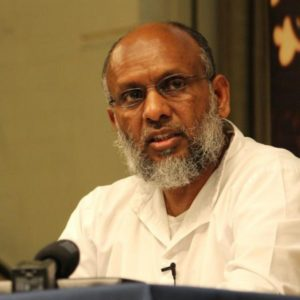
Shaykh Akram Nadwi
Muhaddith & Islamic Scholar

In the Name of Allah, the Most Gracious, the Most Merciful
A New Islamic Educational System
By: Dr. Muhammad Akram Nadwi
Oxford
Maulana Abdullah Rizwan hails from Mangalore. Along with modern education, he has also completed his Alimiyyah degree and has pursued a course in Iftaa (Islamic legal verdicts) from the Al-Salam Institute in London/Oxford. He is a dear student of mine. In August 1424 AH, Al-Salam Institute organised an Arabic language training course in Makkah, in which he participated along with his wife. Both husband and wife have a comprehensive background in both modern and Islamic education and have an excellent command of spoken and written Arabic. Maulana Abdullah had several sessions with me, during which he sought advice on various matters. He intends to establish an institution in South India modeled after the Al-Salam Institute. His respected father is prepared to provide financial support; however, he wishes to have a written clarification from me about this new educational system so that his friends and relatives can participate in the project with complete confidence. I am writing this article upon the request of my dear student Maulana Abdullah Rizwan.
The Existing Madrasas:
What I will write in this article will fundamentally differ from the current educational structures of madrasas in the Indian subcontinent. Naturally, these madrasas will not support my ideas, as it is difficult for people to abandon something they are familiar with. Therefore, I would suggest not disturbing the old madrasas. When Darul Uloom Nadwatul Ulama was established in Lucknow, there was already a madrasa in Farangi Mahal, but Nadwa did not interfere with it. The effectiveness of the new system eventually left the old system far behind. Similarly, the new educational system we intend to establish in the Indian subcontinent should be independent and autonomous. If it proves beneficial, its utility alone will guarantee its popularity.
The Two Objectives of Education:
Education has two fundamental objectives:
1. The first objective is for a person to be aware of their time and place, and to learn to live according to the demands of the present and future. This includes all secular sciences and arts, such as geography, medicine, engineering, politics, society, literature, history, and philosophy. Muslims and non-Muslims are equal in the pursuit of this objective.
2. The second objective is the development of personality. In this pursuit, Muslims will differ from non-Muslims. The development of a Muslim’s personality depends on living life as a servant of God. For a successful life of this kind, the acquisition of religious sciences is of fundamental importance. This includes Arabic language (as a medium), Qur’an, Tafsir, Qur’anic sciences, Hadith, Usul al-Hadith, Hadith sciences, Fiqh, Usul al-Fiqh, the secrets of Shariah, etc.
Comprehensive Education:
It is essential that the educational system of Muslims integrates both objectives. However, in the Indian subcontinent, Muslims are not in a position to establish and maintain such a comprehensive system. Therefore, practically speaking, efforts should be made to achieve what is possible. This means benefiting from the secular educational system for the first objective, enrolling children in schools, colleges, and universities, and striving to excel in every field. By achieving high standards of education, they will better understand their era, handle it skillfully, and find it easier to secure jobs and other sources of income.
For the second objective, we can run classes in the evening for two hours and organized classes on weekends. These classes can be held in mosques or community centers. This education can be divided into three levels: 1. The first level is what is necessary for every Muslim. This level of education should continue until high school.
2. The second level is for those who wish to become scholars. They should study Arabic language and Islamic sciences up to the intermediate level, and then spend two years completing the Alimiyyah, which will be equivalent to a BA degree. The Alimiyyah education should be conducted in a part-time manner, i.e., two hours in the evening and on weekends.
3. The third level is for those who wish to specialize in the Qur’an, Hadith, or Fiqh and Iftaa. Such individuals should complete their education at a reputable, broad-minded Darul Uloom in the Indian subcontinent, or at a university in the Arab world, or at the Al-Salam Institute.
My advice would be not to undertake the Alimiyyah’s two-year curriculum immediately; instead, enroll students in the Al-Salam Institute. In other words, you should only organize education up to the intermediate level in Arabic and Islamic sciences.
Curriculum:
I have developed the curriculum for all these levels. At the Al-Salam Institute and the Cambridge Islamic College, education is provided according to this curriculum, and Al-Salam has spent millions of pounds preparing the curriculum. Therefore, you should benefit from Al-Salam’s efforts.
The fundamental characteristic of this curriculum is that students are liberated from imitation and stagnation, they develop the ability to think critically and conduct research, and they only accept something when its proofs are clear to them.
Our curriculum has been running for about 15-20 years, and our graduates are present in every country in the world. On the one hand, they are doctors, engineers, and experts in modern education, and on the other hand, they are also religious scholars.
Our graduates do not face difficulties in finding employment because, due to their secular education, they easily secure jobs, and in their remaining time, they serve religion, lead prayers, deliver Friday sermons, and engage in teaching, training, writing, and authoring.
System:
There is no need for donations in this system. A reasonable fee is charged from each student, and the teachers and staff are paid salaries according to the standards of secular educational institutions in the country. As a result, we only appoint competent and hardworking teachers.
We believe that no student should be deprived of education due to financial constraints. To achieve this, you should take two steps:
1. Establish a scholarship fund within your institution. Wealthy people should be encouraged to contribute to it. Do not go out asking for donations, but instead, make an appeal on your website, etc. Provide scholarships to as many students as the fund allows.
2. Wealthy individuals should be reminded of their responsibility to establish their own scholarship funds. Students can apply for scholarships there, obtain them, and pay their fees at your institution.
When you charge fees, you will have to maintain your standards because students will question what they are receiving in return for the money they are spending.
This is the basic framework. You can modify or amend it according to the needs of your country. May Allah grant us all the ability to work with sincerity. Ameen.