Understanding Ḥadīth: A Foreword to Dr.
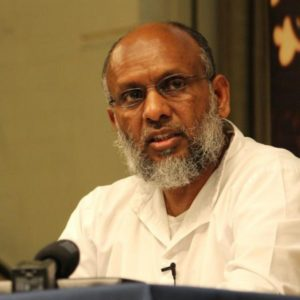
Shaykh Akram Nadwi
Muhaddith & Islamic Scholar

For my work on female ḥadīth narrators, al-Wafāʾ bi asmāʾ al-nisāʾ, I had to consult countless biographical and historical works, works on ḥadīth and isnād, unpublished manuscripts, and registers of attendance and audition (samāʿ). I wound up spending a good portion of my life buried in these works, which increased my connection with ḥadīth.
The second manifestation of Shaykh Akram’s brilliant ḥadīth scholarship appears in his intensive engagement with the Ṣaḥīḥ of Imām Bukhārī, which he has taught for years to advanced students in the UK. I spent some time in my ʿālimīyyah program studying chapters with him in exhaustive detail and by far, these were some of the most valuable lessons I ever attended in my entire life. His deep insights into rijāl (transmitter-criticism), the deeper meanings of the ḥadīth (fiqh al-ḥadīth), the subtle defects of reports hidden to most (ʿilal), and his ability to draw on Bukhārī’s own understandings revealed his true position as an erudite master of ḥadīth.
This work leads us to a third expression: al-Madkhal ilā Ṣaḥīḥ Bukhārī (forthcoming), which summarizes the insights from these classes in order to produce a specific introductory work for those interested in studying Bukhārī’s Ṣaḥīḥ. I have already been tasked by my teacher to translate this next, and I look forward to that project, inshāʾAllāh.
The fourth expression of Shaykh Akram’s ḥadīth scholarship will be expressed in his current major research project: producing a critical commentary on Ṣaḥīḥ Muslim. In my view, this work has the potential of overtaking al-Wafāʾ bi Asmāʾ al-Nisāʾ to become his most valuable contribution to Islamic scholarship. The following are five major distinctions of this work, much of which has already been completed:
1. The division of the Ṣaḥīḥ with new chapter headings that are consistent with Imām Muslim’s original intent and that reflect the beauty of the original work as a masterpiece of ḥadīth craftsmanship
2. A deep analysis of those narrations that Muslim included which Bukhārī had rejected
3. An analysis of those narrations exclusive to Bukhārī which Muslim had rejected
4. A brief and original commentary of the ḥadīth contents
5. A critical analysis and arrangement of Muslim’s Muqaddimah (introduction), which is an important independent reference in ḥadīth methodology
The fifth manifestation is al-Madkhal ilā Sunan al-Tirmidhī (also forthcoming), a primer on introducing students to a deeper appreciation of Tirmidhī’s classical Sunan work. The Sunan features prominently in Shaykh Akram’s teaching, and he is keen to point out the need to understand the unique aims and methods of each work. As a student of Bukhārī, Tirmidhī shared his commitment and approach to ḥadīth authenticity, and yet he authored a work with different aims. Shaykh Akram reminded us once in class, ‘the greatness of Tirmidhī is that he knew Bukhārī, Muslim and Abū Dāwūd very well, and yet he felt the need to compile a fourth work and was not afraid to make an additional contribution.’ The Sunan is designed to reproduce all ḥadīth reports used by jurists, demonstrate their practical application across juristic schools, and provide valuable post-ḥadīth comments on the gradings of these reports.
The final manifestation of Shaykh Akram’s ḥadīth expertise lies in two introductory works designed to serve as a preamble to the above mentioned five scholarly projects. The first is Introduction to the Methodology of Ḥadīth Evaluation (Mabādiʾ fī Uṣūl al-Ḥadīth wa al-Isnād), published in 2019 by Al-Salam Institute Press under their Islamic Sciences Text Series. It is the more basic of the two works and focuses primarily on ḥadīth terminology (muṣṭalaḥ). The second of these works is the current book, which represents a more advanced primer to the general ḥadīth sciences. It is a collection of Shaykh Akram’s insights on various topics pertaining to this complex field. The book appears to be have been hand-picked, by the driving of fate, from all the insights and answers I gathered myself from my teacher’s lessons over time in response to my own queries. His selection reveals his acumen as a master teacher, who knows well what lessons his students need in order to advance their journey in a meaningful way. I had long compiled my own notes on these lessons and shared them with students, and Shaykh Akram here had provided a far superior selection crafted by his own eloquent pen, and for that I am grateful.
It should be noted that the chapters, though arranged within six topical units, stand independently and can be read separately in no particular order. My translation style should now be familiar to readers of Shaykh Akram’s more recent English works. My aim is always to convey the best sense of the author’s words in English and not to follow a literal word-focused approach. The sub-divisions of chapters are my own work. I have provided ample footnotes to add needed clarifications, biographies of some—not every—individual, and the occasional insights from Shaykh Akram’s classes or from my discussions with him. I have provided isnād charts when discussion of transmitters is dominant, and I hope these are useful to the reader to follow the text. The word Sunnah is capitalized when it refers to the generality of the Prophet’s example and in lower-case when referring to specific Prophetic practices. I have refrained from the use of any abbreviations, even in a work as technical as this one, in order to render a more flowing text. Qurʾānic translations follow no particular method, but among my preferred ones are Abū al-Aʿlā Mawdūdī’s The Meaning of the Qurʾān and Muḥammad Asad’s The Message of the Qurʾān, which I use as a base and take the liberty to further modify as I deem fit. In the end, it should be noted that this is a translation of Shaykh Akram’s work and as such, any mistakes found are bound to be mine.
I must thank all those involved in this translation effort, starting with my family and children, whose valuable time I have continuously sacrificed in pursuit of my endeavors. I only pray that God’s grace blesses them and safeguards their faith and future, making up for all the lost parenting time. I take comfort in my conviction that His grace and mercy are far superior to any of my own efforts at tarbiyah and upbringing. I thank my proofreaders Usman Khan (for taking valuable time out of his PhD studies at Princeton University) and Moiz Mohammed (for placing his reckless pursuits on pause, even if briefly). Finally, I thank Professor Shaykh Issam Eido of Vanderbilt University for graciously agreeing to write the academic foreword to this work.
This translation effort took the better part of the pandemic year of 2020. It was the unique, God-created circumstances of this trying time which placed the world on pause and forced us to be confined to our homes for an entire year—and still counting—that created the opportunity and space for me to complete this project. No matter what happens, it is always good for the believers.
How amazing is the matter of the believer, for all his affairs are good! In prosperity, he is grateful, and that is good for him. In adversity, he is patient, and that is good for him. (Ṣaḥīḥ Muslim)
Abu Zayd
Piscataway, New Jersey
January 28, 2021 Foreword by Issam Eido
In 2009, a female PhD student from Princeton University came to Damascus to study with me ḥadīth sciences and the genre of al-samāʿāt focusing on the role of female narrators during the Islamic medieval age. At that time, I was already familiar with Akram Nadwi’s general work and scholarly efforts, but it was the first time I came to know about his ongoing project on ḥadīth transmission and the role of female narrators. I realized how promising this project would be and its potential impact on reframing our reading of Islamic intellectual history.
During my study of ḥadīth sciences I was fortunate to meet with giant scholars such as Shaykh ʿAbd al-Fattāḥ Abū Ghudda and Nūr ad-Dīn ʿItr, as well as many seekers of ḥadīth sciences who came from Syria, India, Pakistan, Turkey and the Western World. The impression I have collected during this long period is that the Indian subcontinent has produced and given our modern world serious and productive scholars in the field of ḥadīth studies who have been able to reform, reproduce, and reframe the field from within. Without any hesitation, one of these scholars is Shaykh Akram Nadwi who is representing a new episode in this long series. His intellectual life and scholarly works are expressive and full of real stories and incidents that inspire the seekers of knowledge in general and the students of ḥadīth in particular.
A couple of things can be mentioned here about the significance of his character. Among them is his connecting with real scholars of the discipline whether they are his shuyūkh or his colleagues, his capability to reframe complicated issues in the field following a brilliant and simple way that can at one time teach beginners and provoke advanced seekers, his humility and sincere advice he gives to his fellows and students, his vast and comprehensive knowledge covering different fields and disciplines, and his uniqueness in terms of understanding both traditional knowledge and western scholarship. These characteristics represent and reflect his new scholarly work Foundation to Ḥadīth Science: A Primer on Understanding & Studying Ḥadīth. It is a work that can be an important step for beginners, and a source for serious and complex dialogue among advanced students and scholars.
In this work, Nadwi, generously, represents seven major elements: 1- clarifying and confirming specific ḥadīth issues that many student are used to discussing and debating such as mursal, tadlīs, mudraj, munkar, etc., with brief and clear words and examples, 2- reestablishing and fixing some issues that have occupied students’ minds for decades, even centuries, by providing a new approach based on evidences, such as his approach to riwāya, types of ḥadīth books, the meaning of shādhdh, the ranks of knowledge, the preference of Muslim’s Ṣaḥīḥ over al-Bukharī, 3- reframing some technical issues and giving a clear taxonomy for terms such as ṣaḥiḥ, ḥasan, and ḍaʿīf, 4- providing new viewpoints on a couple of issues seekers need to hear such as the Ḥanafi school and ḥadīth, and the significance of Abū Hurayra’s ḥadīth, 5- summarizing and giving concise information on a couple of ḥadīth matters citing unparalleled and appropriate quotations; 6- sincere advices and recommendations for seekers of ḥadīth based on his personal and scholarly communications with his shuyūkh and colleagues, in particular those who are living in the Muslim word and are known for seriousness, sincerity, and humility; and 7- finally, though the style he chose to write in is a very traditional one (based on Q/A), it can be a creative way to motivate readers to engage in reading and forget the time.
However, I must point out that though the book targets both beginners and advanced students, it can confuse some learners who are not equipped with enough ḥadīth studies and do not have a solid background on some issues mentioned in the book such as the Ḥanafi principles of ḥadīth, and the sub-ranks between ṣaḥiḥ, ḥasan, and ḍaʿīf. In addition, there are a couple of places in the book that need more clarification and evidence; leaving them without clarification perhaps causes some avoidable argument among students, for example the ranks of knowledge and the impact of Muslim praxis on the ḥadīth authentication process. Additionally, there are some issues mentioned in the book which I, personally, would contend with the author, in particular his viewpoints on the Ḥanafi school and ḥadīth, and the definition of ṣaḥīḥ which needs more deep discussion in terms of differentiating between the definition itself and the usages of ṣaḥiḥ in the early period of Islam. Moreover, it would be important for the learners to know who are meant by early (mutaqaddim) and late (mutaʾakhkhir) ḥadīth scholars so that one can grasp the border line between these two eras and their related issues.
Finally, the book is an important source for students of ḥadīth, beginner or advanced (muqtaṣid and mujtahid), replete with much information and creative thoughts on ḥadīth studies in particular and Muslim intellectual history in general.
Issam Eido,
Senior lecturer, the Department of Religious Studies, Vanderbilt University
Author of Manhaj Qabūl al-Akhbār ʿinda Al-Muḥaddithīn (Ḥadīth Scholars’ Criteria of Ḥadīth Criticism)
January 22, 2021
Nashville, Tennessee
U.S.A