Formation of thoughts: an inquiry into the pre-discursive
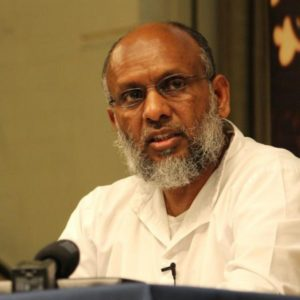
Shaykh Akram Nadwi
Muhaddith & Islamic Scholar

Formation of thoughts: an inquiry into the pre-discursive
by: Dr Mohammad Akram Nadwi
Oxford
8/12/2025
Human cognition, though commonly associated with rationality, linguistic structure, and the articulation of concepts, is rooted in layers of experience that precede reflective thought altogether. Before cognition becomes available to introspection or deployable as inferential reasoning, it subsists as a primordial, pre-discursive orientation of the subject toward the world. This pre-reflective level of experience is neither an undifferentiated immediacy nor a mere physiological response; it is a tacit form of apprehension imbued with affective significance and relational attunement. Central to such attunement is empathy, understood here not simply as emotional contagion but as an affective responsiveness that discloses other beings, human, animal, or natural, as already meaningful. Empathy thus mediates the earliest stages of awareness by situating the self within a nexus of significance prior to judgement, categorisation, or explicit interpretation. It is within this tacit domain of embodied and relational experience that the first formations of thought take shape.
Among the thoughts which emerge from this primordial stratum, the most fundamental is the implicit awareness of the divine. This awareness is not initially thematic; nor is it presented as a metaphysical thesis or doctrinal claim. Rather, it manifests as a diffuse mood or orientation characterised by dependence, finitude, and wonder. Such affective orientations precede explicit questioning, yet they anticipate the existential enquiries that later arise: What is the purpose of my life? Why is there something rather than nothing? Why is death an inescapable horizon of existence? These interrogatives originate as felt disquietudes, perturbations of the spirit that press the human being toward some ultimate source of intelligibility. Hence, the earliest “thought” of God is not conceptual but desiderative; it is a yearning for grounding and meaning, the most primitive modality of prayer in which the self reaches beyond itself toward transcendence.
Within this framework, divine response is not best conceived as the transmission of propositional content. Instead, revelation may be understood as the deepening of self-understanding, the emergence of insight, orientation, or moral summons that corresponds to the pre-discursive yearning for ultimate meaning. Revelation is thus not primarily a supernatural incursion into the natural order but a mode through which the transcendent ground of existence becomes affectively and intellectually apprehensible. Inspiration appears, in this sense, as the correlative of primordial prayer: a reciprocity between human finitude and transcendent intelligibility.
As human beings enter linguistic, social, and cultural orders, the pre-discursive foundations of thought become elaborated through language, conceptuality, and shared narratives. This development enables the articulation of sophisticated accounts of natural, moral, and historical phenomena, as seen in the emergence of science, philosophy, and theology. Yet the maturation of rationality also brings into clearer focus the inherent limits of human cognitive and practical capacities. We discover that although we are able to discern patterns, laws, and structures, we cannot grasp the totality of the world’s intelligibility. We are capable of deliberate action, but not of mastering all contingencies. We experience the richness of life, but we remain bounded by temporal finitude and epistemic opacity.
This dialectic of capacity and limitation is not merely anthropological but metaphysically suggestive. It indicates that the intelligibility of the world, though partially accessible, exceeds the reach of finite rationality. The very structure of understanding points beyond itself to a deeper ground of coherence, a ground which, by definition, cannot be contained within the limits of human cognition. Thus, the long-standing intuition of a transcendent being, of a consciousness for whom the opacity and contingency of the world are transparent, is not reducible to mythic projection or cultural inheritance. It is rooted in the structural conditions of finite rationality and its encounter with an intelligible but inexhaustible world.
To interpret human limitation as expressive of the care of a Creator requires a further philosophical step, one that combines reflective analysis with intuitive or revelatory insight. Human finitude may be construed in nihilistic terms as evidence of indifference, or in mechanistic terms as the by-product of impersonal causal processes. Yet within a theistic metaphysics, finitude can also be understood as the condition under which creaturely intelligence, moral agency, interpersonal responsibility, and spiritual seeking become possible. On this view, human abilities are not truncated approximations of divine omniscience or omnipotence; they are capacities proportioned to a created order in which freedom and relationality are essential. Our limitations thus do not simply restrict us, they orient us toward humility, mutual dependency, and receptivity to transcendence.
This interpretive arc, from primordial empathy to metaphysical reflection, reveals the continuity between pre-discursive experience and mature theistic understanding. What begins as a tacit affective orientation develops, through linguistic and cultural mediation, into explicit enquiry concerning the ground of being and the nature of transcendence. Human finitude, rather than obstructing such enquiry, provides the very conditions under which the divine becomes thinkable and encounterable.
In conclusion, the formation of thoughts is not an event solely located within the sphere of rational operations. It begins in pre-discursive attunement, emerges through affective and relational structures, and grows into reflective, philosophical, and theological articulation. The earliest stirrings of awareness, the subsequent achievements of reason, and the insights attributed to revelation are not discrete phenomena but moments of a unified dynamic: the movement of the finite human subject toward an inexhaustible source of meaning. The pre-discursive foundations of thought therefore illuminate not only the genesis of cognition but also the profound orientation of the human being toward transcendence.
FOLLOW THE الشيخ محمد أكرم الندوي CHANNEL ON WHATSAPP:
https://WhatsApp.com/channel/0029VbAxp2qGpLHHqQ3LoY0w