Ḥajj
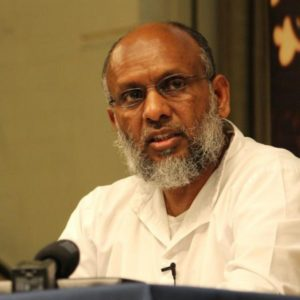
Shaykh Akram Nadwi
Muhaddith & Islamic Scholar

Ḥajj
By Mohammad Akram Nadwī
Translated by Abu Zayd
Oxford, UK
They asked: What is that so strongly pulls your attention and pushes you towards the caravans of the guests of the Most Merciful in the Holy Sanctuary in the days of Ḥajj? What is it that draws you away from your own place and time and distances you from your own companions? I replied: There are two things that completely overtake me such that I am powerless to ward them off. They said: Tell us what they are!
I replied: The first thing is the complete autonomy of Ḥajj from any time. The institution of Ḥajj is not confined to any historical era nor does it represent any memory of a past civilization or any powerful ruler. Rather, it exists far beyond the limits of time, linked to and immersed in antiquity. It goes back farther than even the era of our Prophet Muḥammad, peace be upon him. Islam came and did not alter its rites nor set it straight. Islam merely purified it from certain local and temporal practices and restored its pure and untarnished originality which stands far above and beyond the adulteration of any era.
The second is the complete autonomy of Ḥajj from any place. It is not confined to a particular atmosphere or follow any people limited to narrow surroundings. Rather, it exists beyond the borders of geography and is liberated from the impurities of region and environment. It gathers all sorts of people and nations of varying colors, lands and languages, and of varying practices, customs and traditions. The pilgrim leaves his people, family and land—in fact, he even leaves all habitations, vegetation and normal clothes—and opt to enter deserts, mountains and plains, over which he has no connection or claim.
They asked: What does it mean to be linked to antiquity? I replied: These are links established by Ibrāhīm and his family, upon them be peace. They asked: Wasn’t Ibrāhīm born in a time and place? I replied: Know that Ḥajj is not a simple journey to a holy place, as in other faiths. The timing of Ḥajj is fixed while its rites are also fixed. They have nothing to do with Ibrāhīm’s people or land, nor any other people or land for that matter. Ḥajj is a reminder of the history of life and vigor which comes from submission to God. Submission to God is neither confined to space nor time. No chosen people or nation can lay claim to it. The most perfect representation of submission is Ibrāhīm and his family. This is the real secret behind the universality of Ibrāhīm, and the universality of Ḥajj and its rites. God said, “I am making you a leader of mankind” (Qurʾān 2:124); “We made the House a center and sanctuary for mankind” (Qurʾān 2:125); “Ḥajj to the House is a duty owed to God by all mankind.” (Qurʾān 3:97) In these verses, God referred to humanity without specifying the progeny of Ismāʿīl or Isrāʾīl, or the Arabs or any other race.
They asked: What is the importance of connecting Ḥajj with Ibrāhīm and his family? I replied: God’s religion is the same since He created the heavens and earth, and is the way He legislated for Adam, Nūḥ, and all the prophets and their followers until the end of time. This way was in need of a model or path to give it life, strength and energy, while protecting it from becoming habits and rituals which could rob it of its significance and strip it of its spirit. So God chose Ibrāhīm, peace be upon him, as the model for this way since he fulfilled all the commands and passed all the trials sent to him by God. So God commanded mankind to follow the way (millah) of Ibrāhīm. This command extended even to our own Prophet, peace be upon him: “Then we revealed to you, ‘Follow the way of Ibrāhīm in complete devotion.’” (Qurʾān 16:123) “Say, ‘Whatever God says is true,’ and follow the way of Ibrāhīm in complete devotion.” (Qurʾān 3:95)
They asked: How does the Ibrāhīmic way give life to God’s religion and protect it from deterioration and decline? I replied: Look at the components and elements of this way, and you will know the answer.