Understanding Intercession in Islam: Insights from Dr. Mohammad Akram Nad
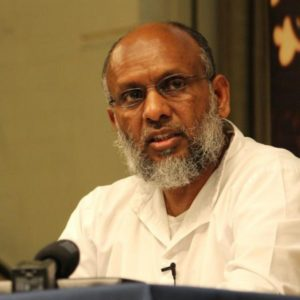
Shaykh Akram Nadwi
Muhaddith & Islamic Scholar

Source: <a href=”https://t.me/DrAkramNadwi/5560″ target=”_blank”>https://t.me/DrAkramNadwi/5560
Disclaimer: This article was translated by AI and may contain errors.
Please refer to the original text for accuracy.
In the Name of Allah, the Most Merciful, the Most Compassionate
Intercession
By: Dr. Mohammad Akram Nadwi
Oxford
Shaykh Ilyas Numani, the son of my respected teacher, Mawlana Muhammad Zakariya Sambhali (may Allah preserve them), asked for clarification regarding a specific aspect of intercession. This article has been prepared to address his inquiry, providing essential details about intercession and an answer to his specific question.
In Arabic, the term shafa‘ah (intercession) linguistically means joining one thing with another, making a pair. This concept has expanded over time, and intercession is also understood as a form of mediation or advocacy, where one person supports or combines their request with another’s. In religious terms, shafa‘ah can mean to pray for someone.
Over time, shafa‘ah became commonly associated with mediation or advocacy to such an extent that it almost exclusively conveys this meaning. Mediation implies, for instance, that if a king overlooks someone deserving of reward, a minister or another close associate reminds him of that person’s right. Similarly, an advocate might improperly use his position to secure rewards for those undeserving, which is why people often seek connections with those close to authority figures.
In contrast, Allah has made it clear that the qualities that merit His reward are faith and good deeds, and that deserving individuals do not require intercession, as nothing is hidden from Allah. Hence, for those knowledgeable of Allah’s attributes, expecting such intercession in Allah’s court is meaningless. In fact, believing in this type of intercession contradicts tawheed (the oneness of Allah). Thus, the Quran repeatedly negates the concept of intercession and firmly denies any room for it: “No intercession will be accepted” (Surah Al-Baqarah, 48), “No intercession will benefit them” (Surah Al-Baqarah, 123), and “No intercession will avail them” (Surah Al-Muddathir, 48).
However, the Quran and Hadith inform us that there will be a form of intercession on the Day of Judgment. But what is its nature? To understand this, consider two examples:
1. When a king prepares to distribute rewards, a trusted figure might precede him to announce his arrival, initiating the formal proceedings. People would not think that the king arrived because of this announcement, as it was the king’s own decision. This individual was simply given the honor of commencing the event. This is similar to what we know as shafa‘ah kubra (the Grand Intercession) on Judgment Day, when the Prophet Muhammad (peace be upon him) will be granted a great honor to commence the proceedings. This is referred to in the Quran as Maqam Mahmood (the Praised Station).
2. Another example is when distinguished individuals are invited to present awards at a college ceremony. They do not decide who receives the awards; their involvement honors them and motivates the students. Similarly, on Judgment Day, those deserving of reward will enter Paradise, while sinful Muslims will initially face punishment in Hell proportional to their sins. Then, at appointed times, Allah will command angels, prophets, and righteous people to intercede on behalf of certain sinners, guiding them toward intercession. Here, the intercessors do not decide who deserves intercession; it is Allah’s decision.
Intercession for the Prophet (peace be upon him) is recommended as a form of prayer (du’a), as indicated by the phrase: “And grant him the praised position that You have promised him.” While Allah will indeed grant this position to the Prophet due to His grace, the purpose of our prayer is to gain His favor for ourselves and elevate our ranks. As for smaller-scale intercessions (shafa‘ah sughra), asking Allah to make someone an intercessor, like a martyr or righteous person, in the Hereafter is acceptable. However, asking that a specific person intercede for oneself on the Day of Judgment is inadvisable, as it implies asking for entry into Hell and then for release through intercession. Instead, one should seek forgiveness and mercy directly from Allah and pray for immediate protection from Hell, for even a single moment in Hell is beyond imagination.
In some narrations, the Prophet (peace be upon him) said regarding the supplication of a blind man, “O Allah, make him my intercessor, and accept my intercession for him.” Although some scholars have attempted to authenticate this narration, even if accepted, it means that Allah accepts his prayer on behalf of the man rather than traditional intercession.
In the funeral prayer for children, people commonly recite phrases like “make him an intercessor.” Although not explicitly established from the Prophet, this supplication is recorded from some early scholars and implies that the grief of the parents may be a reason for them to be spared from Hell. Such intercession is an encouragement for patience and for seeking comfort in the Hereafter.