The Status of Muhammad ibn Ishaq: Authority in Maghazi
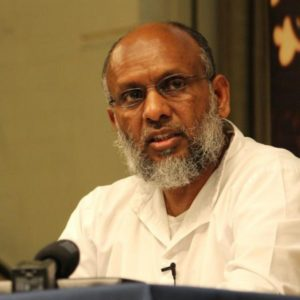
Shaykh Akram Nadwi
Muhaddith & Islamic Scholar

The Status of Muhammad ibn Ishaq in Hadith
By: Dr. Muhammad Akram Nadwi
Oxford
Translated by AI
I received a question from the pious and devout scholar, Shaykha Umm Zaid Samira Khan, wife of the esteemed scholar Dr. Abu Zaid from New Jersey, USA: The distinguished scholar Shibli Nomani mentioned in his book Sirat al-Nabi that Ibn Ishaq was advanced in the science of Hadith. What is your opinion on Shibli’s statement? And did al-Bukhari narrate from Ibn Ishaq in his Sahih?
Response:
I will first quote some of Shibli’s statements regarding Muhammad ibn Ishaq from the introduction to Sirat al-Nabi. After praising Muhammad ibn Ishaq for his leadership in Maghazi (the accounts of military expeditions of the Prophet), Shibli states: “Ibn Ishaq was a Tabi’i (successor of the Companions); he saw Anas ibn Malik, and excelled in the knowledge of Hadith… The scholars of Hadith differed in assessing his reliability. Imam Malik severely criticized him. However, the scholars generally agree that his narrations in Maghazi and Seerah are reliable. Al-Bukhari did not narrate from him in the Sahih, but he did in his work on Qira’ah Khalfa al-Imam, and also cited him frequently in his history works” (Introduction to Sirat al-Nabi, 1/23).
In summary, Shibli’s comments about Ibn Ishaq are fivefold:
1. He excelled in the knowledge of Hadith.
2. The scholars of Hadith differed in their assessment of him.
3. Imam Malik strongly criticized him.
4. His narrations are relied upon in Maghazi and Seerah.
5. Al-Bukhari did not narrate from him in the Sahih.
These five points align with what the scholars of Hadith said about him. Below, I will elaborate further based on his biography in Tahdhib al-Kamal by al-Hafiz Abu al-Hajjaj al-Mizzi and Siyar A’lam al-Nubala by Imam al-Dhahabi:
His prominence in Hadith:
Shibli’s mention of Ibn Ishaq’s excellence in Hadith seems to be based on the praise of scholars for him. For example, Ali ibn al-Madini said that the Hadith of the Prophet revolves around six people, and among them, the knowledge of the six was concentrated with twelve people, one of whom was Muhammad ibn Ishaq. Sufyan ibn ‘Uyaynah said: Abu Bakr al-Hudhali reported that al-Zuhri said: “There will always be abundant knowledge in Madinah as long as Ibn Ishaq is among them.” Ahmad ibn Abi Khaythama narrated from Harun ibn Ma’ruf, who said: “I heard Abu Mu’awiyah say that Ibn Ishaq was one of the most knowledgeable people, and if a man had five or more Hadiths, he would give them to Ibn Ishaq to memorize.” Shubah also said: “Muhammad ibn Ishaq was the leader of the muhaddithin due to his memory.“
His reliability:
Scholars differed in assessing his reliability. Al-Mufaddal ibn Ghassan al-Ghulabi said: “I asked Yahya ibn Ma’in about Muhammad ibn Ishaq, and he said: ‘He was trustworthy and his Hadiths were good.‘” Sufyan, when asked why the scholars of Madinah did not narrate from him, replied: “I sat with Ibn Ishaq for over seventy years, and none of the scholars of Madinah accused him of anything.” However, al-Dhahabi noted that some scholars refrained from relying on his narrations due to his inclination toward Shi’ism, his attribution to Qadar, and his occasional tadlis (concealing the source of a narration). However, no one questioned his truthfulness.
Malik’s criticism:
Abu Bakr al-Athram said: “I asked Ahmad ibn Hanbal about Ibn Ishaq, and he replied that he was good in Hadith.” However, Malik called him “one of the great deceivers.” Ibrahim ibn al-Mundhir narrated from Abdullah ibn Nafi’, who said: “Ibn Abi Dhieb, Abdul Aziz al-Majishun, Ibn Abi Hazim, and Muhammad ibn Ishaq criticized Malik ibn Anas, but Ibn Ishaq was the harshest in his criticism, saying: ‘Bring me some of his books, and I will show you their flaws, for I am the veterinarian of his books.‘” Ya’qub ibn Shaybah asked Ali ibn al-Madini: “How do you view the narrations of Ibn Ishaq?” He replied: “I consider them sound.” When asked about Malik’s criticism of him, he said: “Malik neither sat with him nor knew him.” Al-Dhahabi commented: “We do not claim that the scholars of jarh wa ta’dil (criticism and authentication) are infallible from rare mistakes or harsh words. Often, criticisms between contemporaries can be overlooked, especially when a person is validated by other fair-minded scholars. Although Malik’s criticism had some effect on Ibn Ishaq’s reputation, it did not impact him as much as it did Malik, who rose to prominence.“
People’s reliance on him in Maghazi:
Ali ibn al-Madini reported that Sufyan ibn ‘Uyaynah said: Ibn Shihab (al-Zuhri) was asked about Maghazi, and he replied: “Ibn Ishaq is the most knowledgeable of them.” Imam al-Shafi’i said: “Whoever wants to be well-versed in Maghazi must rely on Ibn Ishaq.” Al-Dhahabi stated: “He was a master of Maghazi.” Ibn ‘Adi said: “Even if Ibn Ishaq had no other virtue, his ability to divert the attention of kings away from useless books toward the study of the Prophet’s Maghazi, his life, and the beginning of creation would be enough of a virtue.“
Al-Bukhari’s non-narration from him in Sahih:
Al-Bukhari did not narrate from Ibn Ishaq in the Sahih but mentioned him in a suspended form (ta’liq) and cited him in his work on Qira’ah Khalfa al-Imam. Muslim included him in secondary support (mutaba’at), meaning he was not considered a primary narrator for Sahih purposes. However, the other six books of Hadith, including al-Bukhari and Muslim, narrated from him outside of their Sahihs. Al-Mizzi stated: “Al-Bukhari used him for reference in Sahih, and Muslim included him in support narrations.” The remaining scholars of the six books accepted his narrations.
In conclusion, Ibn Ishaq is an authority in Maghazi, but not in Hadith. His Hadiths can be used for supplementary support.