Journey to Bosnia (9)
(8)
Sunday, 7th Dhu al-Hijjah 1447 AH
I awoke for the Fajr prayer, burdened by fatigue that compelled me to perform the prayer and then succumb to a brief rest, as if my body, overwhelmed by the past days’ exertions, sought an hour of tranquility. When the sun had risen slightly, we descended to the hotel restaurant at seven-thirty. The food was abundant and varied, yet I found no inclination for extravagance, preferring instead bread, honey, and oil. In these simple foods, I found a peace not always present in luxurious dishes.
Returning to my room, I engaged in reviewing my book on exegesis, turning its pages in the morning’s calm and revisiting certain passages until it was time for the lesson.
Today’s discourse was on the story of the sacrifice, beginning with the essence of the Abrahamic faith, which is wisdom—an intellect guided by innate nature and illuminated by its light. I then explained the verse: “And We had certainly given Abraham his sound judgment before, and We were of him well Knowing,” highlighting that the opposite of wisdom is foolishness, as Allah says: “And who would be averse to the religion of Abraham except one who makes a fool of himself?” I proceeded to reveal to the students the subtle and intricate parallels between the story of the sacrifice and the vow of the wife of Imran; both are founded on the concept of offering and submission to Allah, though the former occurs in the male realm and the latter in the female realm. I left them to ponder these similarities, hoping they would arrive at the meaning through exploration rather than instruction.
We then divided into two groups: one set out to explore the city of Sarajevo from morning until noon, observing its landmarks and historical sites, while the other remained at the Jordanian mosque to practice the art of gilding, a venerable Islamic craft that adorns Qur’ans and manuscripts with gold and intricate designs.
The mosque was spacious and well-organized; its ground floor was designated for men’s prayer, the upper floor for women, and it housed rooms for Quranic schools and facilities for ablution and bathing, reflecting the local people’s dedication to both knowledge and worship.
I was part of the second group, arriving at the mosque around ten o’clock. Our instructor was a Bosnian woman residing in Istanbul, who had flown in specifically to demonstrate and teach this art. We spent three hours with her, drawing and coloring, learning the secrets of gilding, which has long been associated with precious Qur’ans, poetry books, and miniatures.
This art appeared to me as more than mere decoration; it seemed an attempt to bring light to the page, just as the Quran illuminates souls and minds. The gold was not mere luxury but a symbol of spiritual meaning, which is why Muslims have historically surrounded the words of Allah with the finest craftsmanship. The gilding motifs drew inspiration from nature, yet were fundamentally based on precise Islamic geometry hidden beneath branches, leaves, and flowers, giving the impression that intellectual order had melded with botanical beauty.
These gilded Qur’ans were not only revered religiously but also became among the most cherished gifts exchanged by kings and sultans. The beauty extended beyond gold to include precious colors derived from gemstones, like the deep, enchanting blue of lapis lazuli. The art of gilding transcended the Quran, entering literature, history, and epic books like the “Shahnameh,” becoming one of the four pillars of the “art of the book”: calligraphy, gilding, miniatures, and binding.
We were supposed to pray Dhuhr at the mosque, but an incident in the city cut off water to a third of Sarajevo, so we returned to the hotel to perform ablution and pray there.
Afterward, the first group went to the mosque to learn gilding, while my group headed to the city center for a stroll. I chose to stay at the hotel to rest, having seen most of the landmarks during my first visit to Sarajevo, though I recalled them in my memory as if they had never left my sight.
Sarajevo is not merely a city to visit but a city to read like an ancient book; page by page, line by line, until it seems to the visitor that its stones preserve memory, and its rivers, bridges, mosques, and markets speak in a soft language heard only by those who listen with their hearts before their ears.
The first thing to catch the eye is the Miljacka River road, running alongside the river that splits the city in two, as if intending to divide its history between East and West, or between an old Ottoman era and a modern European age. The river flows calmly, only slightly disturbed beneath the stone bridges that have withstood centuries, while variously styled and colored buildings stand on its banks, showcasing the harmonious coexistence of Ottoman architecture with Austro-Hungarian construction.
The bridges over the river were not mere crossings but stood as enduring witnesses to the passage of time. Among the most famous is the Latin Bridge, small and modest in appearance, yet bearing the weight of history that even grand palaces cannot. It was here that the gunshots rang out, taking the lives of Archduke Franz Ferdinand and his wife in 1914, shaking all of Europe and propelling it into World War I. Remarkably, the site is now peaceful and quiet, as if the city wishes to teach its visitors that the greatest events can begin in the simplest of places.
The road then leads to the Sarajevo City Hall, a majestic building overlooking the river with clear grandeur. Built in the late 19th century in the Austro-Hungarian style influenced by Eastern ornamentation, it combines Islamic arches and Andalusian colors with strict European precision. Upon entering, one is captivated by the ornate ceilings, stained glass windows, and wide staircases gleaming under the light. It is poignant that this building was burned during the Siege of Sarajevo, losing thousands of precious manuscripts and books, yet it was restored after the war, as if the city sought to triumph over ruin with memory and beauty.
The visitor then enters the old market, “Baščaršija,” the heart of Ottoman Sarajevo and its enduring Eastern spirit. Here, narrow stone-paved alleys wind, and small shops exude the aroma of Bosnian coffee, polished copper, and aged wood. Artisans sit before their stores crafting copperware as their ancestors did for centuries, making it seem as though time has slowed in this place to grant the past another chance to endure.
In the market’s center rises the Gazi Husrev-beg Mosque, standing in serene majesty. It is the greatest mosque in Bosnia and one of the most beautiful Ottoman relics there. People enter its vast courtyard where a fountain serves worshippers performing ablution, and before them stretch white domes and a slender minaret reaching skyward. The mosque exudes an extraordinary tranquility, as if the world’s clamor ceases at its door, leaving only the soft footfalls and Quranic recitation. The mosque was not only a place of prayer but also a center for learning, justice, and social life through the centuries, becoming a symbol of the enduring Islamic identity in these lands.
Near the mosque stands the Ottoman clock tower, with its ancient face and clock still set to the Islamic lunar calendar, a rare tradition that remains alive today. The tower resembles a dignified elder observing the city in silence, having witnessed the succession of states, wars, and generations.
A short walk further leads to the Kovači Memorial Cemetery, where the city’s visage changes within the soul. After the markets, bridges, and ancient buildings, rows of white graves stand in solemn silence, as if silently recounting the tale of the suffering Bosnia endured during its long siege. Here lie the Bosniak martyrs who fell defending their city, alongside Alija Izetbegović, whose name remains synonymous with patience, faith, and struggle.
The city then stretches towards the University of Sarajevo, where the future seems to converse with the past. Students spread across the courtyards, speaking various languages and dialects, reminding one that Sarajevo has always been a crossroads of cultures, religions, and peoples. The Museum of the Revolution houses long chapters of Bosnia and Herzegovina’s history, from the Austro-Hungarian era to modern wars, with photographs, documents, and artifacts narrating a century of upheaval and transformation.
What distinguishes Sarajevo most is that the visitor does not feel a separation between past and present; minarets rise beside churches, Eastern markets stand near modern European buildings, and war scars still occasionally appear on walls, while cafes brim with youth, laughter, and life. It is as if the city has learned, after its suffering, to unite sorrow and hope in one heart, crafting from its wounds a memory that never fades.
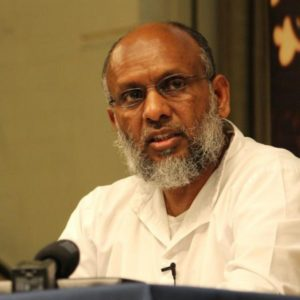
As evening approached, and the day’s activity gradually subsided, Sarajevo prepared for its tranquil night. After the Maghrib prayer, we were honored by the presence of Professor Nermina Baljoik and Dr. Naida Hota-Muminović, the Minister of Education and Culture of Bosnia and Herzegovina. These two ladies held a special place in my heart; they were not mere guests visiting a passing gathering but represented a testament to the dedication to knowledge and the care for Islamic culture in this land, which has endured trials that nearly severed its ties to its past, yet refused to relinquish its roots with quiet perseverance.
What added joy to the meeting was that both had participated in translating my book “Al-Muhaddithat” from English to Bosnian, and I felt a subtle gratitude as I welcomed them, the kind an author feels when seeing his words cross linguistic and geographical borders to find a new home in the hearts of people he has never met.
We gathered in the conference hall, attended by a group of students, their faces reflecting the quiet passion that characterizes Bosnian youth; a passion not clamorous in speech but evident in attentive listening and precise questioning.
The professors sat before the audience with simplicity and dignity, then began speaking about Bosnia’s history, not as dry historians recounting events, but as those who have lived the effects of history in the collective memory of the people, witnessing how a nation can be wounded yet remain alive.
They spoke of Bosnia, traversed by empires and wars, and of Islam, which settled there for centuries, becoming part of its cultural and civilizational spirit. They then spoke of the years of trial and siege, and how people endeavored to maintain their religion and identity amidst ruin and fear. Their speech bore no loud bitterness but was calm and profound, as if prolonged pain transforms into wisdom.
The conversation then shifted to the book “Al-Muhaddithat,” where they mentioned the intellectual issues they found worthy of conveying to the Bosnian reader and discussed the challenges of translation, as it is not merely the transfer of words but the conveyance of spirit, culture, and context from one language to another. The students listened with apparent interest, followed by questions on Islamic thought, language, and the impact of books on shaping youth awareness.
After the meeting concluded, we headed to a café, the night having enveloped the city, the streets quiet save for a few passersby and the light reflecting on the evening’s dew-covered pavements. We sat around a small table, enjoying a light dinner and hot tea, and the gathering continued until eleven at night.
There, away from formalities and lectures, the conversation became closer to the daily lives of people. They spoke of Bosnian Muslim women, their mosque attendance, though less frequent than men for Friday and Eid prayers due to social customs. They discussed funerals in Bosnia, the gathering of women, and the accompanying reading, supplication, and quiet patience, where sorrow and faith blend in a remarkable mix.
What struck me in their conversation was that Islam in Bosnia does not always manifest in loud displays but appears as a quiet, deep faith, living in daily customs, memory, and the people’s way of enduring and persevering. Often, as I listened to them, I felt that this people had learned from their long history how to conceal their pain behind a veil of calm and dignity.
The gathering dispersed late at night, and we returned to our rooms. I paused for a moment at my window, contemplating Sarajevo in the silence of the night, seeing it as a city of strange nature; it possesses the spirit of the East and the image of the West, with as much sorrow as hope. A city that emerged from war burdened with wounds, yet still retains a human tranquility that quickly endears itself to the visitor, making it impossible to forget.