Reconsidering the Concept of Renewal in Islamic Tradition
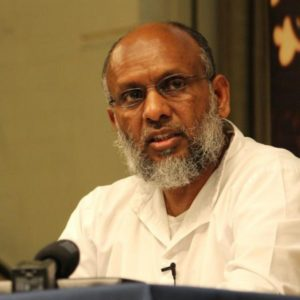
Shaykh Akram Nadwi
Muhaddith & Islamic Scholar

Disclaimer:
This article was translated with the assistance of AI ⚠️
📎 The original text can be found here: <a href=”https://t.me/DrAkramNadwi/164″ target=”_blank”>https://t.me/DrAkramNadwi/164
The Meaning of the Hadith of Renewal
By Dr. Mohammad Akram Nadwi, Oxford
🟢 Introduction
They asked: “Explain to us the meaning of the Hadith of renewal.”
I replied: “I have previously delivered several lessons on the topic of reform and its history in various colleges and educational centers in Britain. In these, I explained the meaning of the Hadith of renewal, which has become widely known and has been the subject of much discussion and explanation by scholars.”
🟢 The Hadith of Renewal
The Hadith was recorded by Imam Abu Dawood in the section on battles in his Sunan. It was narrated by Sulaiman bin Dawood al-Mahri, who said: “Ibn Wahb informed us, who said: ‘Sa’eed bin Abi Ayyoob informed me, from Shurahil bin Yazid al-Ma’afiri, from Abu Alqama, from Abu Huraira (may Allah be pleased with him), as I know, from the Messenger of Allah (peace be upon him) who said: Indeed, Allah will send for this Ummah at the turn of every hundred years someone who will renew its religion for them.”
🟢 Clarification of the Narration
The phrase “as I know” is likely from Abu Alqama or someone below him, indicating that in his knowledge, Abu Huraira narrated it as a Marfu’ Hadith (attributed directly to the Prophet) and not as a Mawquf (stopped at the Companion).
Abu Dawood commented: “Abdur Rahman bin Shurayh al-Iskandarani narrated it (from Shurahil bin Yazid al-Ma’afiri), but he did not connect it to Shurahil. Hence, the Hadith is considered Mu’dal (with a missing link in the chain), as Abdur Rahman bin Shurayh omitted Abu Alqama and Abu Huraira from the chain.”
Abdur Rahman bin Shurayh is considered trustworthy, as both Bukhari and Muslim agreed on the authenticity of his narrations, as did Sa’eed bin Abi Ayyoob. However, there is a disagreement between two reliable narrators regarding whether the chain is continuous or interrupted. The stronger opinion seems to be that it is interrupted, as those who connected it did not affirm its attribution to the Prophet (peace be upon him) with certainty.
🟢 Chain of Narration
Shurahil bin Yazid al-Ma’afiri is only mentioned by Imam Abu Dawood, who recorded this single Hadith from him. No one else among the authors of the six main books of Hadith included narrations from him, and no one declared him trustworthy except Ibn Hibban, who mentioned him among the reliable narrators. Imam Bukhari, in his Al-Tarikh Al-Kabir (4/255), mentioned:
“Shurahil bin Yazid al-Ma’afiri heard from Muslim bin Yasar, and from Abu Alqama. His narrations were recorded by Abdur Rahman bin Shurayh and Sa’eed bin Abi Ayyoob.”
However, Bukhari did not establish that he heard directly from Abu Alqama, and inserted Muslim bin Yasar between them.
This Hadith was also recorded by Abu Al-Qasim al-Tabarani in his Al-Mu’jam Al-Awsat through the chain of Ibn Wahb. After recording the Hadith, al-Tabarani remarked:
“This Hadith is only narrated through this chain, and Ibn Wahb is the only one who narrated it.”
🟢 On the Authentication of the Hadith
They asked: “What is your opinion about those who have authenticated this Hadith?”
I replied: “They authenticated it based on the fact that its narrators are those used by Imam Muslim, but this is a mistake. Imam Muslim only recorded one narration from Shurahil, and that was in the introduction to his Sahih, not in the main body of the book. It is well-known that Muslim’s criteria for the introduction are less stringent than for the main Sahih. This has been clarified by many leading scholars.”
Thus, as we can see, this Hadith is isolated and weak, with uncertainty regarding its elevation to the Prophet (peace be upon him). What is even more astonishing (and the strange things in this world never cease) is how people linked renewal and reform to every hundred years.
“And now the ninth century has come,
And the guide’s promise will not fail,
I hope to be the renewer in it,
By the grace of Allah, a claim that none can deny.”
After that, he closed the door to renewal, saying:
“In the last century to come,
Will be Isa (Jesus), the prophet of Allah with his signs.”
🟢 Questioning the Concept of Renewal Every Century
A question arises here: don’t people in every era need someone to reform their religion for them? Why should we wait a full hundred years for a reformer to appear? Moreover, the Hijri calendar did not even exist at the time when the Prophet (peace be upon him) reportedly made this statement.
🟢 What Is the Firm, Reliable Basis?
I said: “The basis for this is the authentic Hadith recorded by Bukhari and Muslim from Muawiya (may Allah be pleased with him), who said:
‘I heard the Prophet (peace be upon him) say: A group from my Ummah will continue to stand firm on Allah’s command. They will not be harmed by those who forsake them or oppose them, until Allah’s command comes, and they remain steadfast.’
This Hadith is further explained by another:
Those who carry this knowledge in every generation will be its just ones. They will remove from it the distortions of the extremists and the misinterpretations of the falsifiers.”
🟢 Conclusion: Interpreting the Hadith of Renewal
I said: “We should interpret the Hadith about the hundred years in terms of generations or epochs, where each generation or class of people will have its own reformers.”
This interpretation was also supported by Imam Ahmad bin Abd al-Rahim, known as Shah Waliullah al-Dehlawi, who said in his book Hujjatullah Al-Baligha:
“The Prophet’s saying (peace be upon him): My Ummah will not unite upon error, and his saying: Allah will send to this Ummah at the turn of every hundred years someone who will renew its religion, is explained by another Hadith: Those who carry this knowledge in every generation will be its just ones who will remove from it the distortions of the extremists and the misinterpretations of the falsifiers.”