Protest justly for justice
The Indian government has recently passed a law which offers citizenship to refugees and migrants from Afghanistan, Bangladesh and Pakistan provided that they are not Muslims. Muslims are explicitly excluded by name, which is unprecedented in its disdain for human rights conventions regarding the treatment of refugees and migrants. The government is also proposing a new system of registering citizens on the basis of papers that the citizens are obliged to produce. Huge numbers of people in India do not have the kind of documentation that this new system requires. Many citizens and communities in India have understood the danger of this system once the new naturalization procedures come into effect: the danger is that Muslims who have been resident in India for hundreds of years could be classed as illegal immigrants and therefore deprived of citizenship and their property rights. Precisely this happened in the scandalous case of the Windrush families who had immigrated to the UK at the request of UK government but sixty years later could not supply the documentation proving their right of citizenship in the UK. The scandal was humiliating for the government which had to back down and pay damages to those who had been forcibly returned to the West Indies. What is threatened by the current Indian government is the same dreadful injustice but on a scale of millions, not thousands.
Because the legal precedent established by the government could easily be extended to other groups out of favour with the ruling party, it is imperative that the Muslims protest this law in the company of like-minded people from among non-Muslim communities.
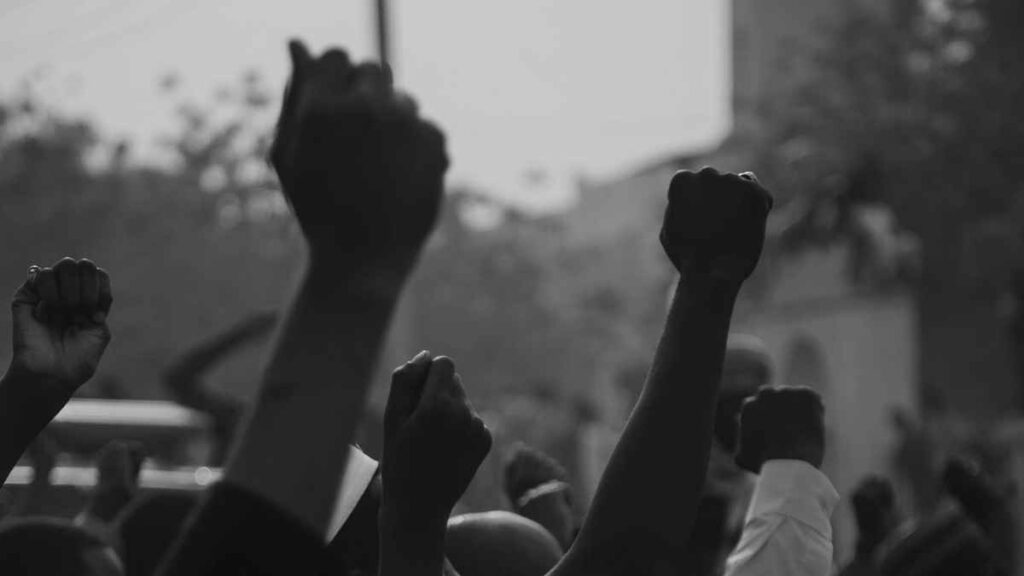
For any protest to succeed against the will of a resolved and powerful government, it must be sustained, it must be able to go on for as long as necessary. The protest should expect the government to issue denials as to its intentions and offer anodyne explanations or minor changes in phrasing of the objectionable system being proposed. In order to sustain itself the protest needs to be consistently peaceful and non-violent. It needs to be in practice leaderless so that the protest movement cannot be silenced simply by silencing the leaders. The protest needs to be localized and supported at the grassroots level while being organized or inspired at the more regional level. What this means is that the protest can be planned to take place in one area with residents from other nearby areas providing support. In this way isolated groups of supporters cannot be targeted and improperly treated by the security forces.
For the same reason it is important for any protest event to be recorded and the recording transmitted live. It is sometimes helpful to have well known persons who are sympathetic to the protesters either attend the events or write and speak about them. What is most important is to avoid negative publicity and to be on the alert for government agents who will try to steer any protest towards violence or towards the chanting of extremist slogans. Both these provide the government with an excuse to declare the protest as a threat to security.
The protesters must avoid communalism and divisive rhetoric because that is what they are protesting against: the law excluding Muslim refugees from any right of citizenship in India, and the potential of the new registration process, appear to be a device of the ruling political party to divide the people of India, starting with the Muslims. On the contrary, protesters must make it very clear that they are protesting for equality of rights and fair treatment for all the people of India, and pressing the government to do its constitutional duty in that regard.