A Spiritual Evening in Kakori

An Evening in Kakori
18/4/2026
Do not ask about the state of my youth and old age,
Two turns were the dreams of the world of oblivion,
The thread of breath brought news of anxiety,
May Allah protect the heart of this ruined house,
The shame of sin erases the form of torment,
O child of tears, wash away my records of account.
The enchanting evening of April 6, 2026, was not merely a fleeting moment for us; it was a profound spiritual experience that knocked on the hidden chambers of the soul. As we—myself, Zaid, Maulana Muhammad Wathiq Nadwi, and Maulana Saud Azami—set out for Kakori, it seemed a brief journey, yet in truth, it was a voyage of the heart and soul, where each step acquainted us with new horizons within ourselves. It felt as though, while walking on the earth, we were moving towards another realm, a world where time slowed and the intensity of feeling deepened.
The people of Nadwa can never forget Kakori; this town is the custodian of those sacred souls who illuminated the lamps of knowledge and virtue. It was here that Munshi Ihtisham Kakori resided, on whose land the magnificent buildings of Darul Uloom stand, and here too lived another benefactor of Nadwa, Munshi Athar Ali Kakori, after whom Athar Hostel is named. Thus, this town is not merely a collection of bricks and mortar but a continuous tradition of knowledge and benevolence passed down through generations.
Upon entering the boundaries of Kakori, a silent majesty and dignity enveloped us. It felt as if the air itself was engaged in poetry and remembrance, and on the wings of the breeze, memories of centuries were floating. Ancient mansions, towering houses, and dimly lit alleys each narrated the tales of the past in their own language. Every door and wall seemed to be the custodian of the footsteps of the learned and virtuous, and every corner was fragrant with the memory of those sacred souls who made this town a cradle of knowledge and literature.
This is the same Kakori where once the luminaries of Urdu literature shone, where the great poet Mohsin Kakori elevated naat poetry to new heights, and his verses still illuminate hearts like lamps of devotion. This land has also given birth to other writers and thinkers who enriched language and expression and bestowed the fragrance of Lucknow’s culture with permanence. It felt as if the echoes of poetry still lingered in these streets, as if every gust of wind carried a couplet of a ghazal, as if words themselves had dissolved into the air, becoming an eternal melody.
From the direction of Kashi, the clouds moved towards Mathura,
The breeze brings Ganges water on the shoulders of lightning,
At home, the tall ones of Gokul bathe,
Going to bathe at the Yamuna is also a long endeavor,
The news has just flown in from Mahaban,
That the clouds are coming to the pilgrimage on the wind,
The chosen manuscript of unity was this from the beginning of time,
That neither is there a second to Ahmad nor a first to Ahad,
Even the dawn of the solar era will occur on the Day of Judgment,
Forever, the era of Muhammad is the first day,
On the night of Isra, from the radiance of the blessed face,
A golden halo adorned the neck of Rafraf,
In prostration of gratitude is the forehead of the Throne of the Most High,
Applying the sandalwood of the sacred feet’s dust,
Your superiority is filled with signs and books,
Your primacy is agreed upon by religions and nations.
We walked through these alleys slowly, reverently, as if entering the gathering of an elder. A strange tenderness enveloped the heart; sometimes the eyes would moisten, sometimes a silent smile would grace the lips. It was as if, while turning the pages of an old book, one suddenly finds a forgotten memory, sweet yet filled with pain. At times, it felt as if we were not of this time, but people from another era who had temporarily arrived in this age.
In this state, we arrived at the sanctuary of Khanqah Kazmiya Qalandariya. This khanqah is not merely a building but a living tradition, a breathing history. From its walls emanates a light that illuminates the heart more than the eyes, as if in darkness, someone suddenly lights a lamp and its glow penetrates directly into the heart.
This is the place established by Shah Muhammad Kazim Qalandar—the man of God who lit the lamp of humanity, love, and brotherhood, and lit it in such a way that even centuries later, its flame has not dimmed. His being was like a sun whose light not only illuminated this town but also distant regions, and his teachings still bring freshness to hearts like the first ray of dawn.
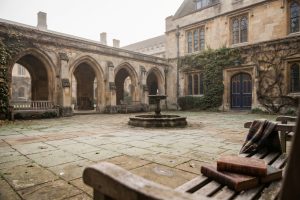
As we stepped into the courtyard of the khanqah, it felt as if the burdens of the heart were lifting, as if the soul had rediscovered a lost peace. There was a gentle whisper in the air—of remembrance, of prayer, and of that love which embraces everything in its fold. Even the silence there seemed like a melody, a melody that only the heart can hear.
We had the honor of meeting a sheikh there. His conversation was devoid of pretense and affectation, possessing a simplicity that captivates the heart. His words felt like dewdrops falling on dry leaves, soft, silent, yet life-giving. We were all ears, and the soil of our hearts was being nourished by his words. Our familiarity with him was also due to his connection with Nadwa and its personalities. He mentioned that Maulana Abdullah Abbas Nadwi used to visit here, and that they had a deep connection with Khanqah Majibiya Bhalwari Sharif. Hearing this, another sense of kinship arose in our hearts, as if finding a familiar face in an unfamiliar environment.
We visited various corners of the khanqah, observing the places where once elders like Shah Turab Ali Qalandar, Shah Haider Ali Qalandar, and Shah Ali Akbar Qalandar held gatherings of remembrance and contemplation. Each corner held a secret, each wall narrated a tale. It seemed as if time had stood still here, and each moment had transformed into eternal tranquility.
For a while, we stood silently. This silence too had a language, a language that transcends words. In that stillness, we began to hear our own voice, feel the echo of our own existence. It felt as if we were meeting ourselves for the first time, as if a lamp had been lit in the depths of the heart.
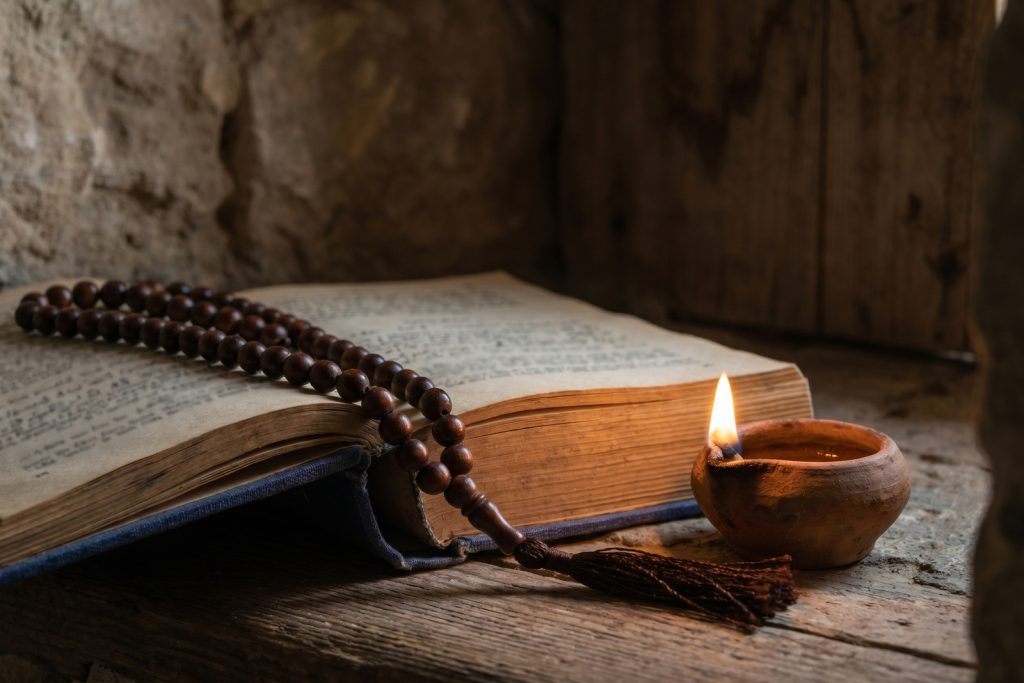
We also intensely felt that the true essence of Kakori lies in its scholarly, literary, and spiritual history. This is the land where the pen and the rosary together demonstrated their influence, where knowledge and enlightenment combined to teach humanity the lesson of humanity.
As we rose to depart, an unfamiliar sadness filled our hearts. Our feet moved, but our hearts wished to remain. It felt as if we were awakening from a sacred dream, and the fragrance of that dream still lingered with us, nestled in the hidden chambers of our hearts.
Kakori was no longer just a place for us; it had become a state of being, a state that descends into the heart like a prayer, silently illuminating the soul, like a lamp burning in the darkness, which not only shines itself but also bestows light upon its surroundings.