A Journey to Takiya Kalan

Friday, 16 October 2026. Our little caravan – in which the esteemed brother Mawlānā ʿAbd al-Ḥayy, resident of Qaṭar, Mawlānā Yūsuf Bhūpālī, Dr Shams al-Dīn Bhūpālī, Mawlānā Yūsuf Asʿad and other noble companions were present – reached Takiya Kalān, Rāy Bareli, shortly before the Jumuʿah prayer. It seemed as though we were not arriving at a new destination, but rather entering a long-lost chapter of our own lives; a chapter upon whose pages the dust of time had indeed settled, yet the ink of memory remained fresh. Some points on the map are no more than dots, while other places dwell in the cartography of the heart. Takiya Kalān is among the latter: the feet tread the earth, but the heart walks the corridors of the past.
There we found Dr Anas Nadwī, from Australia, already present. When we met Mawlānā Bilāl Ḥasanī, Nāẓim of Nadwat al-ʿUlamāʾ, and Mawlānā ʿAmmār Ḥasanī, Nāẓir of Nadwat al-ʿUlamāʾ, a delightful majlis was formed. Alongside scholarly and literary topics the discussion turned to the Tahrīk-i-Payām-i-Insāniyat. This movement is not merely an historical title; it is a summons to connect human beings with one another, to preserve respect despite disagreement, and to light the lamp of goodwill amid the darkness of hatred. The problems of the age continue to change, yet the path to the human heart still passes through love, sincerity and good conduct.
In Mawlānā Bilāl Ḥasanī’s personality gentleness, nobility and dignity are harmoniously blended. The softness of his tone resembles the morning breeze that touches the flowers without burdening their petals. His speech is courteous without affectation, serious without dryness, dignified without that formality which estranges the speaker from his listener. In his temperament one beholds a glimpse of that cultural tradition of Nadwa which regards knowledge not merely as a store of information but as a means of cultivating character, moderation and breadth of vision.
The legacy of Nadwa is not confined to books, buildings and certificates; it is also a continuity of intellectual disposition, academic integrity and moral refinement. Its excellence lies in preserving the light of the ancient while not closing its eyes to the demands of the modern. For it, the perfection of knowledge does not consist only in disagreement, but in retaining balance despite disagreement; and the real mark of nobility is neither a loud voice nor a lofty post, but the character that prevents a person, even in possession of authority, from losing humility. In Mawlānā Bilāl’s person one senses the fragrance of this scholarly and ethical inheritance. When the legacy of the elders passes beyond names and is absorbed into temperaments, tradition ceases to be a relic of the past and becomes a living reality of the present.
In the mindset of Mawlānā ʿAmmār Ḥasanī intellectual seriousness and administrative insight stand out. The responsibility of an institution such as Nadwat al-ʿUlamāʾ is not merely the running of office affairs; it is the guardianship of an historical trust, to which are bound the labours of the elders, an academic tradition and the expectations of coming generations. To advance such an institution one must understand the spirit of that tradition as well as its regulations, and possess awareness of the changing demands of the time. With the arrangement of files an office may run, but the life of an educational institution requires wisdom, purposiveness and the art of carrying people along. Mawlānā ʿAmmār’s task is therefore vital: on the one hand he must safeguard the trust of the past, and on the other open the way for the possibilities of the future. The true strength of institutions lies not in their buildings but in the aims for which they are established.
A special delight of this journey was meeting the sons of our late friend Jaʿfar Masʿūd Ḥasanī – our dear ones Khalīl Ḥasanī, Amīn Ḥasanī and ʿAbd al-Ḥayy Ḥasanī – who invited us to lunch. This invitation renewed an old companionship and expressed that bond of affection which the turns of time have not weakened. Some people depart from the world yet leave behind a fragrance that long lingers in their loved ones, friends and the memories associated with them. When one meets their children, one feels that separation has not ended the relationship, only altered its form.
Seeing Khalīl and Amīn revived the memory of Jaʿfar Masʿūd Ḥasanī. Children are not merely the genealogical heirs of their parents; they are also custodians of their morals, relations and family traditions. The love and warmth of these dear ones deepened the feeling within my heart that the capital of friendship consists not only of moments spent with the friend, but also of the relationships that endure afterwards. The presence of ʿAbd al-Ḥayy Ḥasanī further filled the gathering with familial love and intimacy. It seemed as though the memory of our departed friend had silently taken its place in the assembly. Some recollections moisten the eyes, yet at the same time they bestow upon the heart a strange tranquillity: as though the light of an extinguished lamp were now visible in the lamps that remain.
The memories of our honoured teachers, Mawlānā Rābiʿ Ḥasanī Nadwī (may God have mercy upon him) and Mawlānā Wāḍiḥ Rashīd Nadwī (may God have mercy upon him), also became alive. Memories possess their own world; no frontiers of time block them, no walls of distance. At times one face brings before the eyes a scene decades old; at others, in the silence of a familiar place, one hears the voice of a venerable elder. In that very state the days returned to mind when we used to observe iʿtikāf here in the company of the thinker of Islām, Mawlānā Sayyid Abū al-Ḥasan ʿAlī Nadwī (may God have mercy upon him).
Those days were not confined to rituals of worship; they were a beautiful blend of learning, training, companionship and spiritual growth. We attended the dars al-Qurʾān of Mawlānā Shahbāz Ṣāḥib, benefited from the dars al-ḥadīth of Mawlānā ʿAbd Allāh Ḥasanī and took part in the ifṭār and suḥūr arranged under the supervision of Mawlānā ʿAbd al-ʿAzīz Bhaṭkalī. In that environment knowledge emerged from the pages of books to become part of life, and the company of the elders was not merely a meeting but a silent process of character-building. Worship, study, lessons and mutual companionship endowed those days with a meaning that has deepened as time has passed.
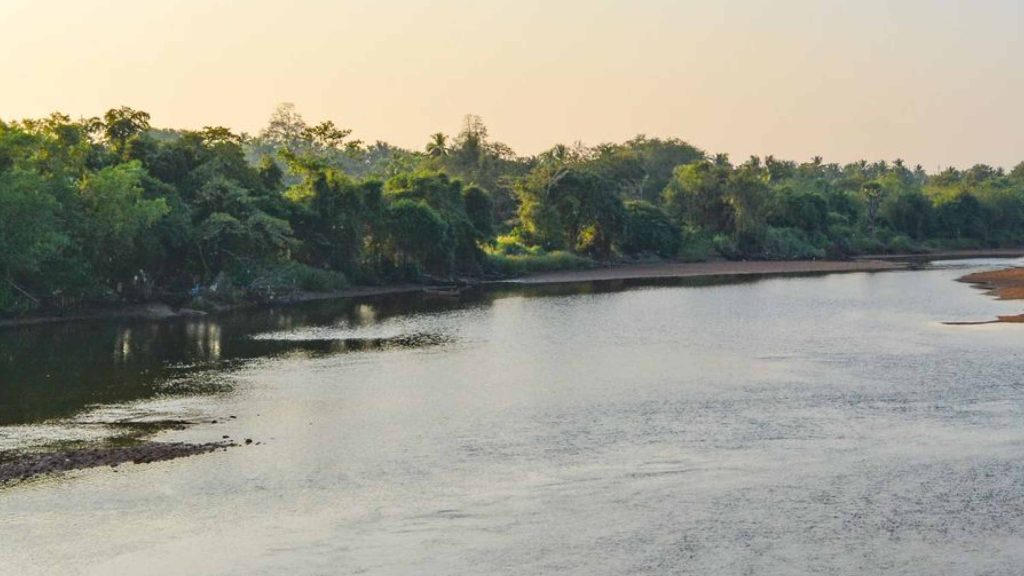
Along with these scenes returned the memory of bathing in the Saī River during the summers – those days when the demands of life were simple, when in the company of friends one lost track of time, and when the cool water of the river washed away both heat and fatigue. At that time we perhaps did not realise that these seemingly ordinary moments would one day become the most precious treasure of remembrance. In youth a person spends time, but with age he discovers how many priceless experiences time has been storing within itself. Today the Saī River appears not merely a flow of water but a mirror of a life gone by; within its waves one discerns the carefree spirit of youth, and upon its banks the imprints of friends’ companionship.
This visit to Takiya Kalān bestowed such delight that for a while even the ghazals of Ḥāfiẓ and the rubāʿiyyāt of Khayyām faded from memory. Spontaneously the heart declared that this place is more beautiful than the verse of Ḥāfiẓ and more captivating than the quatrains of Khayyām. In the couplets of Ḥāfiẓ there is the charm of Shīrāz and the flow of the water of Rukn-Ābād, while in the rubāʿiyyāt of Khayyām there are the mysteries of life’s transience and the revolution of days. Yet some places exist where, instead of reading poetry, one experiences its very essence: where the memories of elders, the company of scholars, the affection of friends and the bank of the Saī coalesce to compose a poetry that cannot be wholly gathered into words.
It is related that Ḥāfiẓ excused himself from travelling to Bengal at the king’s invitation by invoking his love for Shīrāz and its enchanting atmosphere. Setting aside the historical details of this story, it certainly highlights a beautiful aspect of a poet’s attachment to his beloved surroundings. A thought crossed my mind: if only Ḥāfiẓ had seen this bank of the Saī, the mosque of Takiya Kalān and the radiant faces here! It is possible that his love for Shīrāz would have remained undiminished, yet in the garden of his poetry a flower from Takiya Kalān would surely have blossomed. After all, certain places, through their silent grace, bestow a state that even the greatest poets cannot fully convey in words.
The beauty of Takiya Kalān lies not merely in its buildings or historical associations, but in that spiritual and cultural life which makes it a living tradition. Some edifices are lofty, yet beneath their shade hearts remain small; other places are outwardly simple, yet on arrival a person’s inner being is enlarged. Takiya Kalān belongs to this second kind. Its loveliness does not dazzle the eye; it inhabits and enriches the heart. Here the past is not a closed door to be opened only occasionally; rather, it is a part of the present, continuously alive in the teachings of the elders, the memories of the teachers and the love of the friends.