Do We Truly Know Reality?
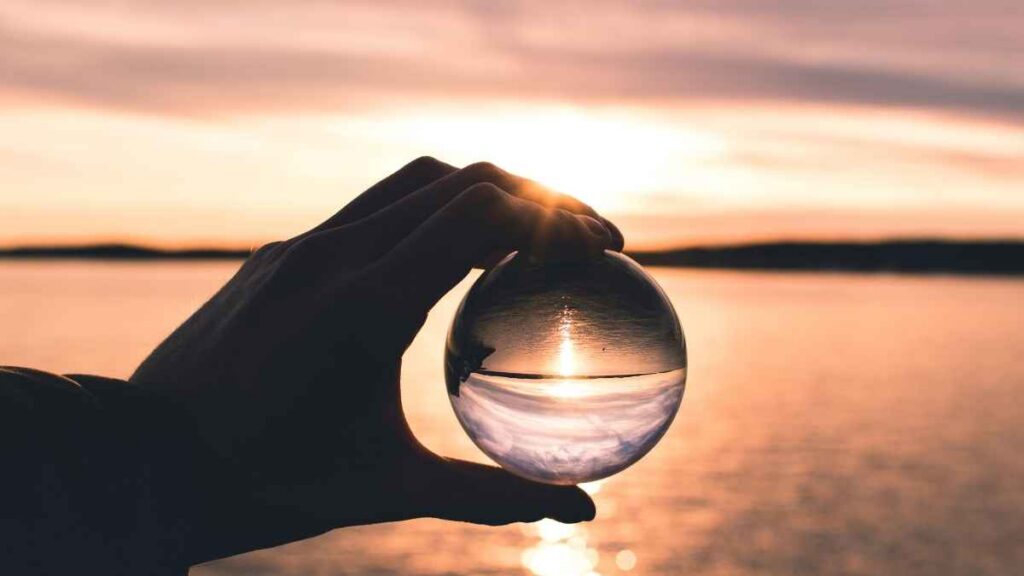
Human beings, throughout history, have been on a quest to reach the truth. From ancient times to the present day, people have adopted every possible path to understand the reality of the universe and their own existence. Philosophers reflected, mystics felt, scientists experimented, and thinkers analysed. Yet the fundamental question remains: can we truly know the essence of a thing? Or are we merely mistaking a limited, surface-level perspective for complete knowledge?
In our current age, as artificial intelligence develops rapidly, this question becomes even more pressing. AI operates on the binary language of 0s and 1s, converting everything into digital data and representations. If you ask AI to create an image of a human being, it will generate a beautiful portrait — but behind that image lies only data, code, and binary repetition. For AI, a human being is nothing more than a data structure, a numerical sketch.
Similarly, if a painter were to draw a human, he would combine colours, lines, and shading to produce a work of art. Yet, his creation would not reflect the human’s inner essence, only an outward resemblance. It would be an impression — a reflection of how the artist perceives and feels about the subject, expressed on canvas through emotion and sight.
If a skilled sculptor carved a statue from stone, it would mirror the human form — limbs, posture, and proportions — but it would lack the true human essence: the soul, the motion, the consciousness that makes a person alive. Here too, the truth is confined to a physical dimension.
These examples show that the reality of a human being cannot be fully known, understood, or expressed from a single angle. A human is not just a body, but also a soul. Not just intellect, but also emotion. A human being is awareness, longing, dreams, fears, memories, and experiences — all the components that make one whole. No code, image, or sculpture can ever fully capture these layers.
We all see the world and each other through our own lenses. A scientist sees a world of observations and laws — Newton’s mechanics, Einstein’s relativity — all real within that framework. A Sufi sees a different world, one behind veils, sensed rather than spoken. A merchant views life through gains and losses, value and cost. A poet sees the world as a dream, a flowing stream of emotion painted with words. Are they not all seeing different aspects of the same world? Are they not, in their own ways, correct? True knowledge is not in denying others’ viewpoints but in recognising them as valid fragments of a larger truth.
This is where we must admit that what we perceive as “reality” may not be the complete truth — only an impression, a limited perspective, a partial understanding. Our knowledge, our vision, our intellect — all have boundaries. What we perceive is a reflection of our comprehension, not necessarily the full face of truth. Just as we smile at the limited perception of AI, perhaps some higher being might observe our limited grasp of reality and find it similarly incomplete.
It is possible that our minds and senses function on a certain frequency, and there are truths beyond that range — just as a blind person cannot see light or colours. We may be blind to angles of truth we don’t even know exist. Perhaps a higher consciousness, a transcendent being, sees all that we cannot and smiles at our self-assured understanding — just as we do at AI.
So, can we ever truly know reality? Perhaps only when we accept every viewpoint, value every perspective, and embrace all knowledge as part of a greater whole. To know truth, we must see not just with our own eyes but through the eyes of others, listen not only with our own ears but with others’ wisdom. We must argue less, and strive more to understand others’ understanding — for perhaps each person holds a piece of the truth, and only by combining, sharing, and comprehending these fragments can we glimpse the fuller picture.
This humility, this broadness of vision, this awareness — may be what brings us closer to the light of truth. Perhaps this is the only path toward reality, even if the full truth always remains veiled in mystery.
Original source: