Maulana Akram Nadvi Speaks at Nadwa
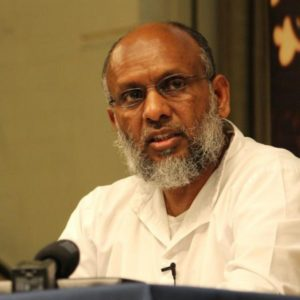

Maulana Dr. Muhammad Akram Nadwi, Dean of Cambridge Islamic College, addresses the students of Nadwatul Ulama, Lucknow. This marks the first program after the vacation at Masjid Darul Uloom Nadwa. Watch, share, and subscribe. Jazakallah Khair.
Human Identity and Self-Purification
Human Identity, Responsibility, and the Path of Self-Purification
The inquiry “Who am I?” cannot be adequately addressed within a purely materialistic or worldly framework. The Qur’an persistently redirects human focus towards an eschatological horizon, urging that life be comprehended in the context of the inevitable realities of death and the Day of Judgement. This perspective is not an encouragement to withdraw from the world, nor does it suggest a negation of worldly engagement; rather, it aims to clarify the true nature, purpose, and limitations of worldly existence. In the Qur’anic view, death serves as a pivotal moment of revelation. It dispels illusions, reveals the fragility and temporality of worldly attachments, and reorders human priorities by situating all actions within a broader moral and metaphysical trajectory. Thus, life is not an end in itself but a transitional phase, a journey culminating in the encounter with God, where every action, intention, and disposition will be fully accounted for.
The Day of Judgement, as portrayed in the Qur’an, forms the central axis of human moral responsibility. It provides ultimate coherence to ethical life by affirming that no deed, however small, is insignificant, and no intention, however hidden, escapes divine knowledge. Thus, the human being is not a passive participant in existence but a morally responsible agent moving inevitably towards a moment of comprehensive reckoning.
Within this framework, the purification of the self (tazkiyah al-nafs) emerges not as an optional or secondary spiritual exercise but as the central task of human existence. It is the necessary preparation for that final encounter with God, as expressed in the Qur’anic declaration: “He has succeeded who purifies it, and he has failed who corrupts it” (91:9–10). Success, therefore, is not defined by outward achievement, social recognition, or material accumulation, but by the condition in which the human soul returns to its Creator.
At the heart of this moral and spiritual journey lies the faculty of will, through which the human being exercises choice, intention, and direction. However, the will does not operate independently or arbitrarily; it is shaped, informed, and refined by knowledge and understanding. An uninformed or misdirected will, even when exercised with determination, may lead not to moral rectitude but to corruption and self-destruction. Conversely, a will grounded in sound knowledge—knowledge derived from revelation, supported by reflection, and integrated within the Qur’anic moral framework—becomes a means of transformation, discipline, and elevation. The Qur’anic paradigm does not recognize a separation between knowledge and action. True knowledge is not merely informational; it penetrates the heart, reforms perception, and ultimately governs behavior.
In this sense, the project of self-purification is inseparable from the acquisition and internalization of knowledge. One cannot purify the self without first understanding the self: its inclinations, vulnerabilities, tendencies towards self-deception, and capacity for both good and evil. The formation of willpower, therefore, depends upon a structured and disciplined cultivation of knowledge. This includes knowledge of God and His commands, awareness of the inner self and its impulses, recognition of the consequences that unfold in the Hereafter, and a sustained commitment to self-discipline and self-accountability. Through the integration of knowledge and will, the human being becomes capable of resisting base impulses, overcoming forms of self-delusion, and maintaining steadfastness upon truth. Without such integration, the will remains unstable, easily swayed by desire, heedlessness, or external pressures.
Within this broader conceptual framework, the Qur’an situates the human being in a position of profound significance by designating him as both a vicegerent (khalifah) and a bearer of trust (amin). God declares: “Indeed, We offered the Trust to the heavens, the earth, and the mountains, but they declined to bear it and feared it; yet man undertook it. Indeed, he has always been unjust and ignorant” (Qur’an 33:72). This “Trust” (amanah) is intrinsically connected with the concept of vicegerency articulated elsewhere in the Qur’an: “Indeed, I will place upon the earth a vicegerent” (Qur’an 2:30). The Trust refers to a unique and immense responsibility conferred upon the human being: the capacity for conscious, voluntary obedience to God. The human being has been granted the necessary intellectual, moral, and practical faculties required to fulfill this responsibility. He has been given access to resources, endowed with the ability to understand divine guidance, and provided with the means to act upon it. However, crucially, he has not been compelled to obey. Rather, he has been granted full freedom to accept or reject divine command.
This element of voluntary obedience lies at the heart of the Trust. It is precisely because the human being is not coerced that his obedience acquires moral meaning and value. The heavens, the earth, and the mountains—despite their magnitude and stability, declined to bear this Trust, recognizing their incapacity to fulfill the demands of such a responsibility. The human being, by contrast, accepted it. In doing so, he demonstrated both his remarkable potential and his exposure to immense risk. The Qur’anic characterization of this acceptance as an act marked by injustice and ignorance invites careful reflection. Injustice here pertains to the misuse or misplacement of responsibility in action, while ignorance pertains to a failure to fully comprehend the gravity and implications of what was undertaken. In accepting the Trust, the human being embarked upon an undertaking of profound consequence without fully grasping its weight.
Yet it is precisely within this daring acceptance that the secret of human potential resides. Without the willingness to assume risk, the latent capacities of the human being would remain unrealized. If the human being were to avoid all danger and responsibility, his potential for moral and intellectual development would never manifest. It is through engaging with risk, through the possibility of both success and failure, that the human condition unfolds. Consequently, human history presents a wide spectrum of outcomes. On one end stand the Prophets, Noah, Abraham, Moses, Jesus, and Muhammad (peace be upon them all), along with the righteous, who fulfilled the Trust through conscious obedience and moral integrity. On the other end stand figures such as Cain, Nimrod, Pharaoh, Abu Lahab, and Abu Jahl, who betrayed the Trust and exemplified moral corruption. This divergence is not incidental; it is the direct and inevitable consequence of human freedom of choice.
The Qur’an further clarifies the ultimate outcomes of this moral differentiation: “That God may punish the hypocrite men and women and the polytheist men and women, and that God may accept the repentance of the believing men and women; and God is Ever-Forgiving, Most Merciful” (Qur’an 33:73). Thus, the acceptance of the Trust leads either to moral decline, manifested in disbelief, hypocrisy, and ethical failure, or to moral elevation, realized through faith, repentance, and the reception of divine mercy. Importantly, even where failure occurs, the possibility of return remains open. Human beings are not defined solely by their lapses, but by their capacity to recognize error, to repent, and to realign themselves with divine guidance. The earliest example of this dynamic is found in the account of Adam, whose lapse was followed by repentance and acceptance, thereby establishing a foundational paradigm for human moral recovery.
A question may arise regarding the apparent tension between the positive portrayal of the human being in the verse concerning vicegerency and the critical portrayal in the verse concerning the Trust. This tension is resolved by attending carefully to the difference in context. In the context of vicegerency, the Qur’an addresses the human being with a tone that highlights his potential and honors his capacity, while simultaneously warning him against the enmity of Satan, whose opposition originates in the very moment of humanity’s elevation to this status. The emphasis here is on human potential and the necessity of vigilance. In contrast, in the context of the Trust, the Qur’anic discourse shifts towards exposing the realities of disbelief and hypocrisy, emphasizing the human tendency towards failure when the Trust is neglected. Each passage, therefore, illuminates a different dimension of the same human reality: one emphasizes potential and responsibility, while the other highlights vulnerability and the consequences of moral failure.
In sum, the human being occupies a position defined by both honor and fragility. He is entrusted with a responsibility that even the greatest creations declined, yet he remains susceptible to error, heedlessness, and moral decline. To understand who we are is to recognize that we are travelers moving inexorably towards death and judgement; that our will must be disciplined, informed, and guided by sound knowledge; and that we are bearers of a profound Trust that is exercised through conscious and voluntary obedience to God. The purification of the self is the process through which this Trust is honored. It is a lifelong endeavor that seeks to align knowledge, will, and action in accordance with divine guidance, thereby preparing the human being for the moment when all realities are unveiled and every soul is brought face to face with the truth of its own condition.
Tadabbur-e-Qur’an Course Announcement
*Tadabbur-e-Qur’an Course*
*With Dr. Mohammed Akram Nadwi*
*Introduction to the Foundations of Deep Qur’anic Reflection*
Join us for an exclusive in-person course on guided Qur’anic reflection (*tadabbur*) with Dr. Mohammed Akram Nadwi, a distinguished scholar renowned globally in the Islamic sciences.
Open to both men and women
*Batley Community Centre, Batley, WF17 5DH*
*Saturday, 27th June 2026*
*11:00am – 4:00pm*
Spaces are limited — reserve your spot now:
[Event Registration](https://www.eventbrite.com/e/tadabbur-e-quran-with-dr-mohammed-akram-nadwi-tickets-1986700413417?aff=oddtdtcreator)
Stay informed about future events by joining our WhatsApp group:
[Join WhatsApp Group](https://chat.whatsapp.com/BkjjdGmif1T3CptpJAxZxb)
Please share with family and friends — this is a rare opportunity not to be missed.
*Al-Manar*
info@al-manar.uk
07356 094055
*Forward Share*