Visit to the Sacred Mosque in Mecca
Mecca Has No Lower Part
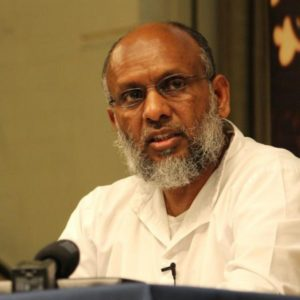
By Dr. Muhammad Akram Nadwi
Oxford
As the sun began its descent towards the horizon, Zaid and I set out at half-past five on the evening of Monday, the twenty-fifth of Shawwal, in the year 1447 Hijri, towards the Sacred Mosque. Our hearts brimmed with longing akin to the thirst of a parched soul for cool water, or the yearning of an exile glimpsing the distant visage of home. Our journey to the Haram was not the routine visit of one who frequents a familiar place, but rather the return of a heart to its sanctuary, a soul to its place of tranquility.
We entered the mosque through King Fahd Gate, amidst a serene throng, as if guided by an unseen, unwavering order. Ascending to the upper level, we commenced our circumambulation. The ancient House stood in the center of the tawaf area, majestic in its stillness, awe-inspiring in its grandeur, while hearts circled it before feet, and spirits encircled it before bodies. We completed four rounds before the call to Maghrib prayer interrupted our tawaf, pausing the visible movement, yet the heart’s motion only grew in clarity and reverence.
After completing the prayer, we resumed our tawaf, picking up where we left off, until we completed the seven circuits. We then prayed two rak’ahs, intending only gratitude and thanks, grateful to Allah for bringing us to His House and granting us this moment where worship is sweetened and the heart is cleansed of life’s burdens.
We prayed Isha in the courtyard of the Haram, in front of the Dar Al-Tawhid Hotel, where the air was gentle, souls were at peace, and night had begun to drape Mecca in its delicate veil. There, people dispersed in various directions, and we too parted ways, but towards another facet of the night, no less delightful, though differing in nature.
We headed to Aziziyah, accompanied by a group of scholars from Umm Al-Qura, among them jurists and hadith scholars, including those who combined narration with understanding. Leading them was our friend Sheikh Turki Al-Fadhli, a man whose name is synonymous with the chains of transmission in Mecca and who holds a prominent place among the teachers of the Haram. He is, in our view and that of many, the authority of Mecca and its benefactor, unrivaled in this regard.
We then rode in Turki’s car to Al-Husseiniyah, a village south of Mecca, beyond the Al-Awali district, stretching across the mountain slopes like a memory in the soul, bordered by Batha Quraysh on one side and Mount Kasab on the other, leading to the route of Al-Khawajat and Wadi Malkan. Al-Husseiniyah at night possesses a unique tranquility, as if distancing itself from the city’s clamor to retain a touch of its original Bedouin charm and the ancient Arab way of life.
We ascended to Sultan’s Restaurant, perched on a mountain, overseeing the plain like a generous host over his guests. This establishment is not merely a place for dining but a social club where the pleasure of taste meets the delight of scenery, where the blessing of food mingles with the blessing of companionship.
Notably, the lambs are slaughtered on-site, and the meat is cooked fresh, untouched by the chill of freezing or the harshness of prolonged preservation. We witnessed the slaughter and cooking areas firsthand, as if transitioning from the table to its source, from the blessing to its original fount.
We observed visitors in scattered groups, young and old, seated on plush carpets, reclining on elegant cushions, with the sky as their ceiling and the stars as their lamps, dining in tranquility and engaging in conversation with unaffected camaraderie.
We were served lamb broth, which, as I recall, was unlike any broth I had tasted before; clear in color, deep in flavor, and delicate in taste, so much so that I was tempted to make it my sole course, were it not for the remaining dishes.
Then came the kabsa, cooked in a pressure cooker, where the aroma of rice blended with the richness of the meat, followed by the maqlooba with bread, a dish that brings a special joy, not merely for its taste, but because it evokes memories of early Arab kitchens, when food was simple and noble, unadorned with false embellishments. I recalled the poet’s words:
“Roasted meat and wine… and the trot of the swift camel,
A man endures in passion… the journey’s length,
Of life’s pleasures, and the youth… for time, which is full of wonders.”
Turki then recited the lines of Imru’ al-Qais:
“We brush the manes of steeds with our hands,
When we rise from a feast of roasted meat.”
After we finished the meal, tea was served, a gentle conclusion to a bountiful table, and our conversation flowed, shifting from food to knowledge, from the pleasure of taste to the pleasure of thought. We discussed the Prophetic hadith, the two Sahihs, the methodologies of the scholars in verifying texts, and the nuances of “I heard,” “He narrated to us,” and “He informed us,” and the confusion some later scholars introduced between the modes of transmission, leading to blurred boundaries and mixed meanings.
Sheikh Turki, as usual, spoke with the confidence of a knowledgeable expert, blending precise narration with insightful commentary, leaving one unsure whether they were in a lesson, a gathering, or a session that combined both knowledge and literature.
We returned to the hotel as night settled, and the streets grew quiet, yet this evening did not settle within us but remained vivid, etched in memory, like a page from an unclosed book.
If someone were to say: “You came to the sacred land of Allah, stayed only a night, and spent part of it eating and drinking; is this not a form of neglect?” We would reply: We see eating and drinking, when done with the right intention, as a form of worship; for He who built this House and bound hearts to it combined prayer and sustenance in His supplication:
“Our Lord, I have settled some of my descendants in an uncultivated valley near Your sacred House… and provide them with fruits so they may be grateful.”
Here, sustenance is paired with prayer, and gratitude is the fruit of both.
I have seen in that courtyard those who performed prayer and then returned to their meal, and I saw no contradiction in this, but rather harmony between the needs of the body and the soul, as Allah intended for humanity.
To us, Mecca is entirely a place of blessing and sanctity, indivisible in word as it is in heart. I was dismayed to hear someone refer to “Lower Mecca,” and I asked: What is this term? They said: To distinguish it from “Upper Mecca.” I replied: This is a term my heart cannot accept; why not say: the Heights of Mecca and the Elevated Parts of Mecca? For Mecca, to us, has no lower part, for it is all elevated by its sanctity, exalted by its sacredness, and radiant with the light Allah has placed within it.