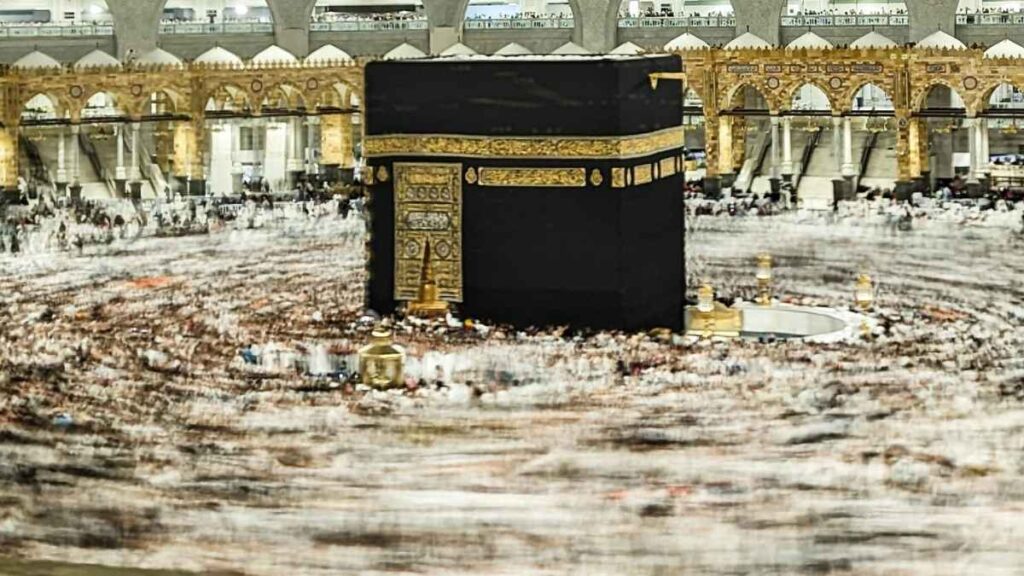
Performing Ṭawāf on the Ground Floor by Deception
17 January 2026
⸻
The Question
Respected Shaykh, Mawlānā Dr Mohammed Akram Nadwi (may Allah preserve you),
Peace be upon you and the mercy and blessings of Allah.
I hope you are well. I am travelling to perform ʿUmrah. For some time now, the Saudi authorities have designated the ground floor area around the Kaʿbah exclusively for those performing ʿUmrah. Those who are in the state of iḥrām for ʿUmrah are allowed to perform ṭawāf on the ground floor, whereas those who are not performing ʿUmrah are required to perform ṭawāf on the upper levels.
In this regard, some scholars issue a fatwā—and act upon it themselves—that one may simply wear the garments of iḥrām, even without the intention of ʿUmrah, so that the Haram security personnel regard him as a muḥrim and allow him to perform ṭawāf on the ground floor.
My question is: is this practice Islamically permissible? And if I were to act upon the fatwā of those scholars, would there be any valid legal allowance for it in Sharīʿah?
⸻
The Answer
Wa ʿalaykum al-salām wa raḥmatullāhi wa barakātuh.
Your question raises a highly important, sensitive, and multi-dimensional issue, touching upon Sharīʿah, the etiquette of worship, ethics, and public order. For this reason, it is necessary to address it in some detail so that all aspects become clear.
⸻
Obedience to Authority and Public Regulations
First and foremost, it must be clarified as a foundational principle that Islam obligates believers to obey those in authority, provided their commands do not entail clear disobedience to Allah. Allah the Exalted says:
“O you who believe, obey Allah, obey the Messenger, and those in authority among you.”
The Messenger of Allah ﷺ also stated that it is obligatory upon a Muslim to listen and obey, whether he finds it pleasing or displeasing, so long as he is not commanded to commit sin.
This establishes that compliance with public regulations and administrative arrangements is itself a religious duty—particularly when such measures are intended to ensure safety, ease, and orderly conduct.
⸻
The Rationale Behind Restricting the Ground Floor
The Saudi authorities’ decision to reserve the maṭāf (ground floor) around the Kaʿbah exclusively for those performing ʿUmrah is not merely an administrative formality. It is a policy grounded in public interest (maṣlaḥah), taking into account the rights and convenience of worshippers.
Its objectives include managing extreme congestion, facilitating genuine ʿumrah-performers, ensuring the safety of women, the elderly, and the vulnerable, and preserving the sanctity of worship. No injustice is involved in this arrangement, nor is anyone prevented from performing ṭawāf altogether, since upper levels are available in all cases.
Thus, those who are genuinely in iḥrām for ʿUmrah are fully entitled, both legally and religiously, to perform ṭawāf on the ground floor. Conversely, those not performing ʿUmrah should perform ṭawāf on the upper levels.
⸻
Wearing Iḥrām Without Intention: A Prohibited Deception
In such circumstances, merely wearing the garments of iḥrām—without the intention of ʿUmrah—in order to gain access to the ground floor is Islamically impermissible and ethically reprehensible. This conduct constitutes deception, fraud, and legal stratagem (ḥīlah).
Islam strictly forbids deception. The Messenger of Allah ﷺ said:
“Whoever deceives is not from us.”
If deception is prohibited in ordinary worldly dealings, then its gravity is far greater in acts of worship, which are sacred and pure by their very nature.
⸻
The Reality of Iḥrām and the Sanctity of Religious Symbols
It must also be understood that iḥrām is not merely a set of clothes; it is a specific devotional state founded upon intention and consecration.
To use it merely as an identifying marker or as a means to gain administrative advantage constitutes disrespect for the symbols of Islam and a violation of their sanctity.
Allah the Exalted says:
“Whoever venerates the symbols of Allah—indeed, that is from the piety of hearts.”
⸻
Serious Religious and Practical Harms
This practice entails several serious religious and practical harms:
1. Violation of the Rights of Genuine ʿUmrah-Performers
Such individuals unlawfully occupy space meant for actual muʿtamirs, leading to congestion, hardship, and disorder.
2. Disobedience to Legitimate Authority
This conduct directly contravenes lawful and reasonable regulations established by the governing authority, which is not permissible in Sharīʿah.
3. False Representation of One’s Religious State
The individual presents himself as a muḥrim when in reality he is not, giving rise to potential legal and religious complications.
4. Serious Juristic Complications
If such a person were to die in that state, he might be treated outwardly as a muḥrim and the rulings of iḥrām applied to him incorrectly—thus departing this world while engaged in deception, God forbid.
⸻
The Correct and God-Fearing Approach
Therefore, the correct, dignified, and safe path for a believer is to honour the symbols of Allah, refrain from falsehood and deception, and adhere to established public order.
If performing ṭawāf on the ground floor is not possible, then performing it on the upper levels is not only permissible but preferable. An act of worship tainted by deception and disobedience is not a source of reward; rather, it becomes a cause of sin. In such a case, refraining from the act altogether is far better than committing disobedience under the guise of worship.
⸻
Concluding Supplication
May Allah grant us a sound understanding of the religion, sincerity, truthfulness, genuine reverence for the symbols of Islam, and the ability to perform our acts of worship with pure intention and integrity. May He accept our worship in accordance with His pleasure. Āmīn.
⸻
Dr Mohammed Akram Nadwi ()