Prayer

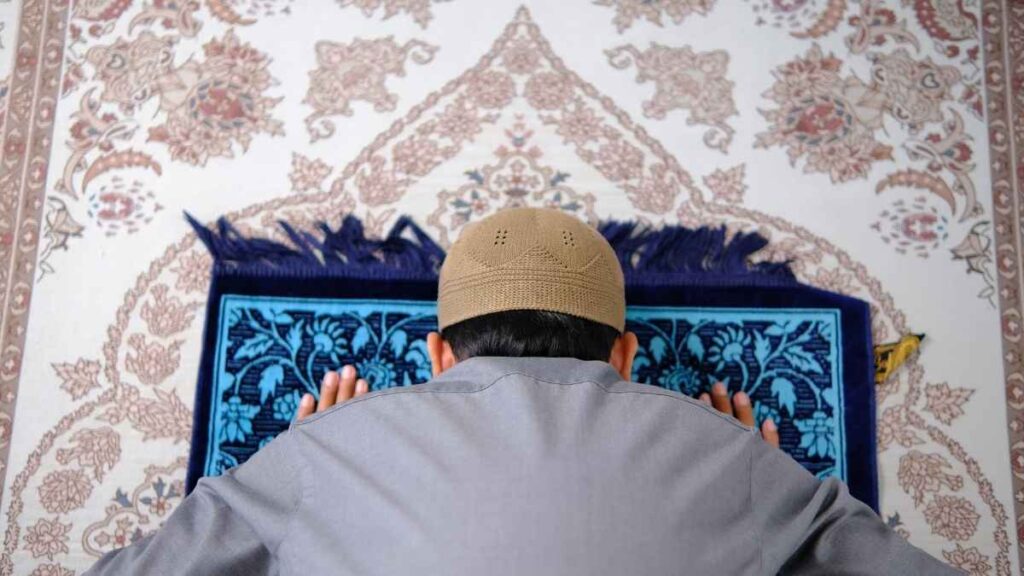
From morning till evening, and from evening till morning, we are occupied with countless worldly and religious matters—some necessary, others not. Yet if we compare them, one truth stands out, clear as the sun at noon: among all these matters, ṣalāh (the prayer) is the most exalted and majestic. Prayer is the very essence of life, the distillation of servitude. Every moment spent in prayer is far better than all that this world contains. The one who prays is the living proof of God on earth, speaking and acting by His command.
Regarding certain good deeds, the Book of God explicitly affirms His companionship with those who do them—for example: “Indeed, God is with the patient” (inna Allāha maʿa al-ṣābirīn), “Indeed, God is with the doers of good” (inna Allāha maʿa al-muḥsinīn), “Indeed, God is with the God-fearing” (inna Allāha maʿa al-muttaqīn). Yet nowhere does it say, “Indeed, God is with those who pray” (inna Allāha maʿa al-muṣallīn)—because the very meaning of prayer is to be with God. In one verse, we are told: “Seek help in God and be patient”; and the phrase “in God” (biʾllāh) here refers to ṣalāh, as explained in other verses. Whoever separates prayer from God is bereft of insight, deprived of sense and understanding; he stands nearer to disbelief than to true faith.
The Reality of Prayer
The whole form of prayer testifies to divine companionship. Its inner aspect is nearness to God and intimate communion with Him; its outward form expresses purity, humility, and angelic discipline. Nothing else in this world possesses such perfect unity between its inner and outer dimensions. This station belongs to prayer alone: from whichever angle you behold it, divine oneness shines forth, the light of the Lord’s mercy glows, and the love of the Creator of all things casts its gentle shade. The one who prays stands in the presence of his Lord; his soul is enraptured, a clear and luminous lamp is lit in his heart, and his intellect is protected from the deceits of Shayṭān.
The Rank of the One Who Prays
What, then, is the rank of the one who prays? Every precious thing is beneath it. He is a neighbour—secure and honoured—of the Supreme Throne, while all else remains confined to the earth. Prayer elevates character and repels wickedness. The desolation of our mosques should be unbearable to us, yet we neglect our prayers without feeling the loss. We worry deeply about restoring the buildings of our mosques—if only a fraction of that concern were devoted to safeguarding our prayers! Were we to truly establish the prayer, other nations would invite us to take their houses of worship and fill them with life. The most powerful testimony to the truth of our faith is our prayer—its outward form and inner reality both proclaim aloud that this is the worship of the truthful.
We often say that, politically, we are too weak to establish Islam. But then—whom shall we blame for our negligence in prayer? Is not prayer the greatest of God’s commands? Can those who pray ever be abased and humiliated? Did any prophet ever begin his mission with anything other than prayer? It is prayer that has delivered nations from weakness and granted them social and political strength. In truth, prayer is so great that such outcomes add nothing to its majesty. If, by praying, one were to lose wealth and power, let them go—for whoever has gained prayer, what more could he possibly lack?
Whenever I see someone praying, love for him grows in my heart; I feel like kissing him, placing him upon my head in honour. From the company of those who pray, a fragrance emanates beyond description. How beloved to me are the praises and glorifications of God—and when these pervade the atmosphere of prayer, the soul trembles in yearning. If there is any state of the believer that surpasses the angels, it is this—his state in prayer.
The Call Back to Prayer
O my Muslim brothers! Reject heedlessness and intoxication with worldly life; come to prayer, for it is the foundation of servitude. Whoever prays is not deprived. In every place where the Qurʾān describes the believers, prayer is mentioned first. Wherever the people of Paradise are described, their foremost virtue is prayer; and wherever the people of Hell are described, their neglect and abandonment of prayer are specially mentioned. When I was a child, I would often wander through my village humming these lines of Shaykh Saʿdī:
Rūz-e Maḥshar keh jangadāz būd
Avvalīn pursish az namāz būd
“On the Day of Resurrection, when anguish overwhelms all,
The very first question will be about the prayer.”
Can one who does not pray truly be called a Muslim? A form of Islam without prayer has no existence—neither in the Book of God, nor in the Sunnah of the prophets, nor in the lives of the Companions and the righteous predecessors. It was prayer that elevated them, and by prayer shall we too be elevated. Human perfection lies hidden within the prayer; every virtue and every honour depends upon it. Detachment and asceticism, contentment and chastity, forbearance and generosity, self-sacrifice and humility, courage and dignity—all are the fruits and branches of this blessed tree. All the pure fruits of the hereafter spring from it. Every stage of nearness to God in the next life is the grace of prayer. The place where prayer is established is enviable even to the heavens—a likeness of the gardens of Paradise:
Az barā-ye sajdah-ye ʿishq āstān-e yāftam
Sarzamīnī būd manẓūr, āsmān-e yāftam
“For the sake of love’s prostration, I found a threshold;
A patch of earth that was cherished, a heaven that I attained.”
Let all ledgers be blackened, yet may the praise of prayer remain incomplete—for who are we, and what is our worth? Were all the prophets, their Companions, all the truthful and the righteous, and even the near angels themselves to extol the virtues of prayer, still it would remain greater, loftier, and more sublime than their words could ever express:
Majlis tamām gasht o ba pāyān rasīd ʿumr
Mā ham-chunān dar avval-e waṣf-e to māndahʾīm
“The gathering has ended, life itself has reached its close,
And still we remain at the beginning of describing You.”