If someone would take your shirt, let him have your cloak as well
One of the well-known wise counsels of ʿĪsā ʿalayhi al-salām is: “If anyone would sue you and take your shirt, let him have your cloak as well” (Matthew 5:40). In a similar vein, he said: “If anyone slaps you on the right cheek, turn to him the other also” (Matthew 5:39).
This is an extraordinary counsel, full of wisdom, but it has not been understood properly. People have taken it to mean that if someone seizes your shirt, you should run after him and give him your cloak also; and if someone strikes you on one cheek, you should immediately offer him the other so that he may strike that too.
From this interpretation one concludes a doctrine of passivism, which has led to much criticism. Even among Christians there is no actual practice of it. If you cause harm to the most devout Christian, he will take revenge, and he may even attack you. The history of Christian wars testifies that this counsel has not been implemented.
Muslims too often criticise this counsel of the New Testament, even mock it, presenting it as proof that Islam is the true religion because it has no such unnatural or unreasonable teaching.
But this way of comparison is un-Islamic. All the prophets are God’s prophets, their teachings are based on revelation, and the Qurʾān repeatedly urges us to follow the prophets, ʿalayhim al-salām.
It is therefore regrettable that people have not attempted to understand the wisdom in the counsel of ʿĪsā ʿalayhi al-salām. What he means is that God has endowed human beings with capacities and opportunities, and within those they are commanded to worship Him. It is possible that some opportunities are taken from them, or that they are deprived of certain advantages, yet enough remain for them to continue in the worship and obedience of their Lord. If they are sincere in worship, and apply their reason calmly, God will guide them, they will discover new opportunities, hold firmly to the rope of their Master, remain steadfast on the path of worship, and in the end the outcome will be in their favour.
If someone seizes your shirt by force, and you cannot recover it, nor have you access to the seats of worldly power, do not waste yourself in lamentations and complaints. That would damage the real task you are charged with. Rather, think: the shirt is gone, but I still have a cloak. If that too is lost, I still have something left. And so apply yourself wholeheartedly to your duty.
The oppressive powers of this world usually try to snatch something from the oppressed. Their two aims are: first, to see it as their victory and to celebrate it; second, to enjoy the spectacle of the oppressed in helplessness. If one acts according to the counsel of ʿĪsā ʿalayhi al-salām, both aims of the oppressor fail. The oppressed proves that he is not helpless. If one thing is lost, it is no matter, he can use his reason to find many substitutes. Then, with full energy, he applies himself to his duties. Thus the triumph of the oppressor is frustrated, while the oppressed lives with dignity and self-respect.
Pharaoh, by the might of his power, deprived Banī Isrāʾīl of many opportunities, forbidding them their collective worship. Mūsā ʿalayhi al-salām led his people out of that deprivation and taught them that the worship of the Lord is the most precious thing, which no one can take from them. Therefore, build your prayer-places in your homes, and there perform both individual and collective worship.
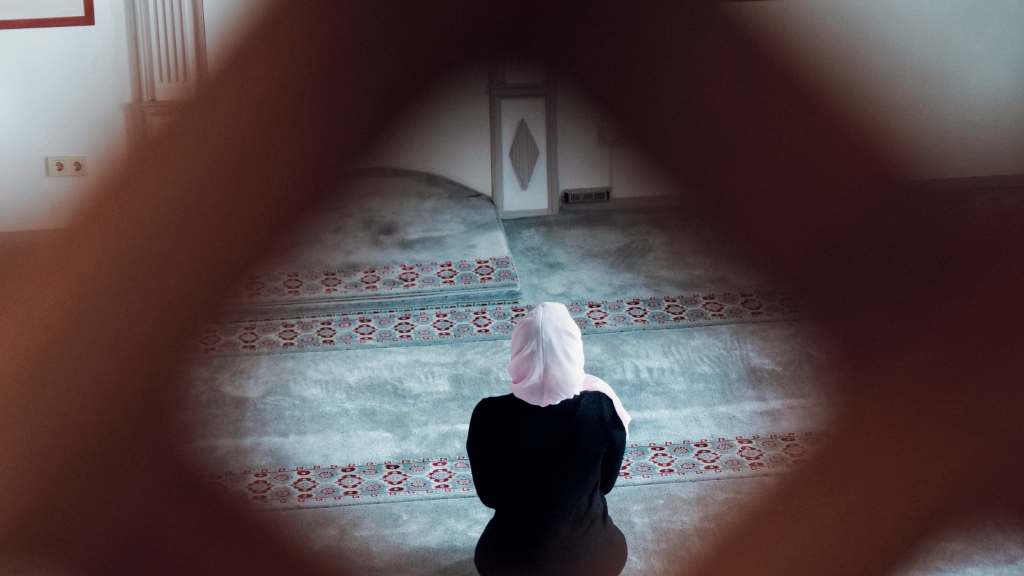
Even today, if somewhere the freedom of worship in public places is restricted, Muslims can still worship in mosques. When they go to the markets, they can choose places near a mosque. If that is difficult, they can arrange their visits for times other than the prayer times. If, while buying and selling, the time for prayer comes, and there is risk of missing it, they can split their transactions into two or more sessions.
In this way, by applying their reason, they will realise how many opportunities remain at their disposal.
If travelling, they can divide their journey into stages. If they cannot pray ẓuhr and ʿaṣr separately, they can combine them; likewise maghrib and ʿishāʾ. But never let prayer be missed, even if this prolongs the journey. In olden times people travelled long distances; how much easier has God made things for you now. If a day’s journey takes you a day and a half because of prayer, do not grieve. Can you not make even this much sacrifice for your Master?
But what concerns me more is this: you complain so much about restrictions on public worship, yet more than ninety per cent of your population, though they have mosques and homes at their disposal, still neglect the prayer. In every village and in every city quarter, there are countless mosques, mostly empty. People do not pray. Is the sin of this wickedness also to be blamed on governments? Why do we not strive to call and reform these Muslims, who, despite having all the means, wilfully neglect the worship of God?
Remember: it is God’s way that when His servants fail to use the means He has given, He reduces their means, until humiliation is imposed upon them. But if they do use them, He gives them more. It is therefore our duty to repent from our sins, never to neglect God’s worship, whatever the difficulty, and to work seriously to instil in those who do not pray a desire to pray. If, under such circumstances, the number of those who pray increases, then indeed we are successful and honoured in the sight of our Lord.
May God make us among those who use their reason, who establish in their hearts the greatness of prayer and worship, and who, whatever the circumstances, pray on time. Āmīn.
Disclaimer: This article was translated by AI. Original post: https://t.me/DrAkramNadwi/7078