Seeking Truth: The Importance of Verification and Knowledge in Islam
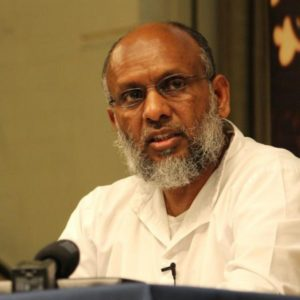
Shaykh Akram Nadwi
Muhaddith & Islamic Scholar

In the Name of Allah, the Most Gracious, the Most Merciful
Has the Sun Risen?
By: Dr. Muhammad Akram Nadwi
Oxford, UK
If your family members differ on whether the sun has risen or not, splitting into two groups—one asserting the sun has risen and the other denying it—do not say, “There are two opinions on this matter: some say the sun has risen, and others say it hasn’t.
” Nor should you spread these differing views on social media. Instead, open your windows, remove the curtains, and see for yourself whether the sun has risen or not.
Similarly, if you find your students debating whether it is raining outside, do not treat both sides equally by listening to their arguments and concluding, “Both perspectives are close, and reconciliation is possible. We shouldn’t be biased towards one opinion.” Instead, step outside the classroom, look up at the sky, and you will know for sure whether it is raining or not.
If you are in Makkah, and someone asks whether India lies to the west or the east, do not respond by saying, “There are two schools of thought on this matter, and both are valid.” Instead, consult a map or ask an expert, and you will clearly see that those claiming India is east are correct, while those saying it is west are wrong.
Seek Knowledge from Reliable Sources
If someone tells you that when Qabeel (Cain) killed his brother Habeel (Abel) and didn’t know what to do with the body, two crows descended to fight, and one buried the other in the ground—don’t blindly accept their claim. Instead, refer to the Book of Allah, which states:
“Then Allah sent a crow digging in the ground to show him how to hide the disgrace of his brother.” (Qur’an 5:31)
The crow was searching for seeds in the ground, and Qabeel, observing this, realized he could bury his brother’s body similarly.
When you hear that some people believe there are four non-emphasized Sunnah rak’ahs before the obligatory ‘Isha prayer, while others deny this, do not hastily perform these rak’ahs or outright reject them. Nor should you spread the notion that there is a legitimate difference of opinion on this matter. Instead, refer to the foundational books of hadith, and you will find that such a practice was neither performed by the Prophet Muhammad ﷺ nor by his Companions.
Gratitude for the Blessings of Perception
Allah has granted you eyes to see, ears to hear, and a mind to comprehend. Cherish these blessings, express gratitude to your Lord, and use these faculties to seek knowledge.
When you can verify something with your own eyes, rely on them. If people around you claim that white is black, do not be swayed by their numbers. Trust your sight and assert that white is indeed white.
If the entire world starts praising the braying of a donkey, calling it melodious, and begins venerating donkeys, distance yourself from them. Listen to the donkey’s bray with your own ears, and you will instinctively find it unpleasant and unbearable.
Truth is Independent of Factions
If people claim that truth depends on sects or schools of thought, or that it is confined to a specific institution, use the innate nature Allah has given you. Trust the analyses of sound reason, and you will realize that the Sovereign Judge of all judges has established clear signs for truth—known as evidences of truth. Seek these evidences, and you will find the truth.
Turn away from all man-made ideologies and proclaim openly:
“Indeed, I have turned my face towards the One who created the heavens and the earth, inclining towards the truth.” (Qur’an 6:79)