Understanding Taqdeer: The Balance of Divine Will and Human Action
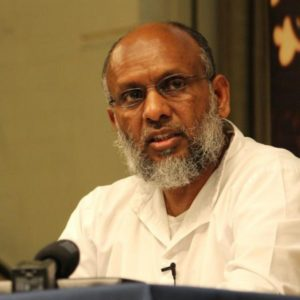
Shaykh Akram Nadwi
Muhaddith & Islamic Scholar

In the Name of Allah, the Most Gracious, the Most Merciful
By: Dr. Muhammad Akram Nadwi, Oxford
The Question:
My younger sister, Saima, sent me the following question:
“Whatever is decreed in one’s destiny will inevitably happen. Then, what is the need for making dua (supplication)? Sustenance (rizq) that is predestined cannot be missed, and wealth will only be received as much as is written. Death will come in the manner and time decreed. So, what should we ask for in dua?”
The Answer:
Misunderstandings about Taqdeer have existed for a long time. Before Islam, all religions and philosophies held different, even contradictory, views about destiny. This confusion persisted even after the advent of Islam. Some people denied Taqdeer altogether—they were called “Qadariyah.” Others denied human will and choice entirely—they were known as “Jabariyah.” These two extremes spread among various groups.
However, within this Ummah, there have always been people who upheld a balanced and moderate understanding of Taqdeer. The explanation of this balanced perspective will follow.
The Root Cause of Misunderstanding:
The primary reason for confusion in matters of Taqdeer—and other attributes of Allah—is the tendency to compare the Creator to the creation. The Qur’an repeatedly refutes this approach, stating:
“There is nothing like unto Him.” (Surah Ash-Shura 42:11)
Despite this, people attempt to limit Allah’s attributes, actions, and essence using their finite understanding. As a result, many misconceptions arise.
Had people acknowledged their limitations and accepted that finite beings cannot comprehend the Infinite, they would have avoided such errors. However, they imposed their flawed reasoning on Allah’s reality, leading themselves and others astray.
Core Concept:
To properly understand Taqdeer, one fundamental truth must be clear:
Allah alone created us, and He alone sets the laws that govern us. Unlike humans who command others without creating them, Allah creates and sustains everything with His knowledge, power, and wisdom. This is a reflection of His Rububiyyah (Lordship).
Additionally, Allah is the only One who has the right to legislate and command, which we call Uluhiyyah (Divinity). Understanding Taqdeer becomes easier when these two attributes—Rububiyyah and Uluhiyyah—are fully grasped.
Rububiyyah (Lordship):
Allah is the Sustainer, and no one else shares this role.
While humans appear to play roles in nurturing or governing others—such as parents raising children or rulers caring for their subjects—these acts are incomparable to Allah’s Rububiyyah.
Parents do not create eyes, ears, or intelligence. Governments do not create the earth, the sun, or the air. Whatever anyone gives, it is Allah who creates the causes, outcomes, and harmony between them. Even parents, rulers, and leaders are created and sustained by Allah alone.
Everything occurs under Allah’s limitless knowledge, power, and wisdom, which humans cannot fully comprehend.
For example, if you ask your child to make tea, think about the process:
Did they create the tea leaves, water, milk, or sugar?
Did they create the hands, intellect, or willpower used to prepare it?
Did they create the earth, fire, or light that made it possible?
The answer is No. All of these were created by Allah. Past, present, and future events are entirely the result of His knowledge, power, and wisdom.
Thus, Taqdeer reflects the reality of Allah’s Rububiyyah, and it is our duty to understand and believe in it.
Uluhiyyah (Divinity):
After creating humanity, Allah provided them with free will, knowledge, and power. Through these faculties, humans perform actions. However, Allah sets conditions for ultimate success: aligning one’s will and actions with His commands.
Those who obey Allah will receive Paradise as a reward, while those who disobey will face the punishment of Hell.
The Connection Between Rububiyyah and Uluhiyyah: