Reflections on Teaching, Travel, and Spirituality: A Journey to
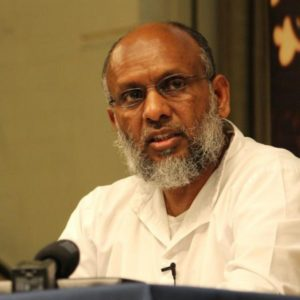
Shaykh Akram Nadwi
Muhaddith & Islamic Scholar

In the Name of Allah, the Most Compassionate, the Most Merciful
Turkey Journey (11)
Thursday, 12th Jumada al-Awwal, 1446 AH
By Dr. Muhammad Akram Nadwi
Oxford
On Thursday evening, I taught a lesson on the commentary of Rasm al-Mufti by the esteemed scholar Ibn Abidin to the students of the Ifta program at Al Salam Institute. I began by discussing the muftis among the Companions and Tabi’un (may Allah be pleased with them), who relied solely on the Qur’an, the Sunnah, and a minimal amount of reasoning. Then, I moved on to the muftis who followed the scholars of their regions, such as the scholars of Madinah, Kufa, and Basra, followed by those who adhered to individual Mujtahids. After this, I discussed the muftis committed to particular known schools of thought, and finally, the later scholars who were strict followers of these schools. Ibn Abidin is considered among the notable and meticulous scholars of this last group. I explained the concept of abrogation in subsidiary and detailed rulings and criticized the overly strict approaches in determining the preferred opinion (qawl rajih) and the fatwa position (qawl al-mufta bihi).
I left for Stansted Airport at 7:45 PM to attend the 35th session of the European Council for Fatwa and Research, scheduled to be held in Konya from the 14th to the 18th of Jumada al-Awwal, 1446 AH. My family and my son-in-law, Faydhullah, accompanied me to the airport. I arrived there at 9:30 PM, and the airport was almost empty. The procedures took only a few minutes, and I sat down to occupy myself with my work.
I find myself torn between academic and teaching activities, on the one hand, and dawah and writing commitments, on the other. My years have passed, turning their back on me, and death is nearer to me than ever. If only I had devoted myself to worship and obedience! A person who purifies his soul out of fear of Allah and strives to please his Lord is akin to an angel. Alas! How sorrowful it is that neither guidance nor admonition has soothed my heart. It feels as if I am waiting for a sign from my Lord to prepare me for the day of departure.
The plane departed on time, and I slept throughout the journey. I woke up at 5:30 AM, went to the restroom for ablution, and prayed at 5:55 AM. Upon landing at Istanbul Sabiha Airport, I was informed that Fajr time had not yet entered, so I prayed again at 6:45 AM.
At the airport, I met a young British Muslim. When I asked him about his reason for visiting Turkey, he replied that he was seeking Turkish citizenship as a backup plan because the situation in Britain was difficult. His parents, who resided in Istanbul, had already obtained Turkish citizenship.
Time was tight to catch the connecting flight to Konya. I hurried but found that the domestic flight route had been closed. I was redirected to the passport control section and then to another location. I feared missing the flight but managed to board, praise be to Allah.
I worked briefly during the flight. When the plane landed at Konya Airport, I felt as if I were breathing the air of Mawlana Jalal al-Din. Upon exiting, I was received by some brothers. We headed to a hotel outside the city of Konya, which, I was told, is comfortable and offers natural hot water that people visit for healing purposes.
This is my first visit to Konya, the city of Mawlana Jalal al-Din al-Rumi, where his shrine is located. I am among those who are captivated by his Mathnawi despite my clear criticisms of it. Konya lies in south-central Anatolia. It was conquered by Muslims in the year 105 AH under the leadership of Marwan ibn Muhammad. The city reached the peak of its glory when it served as the capital of the Seljuk Empire before the Mongol invasion. Later, it became part of the Ottoman Empire, with a rich and illustrious history.
Mawlana Jalal al-Din combined asceticism with a love for beauty, in clear contradiction to the words of Abu al-Ala al-Ma’arri: > If it is said that a man is devout but seeks beauty, then he is not truly devout.
My aspiration is to visit Mawlana’s shrine and draw inspiration from it, just as poets, mystics, and others have drawn inspiration from his words.
I was pleased to be accompanied by the two esteemed scholars, Dr. Jamal Badawi and Dr. Issam al-Bashir, on the way to the hotel. I conversed with them during the journey.
This translation was generated by AI and may not fully capture the nuances of the original text.
Source: <a href=”https://t.me/DrAkramNadwi/5612″ target=”_blank”>https://t.me/DrAkramNadwi/5612