Reflections on a Mothers Love and Legacy
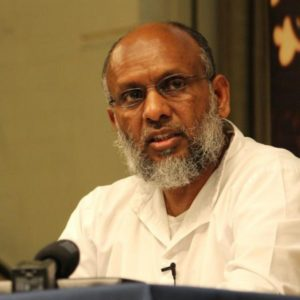
Shaykh Akram Nadwi
Muhaddith & Islamic Scholar

My mother never scolded or hit me. She never took offense at anything I did, and I, in turn, never caused her any pain. If there is any pure goodness in my life that I can remember, it is that I never disobeyed my mother or caused her any grief. She was always concerned about my future and would sometimes say, “If you become a religious scholar, how will you earn a living?” Yet she was also pleased that I was more dedicated to my studies than any other boy in the family. Then, by Allah’s command, one day, I indeed became a scholar. I have never regretted becoming a scholar, and neither did my mother. I constantly thank Allah for the blessing of understanding His Book.
The women in our village lived secluded within the four walls of their homes and would rarely go out, and when they did, they would be fully veiled. They neither saw others nor were seen by others. My mother was the same, perhaps even more cautious. She couldn’t go anywhere alone, nor did she know the way to any place. Her world was limited to the walls of our home. Despite life’s wounds, eastern women like her carry on with a smile.
She would pray regularly, fast, and finish the Quran five or six times during Ramadan. She performed Hajj twice, and I was with her both times. Once, during Hajj, she asked me for a few riyals. I said, “You don’t go out alone, nor do you shop, so what will you do with the riyals?” She replied, “When I see someone in need along the way, I want to help them.” Her words deeply moved me, and to this day, that sentence opens doors of goodness in my heart.
One of her greatest qualities was that she never gossiped, nor did she engage in idle talk like many women. Rather, she hardly spoke at all. The village and family women were the opposite; they rarely remained silent and didn’t wish to. When women visited our home, my mother would sit quietly, listening, neither agreeing nor disagreeing. Shaykh Sa’di said that speaking is a measure of one’s virtue or vice, but from my mother’s example, I realized that silence itself can be a mark of greatness, a wellspring of all noble virtues.
During my early years in England, I would write to her regularly, and she would write back. Once, after Eid, I wrote that I had returned to my room after the Eid prayer, thinking of her, feeling lonely, unable to find joy in anything. Her reply said, “I feel the same way; without you, nothing brings happiness. If the heart isn’t there, what is Eid, what is light or darkness?”
When I would return home from England, she would stop eating, and that night was long for both of us. She would wait, refraining from eating until I arrived. When I finally reached home, her joy knew no bounds, though she expressed it sparingly. She would cook my favorite dishes. I would lie on a bed beside her bed, and there would be little conversation between us. Our silence spoke volumes; our hearts were intertwined without words, and a few unspoken lines would pass between us. It was as if the unspoken was communicated in glances.
The day of my departure would be filled with sadness. Her silence and the unease on her face were visible. Sometimes a stream of tears would make my heart grieve. When I left, I felt as if I was leaving behind the colors of love, a world filled with melody.
She passed away on the night of Friday, 14th Dhul-Qi’dah 1434 AH, while I was far across the oceans. She departed, and life was never the same. A few days later, I returned to my homeland; it wasn’t just my home that felt empty, but the whole village felt desolate.
Later, I visited her grave and recited Fatiha. Standing beside her grave, we were both silent. Once, even if not with words, we communicated through glances. Now, even that was gone.
“The flowers are withered, the grass is lifeless, the candle extinguished, the surroundings forlorn;
My heart swelled with sorrow at the sight of the lonely grave.” Abu Haneefah:
Nice article by Shaykh Akram about his Mother:
Source: <a href=”https://t.me/DrAkramNadwi/5550″ target=”_blank”>https://t.me/DrAkramNadwi/5550
Disclaimer: This article was translated by AI and may contain errors. Please refer to the original text for accuracy.
In the Name of Allah, the Most Merciful, the Most Compassionate
Mother
By: Dr. Mohammad Akram Nadwi
Oxford
“As I gaze upon the field of existence,
I find only a single grain of love; all else is mere straw.”
Mother’s name is synonymous with love, and love is expressed as mother. No matter how one describes her, the description remains incomplete. Any writing about mother is an admission of one’s own inability to truly convey her essence. Whether a person is poor or rich, a slave or a king, a man or a woman, a Muslim or a non-Muslim, from the East or the West—everyone’s mother is a mother. It is narrated authentically that even when countries were divided, seeds of hatred were sown, and rivers of blood flowed, the mother who was in Pakistan was the same as the mother in India.
Every excellence is acquired; a person can achieve great ranks through effort, yet motherhood, which is the mother of all excellences and beyond all ranks, is a divine gift. It is bestowed only upon women. The wise and knowledgeable agree that no man, no matter what he does, can become a mother. This truth is affirmed by the divine statement: “And the male is not like the female.” (Quran 3:36). Once, a preacher passionately stated, “A woman cannot be a caliph.” I replied, “Indeed, well said. How could one who is blessed with the courage to become a mother be distracted by trivial pursuits?”
It is often heard that Paradise lies beneath a mother’s feet. It is also said that there is no poem as beautiful as the love for one’s mother:
“My childhood, my home, my toys,
And above all, mother’s shadow was like a poem.”
I was my mother’s first child, and she loved me dearly. Someone might say, “Is this worth writing? Every mother loves her children immensely.” True, but if only they understood that everyone has been given a mother by Allah, yet each person mentions their own mother. Is it possible to mention one’s mother without speaking of boundless love?
Time passes quietly. Leaping in my mother’s arms, holding her hand while walking, fearing she might disappear from sight, crying to get my way—oh, all of that has passed. Did childhood become a distant memory so quickly? How will that time ever return?
“Where can I find that soft heart, now departed?
Where can I find that innocent spirit?”
Every morning, when my mother would prepare bread and vegetables for breakfast, I would sit by the stove beside her, reciting my Quran lesson to her. When I had memorized it well, I would go to the madrasa. I learned a lot from my mother: I learned to read the Quran, I learned Urdu, and, more than that, I learned patience and gratitude. When I was admitted to Zia-ul-Uloom, Maani Kalan, I would leave home very early. My mother would prepare breakfast for me even before Fajr prayer and pack lunch for me in a small container. I studied at Zia-ul-Uloom for three years and at Maulana Azad Educational Center for three more years. Education at Azad began later in the day, so there was no need to hurry. Yet her routine never changed. Whether it was rainy or cold, she always prepared me, never once complaining of illness or fatigue.
Allah had instilled a love for knowledge in my heart, so I never missed a single day. Even when I was sick, I would go to school. If there was a family wedding, I would not attend, and because of me, my mother would stay home as well. Everyone else would go to the gatherings, but my mother and I would remain alone at home.
I had a passion for reading anything I could find. My mother had a notebook containing various poems—praises, naats, and other verses—which eventually became my possession. I would read it from beginning to end, and when I finished, I would start again, until it became worn and tattered, its pages tearing one by one, until one day, the notebook vanished entirely.