The Cultural vs. Religious Status of Head Coverings in Islam: Clarifying
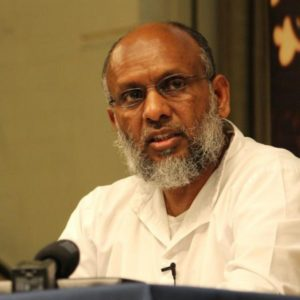
Shaykh Akram Nadwi
Muhaddith & Islamic Scholar

📎 The original text can be found here: https://t.me/DrAkramNadwi/5534
Is a Man’s Head Part of the ‘Awrah?
By Dr. Mohammad Akram Nadwi, Oxford
🟢 Question:
A few days ago, I wrote an article on the topic of “Islamic Dress.” After reading it, the well-known Qur’anic scholar, Noman Ali Khan, asked me about the turban and cap. This question has been asked to me repeatedly, and since I have already discussed its ruling with evidence in my English book (Al-Fiqh Al-Islami, Volume 1), I refrained from writing a detailed article on it. However, upon receiving a message from my village through my respected friend Hafiz Mahmood Kareem Sahib from Allahabad, I felt the urge to write something in Urdu for the benefit of the Urdu-speaking audience. Here is the message I received:
“As-salamu alaikum, I am Abu Hudhayfah bin Naseem Ahmad, from Dr. Akram’s hometown, Jamdahan, Jaunpur. I hope you are well. These days, people are facing a lot of trouble due to unnecessary extremism, and I also try to distance myself from such extremism. I regularly benefit from Dr. Akram’s answers and discuss these matters within my small circle. My current question is regarding the cap. What is the status of the cap in Islam? Some people try to reduce the importance of the beard by associating it with Arab customs and culture, although, as far as I know, there are clear commands about the beard in the Hadith. But is the matter of the cap really the same, meaning it is not a Shari’ah matter but related to Arab customs and traditions? This is because the Prophet (peace be upon him) was often seen wearing a turban and cap. Based on this, scholars (especially those in India and Pakistan) have considered it a Sunnah and recommended it, making it practically a mandatory part of Shari’ah. Could you please provide some Shari’ah guidance about the cap, its status in terms of rulings, and its position based on the Hadiths and narrations?”
🟢 Answer:
In the previous article (“Islamic Dress”), I made it clear that there are two conditions for Islamic dress: one is that it must cover the ‘awrah (the parts of the body that must be covered), and the second is that it must be permissible (mubah). After reading that article, no one should remain unclear about the fact that wearing or not wearing a cap, tying or not tying a turban, and hanging or not hanging a scarf are all cultural practices from different societies and eras. Anyone can adopt whichever culture they wish, and there is neither reward nor sin in this. However, it is unfortunate that this clear point is not well understood, and despite my busy schedule, I still have to clarify this obvious matter.
First, let us understand the term “awrah.” It is an Arabic word that refers to the parts of the body that must be covered. According to the majority of scholars, the ‘awrah of a man is from the navel to the knees. The Hanafi school does not consider the navel part of the ‘awrah, but the knees are included.
There is a consensus among all schools of thought that a woman’s head is part of her ‘awrah. But is a man’s head also part of the ‘awrah? After thorough research and investigation, I could not find a single scholar or jurist who considers a man’s head part of the ‘awrah. However, unfortunately, in the Indian subcontinent, ignorance has become so widespread that it has been ingrained in the minds of people that a man’s head must be covered during prayer, to the extent that if someone starts praying bare-headed, someone will immediately place a cap on his head.
Some people believe that the heads of scholars and students of Islamic seminaries are part of the ‘awrah. It has even been heard that “The head of a scholar is ‘awrah,” meaning a scholar’s head is part of the ‘awrah. No scholar or student dares to uncover their head within the walls of a madrasa. This is all the result of the ignorance that has been imposed on us in recent times. It is also said from time to time that wearing a cap or turban during prayer is Sunnah. Some people, knowing that it is impossible to prove the cap or turban as Sunnah, label it as mustahabb (recommended).
There is no verse in the Qur’an that encourages Muslims to wear a cap or a turban, and there is no Hadith where the Prophet (peace be upon him) emphasized the importance of wearing a cap or turban during prayer. There is no chapter in the books of Hadith dedicated to covering the head while praying, nor is there any chapter among the disliked actions of prayer that states uncovering the head is disliked.
Since the later Hanafi scholars in the Indian subcontinent have tried to incorporate the cap and turban into the religion, we have reviewed all the foundational Hanafi texts. The legal system of the Hanafi school is based on the works of Imam Muhammad bin Hasan Shaybani, and none of these books mention that wearing a cap or turban during prayer is Sunnah or recommended. Likewise, there is no mention that praying with an uncovered head is disliked. The same is true for books such as Quduri, Mabsut by Sarakhsi, Tuhfat al-Fuqaha by Alauddin Samarkandi, Bada’i’ al-Sana’i’ by Kasani, Hidayah by Marghinani, and others. In none of these books is covering the head during prayer mentioned among the etiquettes of prayer, nor is uncovering the head mentioned among the disliked actions.
On the contrary, there are numerous reports about the Prophet (peace be upon him) and the Companions (may Allah be pleased with them) praying bare-headed. There are countless narrations about praying with only one garment, and some narrations explicitly mention praying with only an izar (lower garment). Many authentic narrations in Sahih al-Bukhari, Sahih Muslim, and the Sunan mention that Jabir bin Abdullah (may Allah be pleased with him) once led the prayer wearing only an izar, having removed all his other garments. When asked about this afterward, he replied: “So that a foolish person like you would ask me this question. I have seen the Prophet (peace be upon him) pray multiple times in a single garment.” Safwan bin Amr said: “I saw Abdullah bin Busr (may Allah be pleased with him) over fifty times, and I never saw anything on his head, neither a cap nor a turban, in either cold or heat.” (Tareekh Abu Zur’ah 1/214) In Musannaf Abdul Razzaq, it is mentioned that Umar (may Allah be pleased with him) once removed his cap, used it as a barrier (sutrah), and then prayed. Mas’ud bin Huraish narrated that Umar (may Allah be pleased with him) prayed in a single garment, with nothing else on his body. (Musannaf Ibn Abi Shaybah 1/276) Imam Tahawi narrated that according to Imam Abu Hanifa, Imam Abu Yusuf, and Imam Muhammad (may Allah have mercy on them), praying in a single garment is permissible. (Sharh Ma’ani al-Athar 1/383) In fact, the Hanafi scholars stated that it is better to pray bare-headed with humility (khushu’). (Fatawa Alamgiriyyah 1/106)
There are numerous authentic narrations in the Sahihayn and the Sunan about wearing shoes during prayer. Once, when the Companions saw the Prophet (peace be upon him) remove his shoes during prayer, they all removed theirs. He asked them: “Why did you remove your shoes?” If someone were to claim that wearing shoes during prayer is Sunnah or recommended, they would have some basis, yet no one claims it is Sunnah or recommended because wearing shoes during prayer is not part of any culture. Even though there is no proof for the cap and turban, cultural practices and customs have given them the status of Sunnah and mustahabb.
Many scholars have clearly stated that the cap and turban are cultural practices, not religious. Shah Waliullah Dehlawi (may Allah have mercy on him) differentiated between the Sunnat al-Huda (religious Sunnah) and the Sunnat al-‘Adah (cultural Sunnah) in his renowned book Hujjat Allah al-Baligha and provided an excellent explanation of both. Here are a few fatwas that clarify that the cap and turban are cultural practices, not religious obligations: “Wearing the turban is one of the permissible acts; it is not a Sunnah.” (Fatawa al-Lajnah al-Da’imah 24/43)
The Jordanian Dar al-Ifta states:
“The wearing of the turban and carrying of a staff by the Prophet (peace be upon him) were part of the customs of the Arabs at that time. These were not legislative acts indicating recommendation, nor are they practices to be followed by people today.”
“Covering a man’s head during prayer is not one of the Sunnah actions.” (Fatawa alLajnah al-Da’imah 6/174)
“Wearing the turban is not a Sunnah, neither an emphasized one nor a non-emphasized one, because the Prophet (peace be upon him) wore it following the customs of the people of that time. Hence, no single letter from the Sunnah commands wearing it. Therefore, it is among the customary actions.” (From the Fatawa of Shaykh Muhammad bin Salih al-Uthaymeen, may Allah have mercy on him)
🟢 Conclusion:
The cap and turban are cultural practices that have no inherent religious merit in Islam. They are not part of the Sunnah, and wearing them does not confer any reward, nor does neglecting them result in sin. Unfortunately, cultural and societal norms, especially in regions like the Indian subcontinent, have turned these practices into perceived religious obligations, even though there is no scriptural basis for such beliefs. The distinction between cultural and religious practices is essential to maintain, as confusing the two only leads to unnecessary rigidity and misunderstanding in religious matters.
The focus in Islam should remain on the core aspects of worship, as outlined clearly in the Qur’an and Sunnah, without overburdening ourselves with cultural customs that have no religious foundation.