From dividuality to individuality
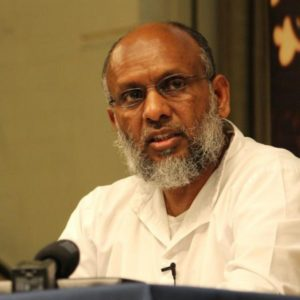
Shaykh Akram Nadwi
Muhaddith & Islamic Scholar

From dividuality to individuality
By: Dr Mohammad Akram Nadwi
Oxford
3/12/2025
Islam, in its profound and comprehensive vision, is frequently misconstrued as chiefly concerned with the establishment of social or political order. While the faith indeed provides guidance for communal conduct, jurisprudence, and societal ethics, such structures are secondary to its ultimate aim: the cultivation of the individual’s relationship with God and the pursuit of moral and spiritual perfection. Social norms, customs, and legal prescriptions function as instruments to facilitate this higher purpose, never as ends in themselves.
From the moment of birth, human beings exist as dividuals, their being inseparably intertwined with parents, family, and wider social networks. In this early state, identity is shared, dependence is inevitable, and existence is inextricably enmeshed with the human milieu. Gradually, through the process of moral and spiritual maturation, the individual differentiates, acquiring singular capacities for choice, reflection, and responsibility. Death, however, marks the consummation of this journey: the soul emerges from the dividual condition into absolute individuality. In the presence of divine judgement, all relational entanglements, the ties of parentage, kinship, friendship, and conjugal affection, bear no weight. The soul alone stands accountable, its worth measured exclusively by its intentions, deeds, and fidelity to God. It is in this ultimate solitude that the true import of personal responsibility is revealed.
This recognition of final accountability must shape the manner in which worldly attachments and relationships are pursued. Bonds of kinship and friendship, while indispensable for moral and emotional development, must be approached with discernment and proportion. Excessive attachment risks obscuring the primacy of ultimate responsibility; indifference or neglect impoverishes the very context in which character and virtue are cultivated. The believer, therefore, must navigate the delicate balance between engagement with the world and the awareness of one’s ultimate solitude, ensuring that social and familial ties serve as instruments of moral formation rather than distractions from it.
Islamic practice provides a coherent framework for harmonising individual accountability with social existence. Ritual obligations, ethical precepts, and moral teachings are designed not merely to regulate outward behaviour but to shape the inner disposition, cultivate discernment, and nurture spiritual awareness. True commitment to Islam is inseparable from preparation for the hereafter: it equips the soul with discipline, moral insight, and the capacity for sincere repentance and reform. Yet human reason, by its very nature, is finite and partial; definitive judgements of one’s own merit, or that of others, are therefore inherently precarious. This epistemic humility allows for hope and for the possibility of transformation, both within oneself and in others. Islam thus engenders a judicious equilibrium between rigorous self-accountability and compassionate acknowledgment of human fallibility.
Ultimately, the Islamic vision elevates the responsibility of the individual soul above the achievements or structures of social and political life. Human relationships and communal institutions, while of profound significance, remain instruments for the cultivation of moral and spiritual excellence rather than substitutes for it. The progression from dividual dependence to absolute individual accountability illuminates the transience of worldly ties and underscores the enduring primacy of the soul’s preparation for the hereafter. By orienting life towards this ultimate horizon, the believer engages ethically with the world, nurtures a morally conducive environment, and sustains hope, all the while mindful of the solitary accountability that awaits before God.
FOLLOW THE الشيخ محمد أكرم الندوي CHANNEL ON WHATSAPP:
https://WhatsApp.com/channel/0029VbAxp2qGpLHHqQ3LoY0w