Ease and Relaxation in Islam
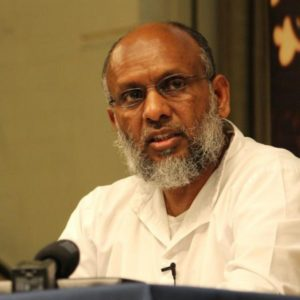
Shaykh Akram Nadwi
Muhaddith & Islamic Scholar

Ease and Relaxation in Islam
By Dr Mohammad Akram Nadwi
Oxford
The concept of ease (yusr) in Islam is inextricably linked with hardship (ʿusr). The Qur’ān itself affirms, “Indeed, with hardship comes ease” (Qur’ān 94:6). This relationship signifies that genuine ease emerges through striving, patience, and discipline. A Muslim should therefore be cautious of any form of comfort or relaxation that does not entail any meaningful effort or purpose. Ease without exertion is often deceptive, leading to negligence or moral laxity.
An illustrative example of this misplaced ease is the passive consumption of entertainment, such as watching television. This activity requires minimal effort, merely the pressing of a button, while offering little in terms of intellectual, spiritual, or physical benefit. Indeed, it would often be better for a person to rest or sleep than to waste precious time in such idle pursuits.
The Prophet Muhammad (peace be upon him) acknowledged, however, that human beings require rest, recreation, and moments of relaxation. His guidance in this matter was balanced and purposeful. He sanctioned activities that combined physical exercise, mental engagement, and moral virtue, activities that we might today categorise as sports, such as archery, horse-riding, and swimming. These pursuits are not merely for entertainment; rather, they develop strength, skill, and discipline, all of which are praiseworthy in Islam.
Furthermore, the Prophet (peace be upon him) recognised the importance of joy, social interaction, and cheerfulness in daily life. He encouraged believers to spend time with their families, to host guests generously, and to cultivate a pleasant and positive demeanour. Such acts are not mere diversions but integral parts of a balanced Islamic life, in which faith, family, and community are harmoniously integrated.
Islam also prescribes particular occasions for communal celebration, notably the two ʿĪds: ʿĪd al-Fiṭr and ʿĪd al-Aḍḥā. Each of these festivals is intimately connected with major acts of worship, fasting in the month of Ramadan and the pilgrimage (ḥajj) to the sacred sanctuary. These celebrations therefore embody gratitude, reflection, and the reaffirmation of one’s faith, rather than indulgence or frivolity.
The essential principle that governs all forms of ease and relaxation in Islam is the perpetual applicability of the divine law. The distinctions between ḥalāl (permissible) and ḥarām (prohibited) remain operative at all times, regardless of circumstance or occasion. Islam does not recognise any form of moral suspension akin to the carnivals of certain cultures, in which ordinary ethical and legal boundaries are temporarily set aside. In the Islamic worldview, there is never a justification for abandoning the divine commands. Every aspect of life, work and rest, worship and leisure, is encompassed within the moral and spiritual discipline that Islam enjoins.
Thus, the pursuit of ease in Islam is not an escape from responsibility but a means of renewal within it. True relaxation strengthens the believer’s resolve, refreshes the body and mind, and reaffirms one’s commitment to Allah. Ease and hardship are not opposites in the Islamic ethos; rather, they are complementary paths leading towards spiritual growth and ultimate contentment.
FOLLOW THE الشيخ محمد أكرم الندوي CHANNEL ON WHATSAPP:
https://WhatsApp.com/channel/0029VbAxp2qGpLHHqQ3LoY0w