Assessment of the Ḥadīth concerning the virtue of making a will in Sunan Ibn Mājah
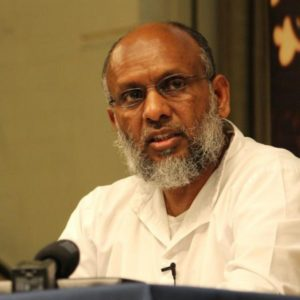
Shaykh Akram Nadwi
Muhaddith & Islamic Scholar

Assessment of the Ḥadīth concerning the virtue of making a will in Sunan Ibn Mājah
by: Dr Mohammad Akram Nadwi
Oxford
Question:
Our friend Sulaiman Qazi inquired about the authenticity of the following hadith recorded in Sunan Ibn Mājah:
“Whoever dies having made a will, dies upon the path of righteousness and the way of the Sunnah, dies upon piety and martyrdom, and dies in a state of forgiveness.”
Answer:
The full wording of the ḥadīth as transmitted in Sunan Ibn Mājah is as follows:
(حدثنا محمد بن المصفى الحمصي حدثنا بقية بن الوليد عن يزيد بن عوف عن أبي الزبير عن جابر بن عبد الله قال قال رسول الله صلى الله عليه وسلم من مات على وصية مات على سبيل وسنة ومات على تقى وشهادة ومات مغفورا له)
In the chain of narration of this ḥadīth there are significant issues that affect its authenticity. Among its narrators is Yazīd ibn ʿAwf, who is unknown (majhūl). None of the compilers of the six canonical books of ḥadīth have included his reports except Ibn Mājah. Because of this lack of recognition and the absence of biographical details about him, his narrations are not accepted as reliable.
The narrator who reports from him is Baqiyyah ibn al-Walīd. Although known for his knowledge, the ḥadīth scholars criticised him for narrating from weak or unknown narrators without clarifying their status. Imām al-Bukhārī did not include any of his ḥadīths in Ṣaḥīḥ al-Bukhārī, and Imām Muslim only mentioned him in supporting chains (mutābiʿāt), not as a principal narrator. This reflects the scholars’ hesitation to rely on him independently.
Furthermore, Imām al-Mizzī mentions that some have added ʿUmar ibn al-Subḥ between Yazīd ibn ʿAwf and Abū al-Zubayr in this chain. ʿUmar ibn al-Subḥ, however, was accused of lying and fabricating ḥadīths, which renders the chain even weaker. This addition, whether authentic to the transmission or not, demonstrates further instability in the isnād.
In addition to these issues in the chain, the content of the report itself is problematic. The claim that a person who merely dies after having made a will attains righteousness, follows the Sunnah, achieves piety, martyrdom, and forgiveness is not in harmony with the established and authentic teachings of the Prophet ﷺ. Authentic narrations indeed encourage making a will, but none attach such far-reaching rewards to it.
Considering all these factors, this narration cannot be regarded as authentic. The presence of an unknown narrator (Yazīd ibn ʿAwf), a criticised transmitter (Baqiyyah ibn al-Walīd) narrating from him, and the possible insertion of a fabricator (ʿUmar ibn al-Subḥ) make this report not merely weak (ḍaʿīf) but munkar (rejected).
Therefore, the ḥadīth “Whoever dies having made a will, dies upon righteousness, the Sunnah, piety, martyrdom, and forgiveness” is not authentic and cannot be used as a proof in matters of Islamic law or virtue.
FOLLOW THE الشيخ محمد أكرم الندوي CHANNEL ON WHATSAPP:
HTTPS://WHATSAPP.COM/CHANNEL/0029VBAXP2QGPLHHQQ3LOY0W