Why Was Mankind Created?
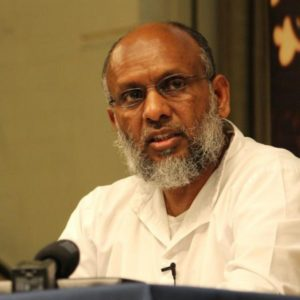
Shaykh Akram Nadwi
Muhaddith & Islamic Scholar

Why Was Mankind Created?
by: Dr Mohammad Akram Nadwi
Oxford
Question:
My student, Abu Hanifah Dilawar, forwarded to me the following question:
Assalāmu ʿAlaikum wa Raḥmatullāh, Ustadh. I hope this message finds you in the best of health and īmān. May Allah grant you peace and well-being in this world and the Hereafter.
What is the mystery, or rather the true purpose, behind the creation of mankind by our Lord?
Allah Himself declares: “Allāhuṣ-Ṣamad”—meaning that He is completely independent and free of all need.
In the Qur’an, various purposes are mentioned regarding the creation of mankind: to worship Allah, to be tested, to serve as His representative (khalīfah), to establish His laws on earth, and so forth. However, on the other hand, whether human beings attain Paradise or are cast into Hell, it does not affect Allah in the slightest. Thus, if our Lord is utterly in need of nothing, how is it logical—or how can it be fully understood—that mankind is tested and that something as terrifying and severe as Hell has been created?
(I am not raising the matter of Paradise, for it is a blessing and a comfort.)
I have been searching for a satisfactory answer to this question for nearly twelve years.
Answer:
Wa ʿAlaikum as-Salām wa Raḥmatullāhi wa Barakātuh,
May Allah reward you for your earnest inquiry and for your perseverance in seeking clarity over so many years. The question you have raised touches upon the very heart of theology: why has mankind been created when Allah, exalted is He, has no need whatsoever, being Allāhuṣ-Ṣamad, independent, self-sufficient, and free from all want? Why then the trial, and why the creation of Hell, a reality so severe and terrifying?
The answer to this must begin by acknowledging the nature of the Divine. Allah is characterised by every conceivable perfection, and His attributes are eternal without beginning and without end. His majesty, glory and completeness do not increase through the existence of creation, nor would they in the slightest be diminished were creation to cease entirely. He is the Creator, utterly distinct from His creation, without any similarity or union; any claim to such resemblance or union is disbelief. He is in need of none, while every created thing depends wholly upon Him. None can bring Him benefit, nor can any cause Him harm, for His essence transcends such notions absolutely.
One of His most manifest attributes is that He is al-Raḥmān, al-Raḥīm, the Most Merciful and the Most Compassionate. His relationship with creation is rooted in mercy, and mercy in its truest sense comprises both love and beneficence. It is by virtue of this mercy that all things were brought into being, and by that same mercy they are continually sustained and increased. The Qur’ān repeats this reality in various forms: in Bismillāh al-Raḥmān al-Raḥīm which prefaces so many chapters, in the opening verses of Sūrat al-Fātiḥah (al-Ḥamdu lillāhi Rabbil-ʿĀlamīn, al-Raḥmān al-Raḥīm), and most delightfully in Sūrat ar-Raḥmān, which sets forth His favours in a manner that touches both intellect and heart.
Angels, jinn and mankind are all among the manifestations of this mercy. They were created that they might be recipients of His boundless bounty and that He might increase them in that bounty. In order to enable this increase and to make their share proportionate to their own choice and striving, He decreed for them a trial. This trial is neither for His benefit nor to complete any deficiency in His Being; it is for their own good, to allow them—by the proper use of their innate capacities—to ascend to ever higher degrees of nearness, felicity and reward. The more they excel in righteousness, the more deserving they become of His generosity, and the better they become, the more their own capacity for receiving divine grace expands.
To equip them for this, He placed within their very nature a sound disposition (fiṭrah) and endowed them with reason (ʿaql). Yet, out of further mercy, He did not leave them to these alone; for both can falter and be clouded. Thus, He revealed commandments and prohibitions, sent messengers and scriptures, and established a system of glad tidings and warnings. All this is an extraordinary favour, as the Qur’ān declares: “And I have completed My favour upon you” (al-Mā’idah: 3).
The diversity of creation itself is one of His great signs. By bringing forth an uncountable multitude of species and forms, He allows His creation to perceive, insofar as they are able, the infinity of His power and knowledge. This diversity extends to the realms of angels, jinn and humankind. Angels were created in such a manner that they can only obey and thus continually ascend in degrees of proximity; they do not disobey and are unsuited for rebellion. This is because they fulfil the role of intermediaries between the Creator and His creation—not because He needs intermediaries, for He is perfectly capable of acting directly, but because His eternal wisdom decreed that a veil should exist between His direct action and the created order, for the latter could not bear the direct manifestation of His will.
Jinn and human beings, by contrast, were given both capacities: the ability to rise to the highest or to fall to the lowest. It is the will of the Most Merciful that they should choose the path of righteousness and thus become worthy of His everlasting generosity. Out of that same mercy He sent prophets, revealed books, and instituted a system of exhortation and warning.
Hell, then, is not created because Allah delights in punishment or derives any benefit thereby, far from it. It is a necessary consequence of the misuse of freedom, a manifestation of justice for those who wilfully reject the path of mercy. Success in the trial leads to His good pleasure and the gardens of eternal bliss; failure leads to loss, estrangement, and the chastisement of Hell. Both outcomes are in reality expressions of His mercy: His mercy in guiding, in warning, and in making the truth clear, and His justice in leaving none without evidence or opportunity. As the Qur’ān states: “Allah does not wrong the people at all, but it is the people who wrong themselves” (Yūnus: 44).
Thus, the creation of mankind, the establishment of a test, and even the existence of Hell are not for the benefit of the Creator, who is utterly free of need; they are entirely for the benefit of the created, to open for them the path to greater perfection, to everlasting felicity, and to the enjoyment of His nearness. Obedience and worship do not enrich Him, nor does sin and rebellion diminish Him; rather, He loves to bestow honour and reward upon His servants, and He does not love to punish them.
May Allah make us among those who obey Him, protect us from the causes of His displeasure, and admit us by His mercy into the gardens of eternal company with Him. Āmīn.
FOLLOW THE الشيخ محمد أكرم الندوي CHANNEL ON WHATSAPP:
https://WhatsApp.com/channel/0029VbAxp2qGpLHHqQ3LoY0w