The Meaning of “And He taught Adam all the names”
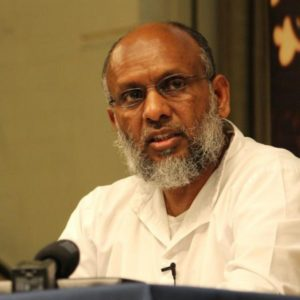
Shaykh Akram Nadwi
Muhaddith & Islamic Scholar

The Meaning of “And He taught Adam all the names”
by: Dr. Mohammad Akram Nadwi
Oxford
In verses 31-33 from surah Al-Baqarah, Allah declares: “And He taught Adam all the names, then He presented them to the angels and said, ‘Tell Me the names of these, if you are truthful.’ They said, ‘Glory be to You! We have no knowledge except what You have taught us. Indeed, it is You who are the All-Knowing, the All-Wise.’ He said, ‘O Adam, inform them of their names.’ And when he had informed them of their names, He said, ‘Did I not tell you that I know the unseen of the heavens and the earth, and I know what you reveal and what you conceal?’”
The exegetical tradition records a range of interpretations concerning the precise meaning of “the names” which God taught to Adam, peace be upon him. This scholarly divergence has been extensively documented in the classical works of Qur’anic exegesis (tafsīr) and is well known among students of the Qur’an. However, rather than rehearsing these varying views, the present analysis is concerned with articulating an interpretation that is both faithful to the linguistic intricacies of the Qur’anic Arabic and harmonious with the contextual framework of the verses.
The context reveals that the angels were initially perplexed by the divine decree to appoint Adam as khalīfah (leader) upon the earth. Their response was not an expression of disapproval, but rather a sincere inquiry into the wisdom underlying a creation that, from their limited perspective, seemed predisposed to bloodshed and corruption. The angels, being honoured and obedient slaves of God, far removed from impiety or rebellion, declared, “We glorify Your praises and sanctify You.” This declaration did not amount to a challenge or protest; rather, it stemmed from their yearning to comprehend the divine rationale behind bestowing authority upon a being whose potential for harm seemed apparent.
In addressing their inquiry, God responded with a dual-layered exposition. First, He offered a general and absolute statement: “I know what you do not know.” This pronouncement, in its brevity, conveys a profound theological truth: that the divine wisdom transcends human and even angelic comprehension. It serves as a comprehensive answer sufficient to satisfy the hearts of believers and deepen their trust in the perfection of God’s will and knowledge. It underscores the epistemic humility that creatures must adopt in the face of the Creator’s infinite wisdom.
The second response was more particular and demonstrative. God sought to reveal, in a manner that would be manifestly clear to the angels and to all subsequent creation, the noble purpose embedded within Adam’s role as a leader. Central to this purpose was the emergence from Adam’s progeny of a righteous and divinely chosen lineage, individuals whose spiritual and moral excellence would embody the very antithesis of the corruption the angels feared. Thus, God taught Adam “all the names,” which, according to a narration reported by al-Ṭabarī from ʿAbd al-Raḥmān ibn Zayd ibn Aslam, refers to the names of Adam’s offsprings.
In Arabic, the word ‘ism’ (name) encompasses all forms of identification, including attributes, qualities, and characteristics. Accordingly, what was taught to Adam was not limited to nominal designations but extended to the recognition of the moral and spiritual virtues that distinguished his divinely selected descendants. These included attributes such as righteousness, piety, truthfulness, gratitude, patience, excellence (iḥsān), complete submission to the Lord of the Worlds, remembrance of God, devotion to Him, and the glorification of His praises both morning and evening.
When God “presented them” to the angels, what was placed before them was not an abstract set of names but the actual exemplars of Adam’s chosen progeny. This included, among others, Noah, Abraham, Moses, Mary, Jesus, Muhammad, Khadijah, ʿĀ’ishah, and other such elevated individuals. God then asked the angels: “Tell Me the names of these, if you are truthful.” The question was, in essence, a rhetorical demonstration; an invitation to reconsider their assumption that humanity would necessarily be a source of corruption and bloodshed. By “if you are truthful,” God was addressing the premise underlying the angels’ question, namely, that the children of Adam were inevitably predisposed to moral failure.
Upon witnessing the presence of these righteous individuals, the angels were struck with awe. The mere sight of such purity and virtue was sufficient to dispel their prior assumptions. In recognition of their limited knowledge and the majesty of divine wisdom, they humbly responded: “Glory be to You! We have no knowledge except what You have taught us. Indeed, You are the All-Knowing, the All-Wise.”
To further reinforce the clarification, God commanded Adam: “O Adam, inform them of their names.” Adam then proceeded to describe his divinely chosen descendants, saying, for example, “This is my son Noah, a prophet sent by God and a grateful servant. This is my son Abraham, gentle, devout, ever-turning to God, a pure monotheist and Muslim.” One by one, Adam introduced them, highlighting their roles, attributes, and virtues in a manner that revealed their true stature.
This interpretation is substantiated by the grammatical and linguistic cues within the Qur’anic text itself. The pronoun “them” and the demonstrative “these” (in Arabic hum and hā’ulā’) indicate the presence of beings with intellect who were directly presented to the angels. The default usage of such terms in the Arabic language presupposes visibility and personhood, which makes it more coherent to understand the “names” as referring to living, noble individuals rather than inanimate objects or abstract concepts.
When Adam completed the presentation of his righteous progeny and the angels grasped the purpose and wisdom behind the divine decree, God reiterated His initial statement with added clarity: “Did I not tell you that I know the unseen of the heavens and the earth?” The angels, having already intuited their error when God first said “I know what you do not know,” were now granted an even deeper insight through this practical demonstration. In His grace and generosity, God afforded them not only a verbal assurance but also a vivid, experiential lesson, one that would remain an eternal testimony to His wisdom and purpose in creation, enduring until the end of time.
Follow the الشيخ محمد أكرم الندوي channel on WhatsApp:
https://whatsapp.com/channel/0029VbAxp2qGpLHHqQ3LoY0w