Destiny
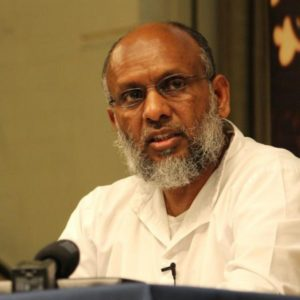
Shaykh Akram Nadwi
Muhaddith & Islamic Scholar

Destiny
by: Mohammad Akram Nadwi
Oxford
Question:
Maulana Irfan Amir Hasani Nadwi sent the following message:
“Akram Bhai, greetings. Do you have any article in English on the topics of Taqdīr (Divine Decree), and free will that presents the Islamic perspective? Grateful to you for your kind cooperation.”
Answer:
Belief in the destiny is part of the faith and trust in God. It gives us the right scope for effort. Without this belief, people remain in illusion about their own knowledge and power, and become despaired when the matters don’t work according to their plan.
We should understand that the things do not happen because of our will and effort. There needs to be enabling circumstances. When you want to grow something, if there is no water or light, it will not grow. Human beings are deluded by their freedom of will, the freedom to obey or disobey. That freedom is true and real. The delusion is that, precisely because freedom of will is true and real, human beings come to think too highly of their own agency. So, someone will plant a seed in the ground and say “Look, I grew this.” But the entire ordered universe, and all the conditions and rules governing its existence and operation, must pre-exist that human effort of planting a seed before the human action can bear any fruit. The plant’s debt to the human effort is negligible, as compared to its debt to the Creator of everything. But humans forget; they even forget that they did not create themselves.
Some become proud of their agency and say “Look, what I have achieved! look at my fine deeds! look, how great a force for good in the world I am.” Yet, the reality is that even if the deeds are good, their full outcome will not be good. To be among those who have no cause to fear or to grieve, a person’s good deeds must come out of and be combined with belief in God and the Last Day. In other words, human beings cannot be saved by their good deeds alone, but they can, if God wills, be saved by their realization of their indebtedness to God (so that they are humble and thankful) and by their realization of their accountability before God (so that they are fearful and strive to avoid disobedience and the sins that flow from it).
If you have any doubt that mere human power intending good but not surrendering to the guidance of God, can realize good in the world, then reflect on what Western powers have achieved. Reflect on whether even the promise of leisure and autonomy (which, sadly, is what people mean nowadays by “the good life”) has been achieved. Reflect on the state of the earth and its resources. In spite of their colossal excesses of wealth, their intellectual, military and technological superiority, the Western states have not been able to secure even an easy material life for their own citizens, let alone for others outside their borders – and, for most people, there is no question of greater ease of heart and mind, or reliable improvements in fairness and justice. Rather, we see increasing stress and frustrated rage, distrust, antagonism, together with a savage self-centredness expressed in extreme concentrations of wealth and power on one side, poverty and helplessness on the other. Instead of being free, people are slaves to the tyranny of a political-economic model that is destroying the resources of the whole world, and people have no resources of will with which even to slow down, let alone stop, that destruction.