Who is the one I like the most?
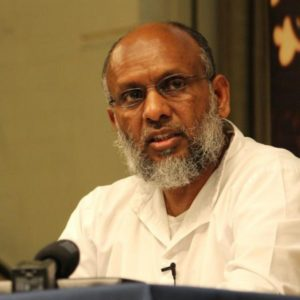
Shaykh Akram Nadwi
Muhaddith & Islamic Scholar

Who is the one I like the most?
by: Dr Mohammad Akram Nadwi
Oxford
It is not the radiant glow of a moon-like forehead,
Nor the flowing dark tresses cascading gracefully on shoulders.
It is not the essence of love poetry,
Nor the blossoming allure of a lotus in bloom.
It is not a queen of melody,
Nor a sovereign of musical harmonies.
It is not a magical voice,
Nor the artistry of a harp or a master musician.
It is not the tale of wine, goblets, and intoxication,
Nor the fragrant waves of blossoms or the scent of spring.
It is not a joyful ambiance,
Nor the allure of a captivating scene.
It is not a king or a minister,
Not someone wealthy or affluent.
It is neither a throne nor a crown,
Nor the shadow of divine power or royal grandeur.
It is not the pomp of rulers,
Nor the arrogance of crowned monarchs.
It is not a rising sun illuminating the royal palace.
It is not a sovereign of republics,
Nor a conqueror of empires.
It is not Alexander the Great or Darius,
Nor a heroic warrior breaking enemy ranks.
It is not youthful ambition,
Nor an unstoppable torrent of desire.
It is not philosophers or sages,
Not poets or literary luminaries.
It is not those presiding over gatherings of intellect and art.
It is not Ferdowsi, Saadi, or Hafiz,
Nor Mir, Momin, or Ghalib.
It is not Shibli, Hali, or Iqbal.
It is not the architect of destiny,
Nor the possessor of a brilliant mind.
It is not one boasting medals or worldly accomplishments.
It is not an embodiment of outward or inward grandeur.
It is not the pure-hearted mystics,
Not claimants of eternal existence or annihilation.
It is not the drinkers of the primordial covenant (Alast),
Nor the followers of Mansur or Sarmad.
It is not the mystical intoxication of Ibn Arabi,
Nor the commentator on Rumi’s wisdom.
It is not the traveler of spiritual paths,
Nor the caretaker of Sufi sanctuaries.
It is not a Brahmin of the sanctuary,
Worshiping idols carved by human hands.
Who, then, is the one I love the most?
Who is it that has entered my heart?
Who is it whose beauty has captivated my soul, stealing my peace?
Who is this being whose presence has rendered me senseless?
Listen, O companion, if you have the capacity to hear:
The one I love the most is not a conqueror of the East or the West.
It is not Jamshid or Anushirwan,
Not Plato or Aristotle.
It is not one who delves into metaphysical unity or existential subtleties.
The one I love is the servant of God who prays,
The envy of all earthly and heavenly beings.
When he performs ablution,
He is adorned with divine attributes.
Each drop of water falling from his limbs
Transforms into a priceless jewel,
A radiant and enduring pearl.
How mesmerizing is the beauty of his face!
How elegant the lines of his features!
How pure and radiant his character!
In purifying both body and soul,
The act of ablution has no equal.
How my heart is drawn to this person—
Who turns toward the Kaaba of Ibrahim,
Who proclaims the greatness of the Lord of all worlds,
Who fulfills the rites of servitude.
He stands, bows, and prostrates,
Guarding the gaze of love and ecstasy.
He becomes the companion of the Holy Spirit,
The confidant of Gabriel.
He wields Ibrahim’s axe against Azar’s idols,
Conquering the battlefield of existence without sword or spear.
What a humble yet extraordinary soul!
What a unique ascetic!
He possesses nothing but the words La ilaha (There is no deity but Allah),
Yet he attains a freedom so profound
That no earthly grandeur appeals to him.
His call to prayer shakes mountains like quicksilver,
Drawing pearls of the future from the ocean of time.
The one who prays turns away from wealth and beauty,
Cuts ties with fleeting pleasures and throned kings.
He inherits the devotion of Ibrahim’s pure heart,
Standing indifferent to the courts of Caesar and Khosrow.
From his fiery breath, barren deserts become paths for seekers.
He finds solitude in wilderness,
His companion a simple mat.
He carries the tender heart of Abu Bakr Siddiq,
The resolute determination of Umar Farooq,
The asceticism of Abu Ubaydah.
He is the praiser of the Lord of all worlds.
From his tongue flows the melody of glorification and praise.
His song draws inspiration from the hymns of the Psalms.
Tears stream from his eyes,
Soaking the folds of his garment.
His gaze is a hymn to God’s grandeur,
And his heart brims with divine love.
His restless soul bows at the threshold of the One,
Where deprivation does not exist.
He speaks the truth, and how true are his words:
“Where there is no remembrance of the Beloved, that place is Hell.”
He dwells with the One most beloved,
Where even the memory of mothers fades.
He places his head upon a threshold
That grants peace surpassing even a mother’s lap.
Who can rival his bliss?
Who has been granted such serenity?
Whoever possesses a tranquil heart and a loyal companion,
Happiness becomes their comrade, And fortune their intimate friend.
Who is better than the one in prostration,
Whose chest overflows with humility and devotion?
Whose lips utter the cries of a beggar?
Who finds solace in the darkness of night,
And amidst its shadows beholds the Light of the heavens and the earth?
He does not await the dawn,
For his midnight lament surpasses all else—
An unceasing yearning.
He distances himself from the universe,
Drawing nearer to the Lord of the universe.
The veil lifts, and separation from the Beloved vanishes.
Oh, the intimacy! Oh, the overflowing passion!
“The most intense longing arises,
When the tents of the Beloved draw near.”