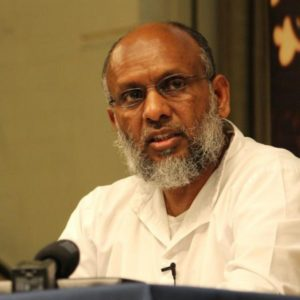
Shaykh Akram Nadwi
Muhaddith & Islamic Scholar, Dean of Cambridge Islamic Sciences
Answered on January 15, 2026
Bismillah al-Rahman al-Rahim. This is an excellent question that addresses a contemporary situation our classical scholars did not encounter. However, the fundamental principles of Islamic law provide clear guidance for such matters.
The short answer is: Yes, you are considered a traveler while on an airplane, and combining prayers is permissible. However, there are important details and considerations to understand.
The Status of Air Travel
**Air Passenger as Musafir (Traveler)**
A person traveling by airplane is indeed considered a traveler (musÄfir) in the Islamic legal sense. The classical definition of travel relates to distance, not mode of transportation. When scholars defined travel as journeying beyond approximately 48 miles (roughly 77 km), they were establishing a principle applicable to any form of travel.
As Ibn QudÄmah states in al-MughnÄ«: “The concessions of travel are established by undertaking a journey of a defined distance, regardless of the means by which one travels.” The airplane is simply a modern conveyance, just as camels, horses, ships, and trains were for previous generations.
Combining Prayers During Flight
**Jam’ al-TaqdÄ«m and Jam’ al-Ta’khÄ«r**
Yes, you may combine prayers while traveling by airplane. The traveler has several options:
1. **Jam’ al-TaqdÄ«m (Praying Earlier):** Combine Dhuhr and ‘Asr during the time of Dhuhr, or Maghrib and ‘IshÄ during the time of Maghrib. This is often more practical on flights.
2. **Jam’ al-Ta’khÄ«r (Praying Later):** Delay Dhuhr to pray with ‘Asr, or delay Maghrib to pray with ‘IshÄ. This may be useful if you expect to land before the second prayer time expires.
The MÄlikÄ«, ShÄfi’Ä«, and ḤanbalÄ« schools all permit combining prayers for travelers. The ḤanafÄ« school has a different opinion regarding combination but permits delaying the prayer until just before its time expires.
**Important Note:** The combination (jam’) is a concession, not an obligation. If you can pray each prayer at its proper time comfortably, that is preferable.
Crossing Time Zones
**Determining Prayer Times Across Time Zones**
This is one of the unique challenges of modern air travel. Here is the practical guidance:
**General Principle:** Prayer times are determined by the position of the sun relative to your location. When flying, you should calculate prayer times based on where you are in the sky.
**Practical Application:**
– Use the local time of your current geographical position
– Many airline entertainment systems show the current location; you can calculate sun position from this
– Modern prayer time apps (like IslamicFinder or Muslim Pro) have GPS features that can help
**If Uncertain:**
– It is better to pray earlier rather than risk the time expiring
– You can use the destination’s local time if your flight is relatively short
– For very long flights crossing many time zones, calculate based on your flight path
The fundamental principle, as stated in the Quran, is: “Indeed, prayer has been decreed upon the believers at specific times” (Quran 4:103). Our obligation is to fulfill this to the best of our ability given our circumstances.
Praying on the Airplane vs. Waiting
**Where Should You Pray?**
This depends on several factors:
**Praying on the Airplane is Preferable When:**
1. The prayer time will expire before landing
2. You can pray with reasonable facility (finding space, performing ablution)
3. Waiting would cause you to miss the prayer time entirely
**Waiting Until Landing May Be Better When:**
1. You will land before the prayer time expires
2. The flight is very turbulent or crowded, making prayer extremely difficult
3. You are combining prayers anyway (jam’)
**How to Pray on an Airplane:**
– Face the qiblah if possible; if not, pray facing whatever direction you can and the prayer is valid
– You may pray seated if standing is not possible or would cause difficulty to others
– If you cannot perform ablution with water, tayammum (dry ablution) is permitted
– For prostration (sujÅ«d), bow as much as you can; even nodding with your head is acceptable if that’s all you can manage
The Prophet ï·º said: “When I command you with something, do it to the extent that you are able” (BukhÄrÄ« and Muslim). Allah does not burden a soul beyond its capacity.
Other Travel Concessions
**Additional Rulings for Air Travelers:**
1. **Shortening Prayers (Qasr):** Four-unit prayers (Dhuhr, ‘Asr, ‘IshÄ) can be shortened to two units while traveling. This applies whether you combine them or not.
2. **Breaking Fast:** If traveling during Ramadan, you have the option to break your fast and make it up later, though completing it is also permissible and praiseworthy.
3. **Wiping Over Socks (Khuff):** The period is extended to three days and nights for travelers (compared to one day for residents).
4. **Turbulence and Movement:** Prayer remains valid even if the plane is moving or experiencing turbulence. Do your best to maintain direction and posture.
Summary & Practical Advice
**Summary of Key Points:**
1. â You are considered a traveler (musÄfir) on an airplane
2. â You may combine Dhuhr-‘Asr and Maghrib-‘IshÄ
3. â You may shorten four-unit prayers to two units
4. â Calculate prayer times based on your flight path and time zone
5. â Pray on the airplane if the time may expire; otherwise, consider waiting for better conditions
6. â Face qiblah if possible, but the prayer is valid regardless of direction when necessary
7. â Make ablution with water if possible; use tayammum if water is unavailable or impractical
**Practical Recommendation:**
For a 10-14 hour flight, I would typically recommend:
– Pray Fajr before boarding or on the plane if the time is tight
– Combine and shorten Dhuhr and ‘Asr (2+2 units) in the Dhuhr time
– Combine and shorten Maghrib and ‘IshÄ (3+2 units) in the Maghrib time
This minimizes difficulty while fulfilling your obligation.
**Important Reminder:**
These are general guidelines. Individual circumstances vary. The spirit of Islamic law is to make worship accessible while maintaining its sanctity. Allah knows your sincere intention and effort.
ÙÙÙ
Ùا جÙعÙÙ٠عÙÙÙÙÙÙÙÙ
Ù ÙÙ٠اÙدÙÙÙÙÙ Ù
ÙÙÙ ØÙرÙجÙ
“And He has not placed upon you in the religion any difficulty” (Quran 22:78)
Wa Allahu a’lam (And Allah knows best).